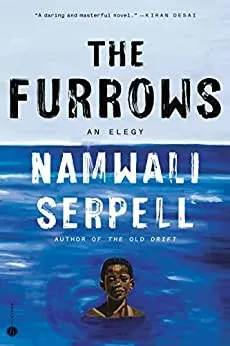
Books like The Furrows
The reader who falls hardest for The Furrows wants grief to alter syntax, time, identity, and even the rules of reality—not merely to supply a sad story. These three novels make absence formally palpable, each through a radically different kind of invention.
If you liked The Furrows, you’ll love these
Not lookalikes — kindred books. Each one shares something essential with The Furrows, and we tell you exactly what.
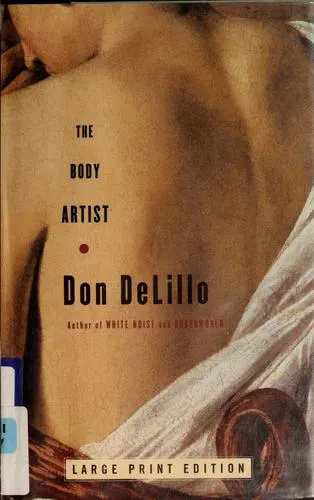
After her husband’s death, performance artist Lauren Hartke withdraws to a lonely coastal house, where time begins behaving strangely and an uncanny visitor speaks in fractured, borrowed phrases. DeLillo’s slim novel has the same unnerving power as The Furrows: mourning does not distort an otherwise stable reality; mourning reveals how unstable reality has always been.
The prose is spare where Serpell’s is lush, but both writers obsess over repetition, doubles, voices, and the body’s refusal to inhabit ordinary time. The Body Artist is among DeLillo’s most concentrated achievements—a ghost story stripped of conventional explanations, and a devastating demonstration that language can preserve the dead while making their absence more acute.
This cult masterpiece arrives as twenty-seven unbound sections in a box: the first and last are fixed, while the rest can be read in any order. Its narrator, a sportswriter sent to cover a football match, finds the city triggering memories of his friend Tony’s illness and death.
The format is not a clever accessory. It reproduces the way grief actually moves—through ambush, recurrence, irrelevant detail, and the sudden collapse of past into present. First published in 1969, The Unfortunates became a landmark of British experimental fiction because its radical construction serves such naked feeling. Anyone moved by Serpell’s repeated, mutually incompatible accounts of loss should experience Johnson’s proof that a broken form can tell the emotional truth more faithfully than a seamless one.
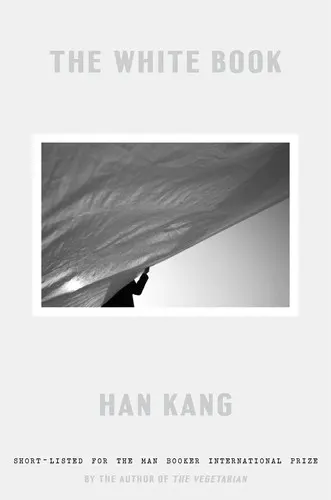
Han Kang builds this luminous novel from white things: salt, snow, rice, swaddling cloth, a shroud. At its center is the narrator’s older sister, who died only hours after being born—a person known entirely through absence, yet capable of casting a second possible life beside the narrator’s own.
Like The Furrows, it understands a lost sibling as more than a memory: the missing child becomes a double, an alternative self, and a question about who has the right to occupy the surviving life. Han’s brief fragments possess an almost physical clarity, turning whiteness into cold, breath, blankness, and fragile renewal. Shortlisted for the International Booker Prize years before Han received the Nobel, The White Book is small enough to read in an afternoon and haunting enough to rearrange the emotional weather of many days afterward.