Author
Books like Max Frisch
5 books we recommend to Max Frisch readers, drawn from I'm Not Stiller and Gantenbein — each with the reason why.
If you loved I'm Not Stiller
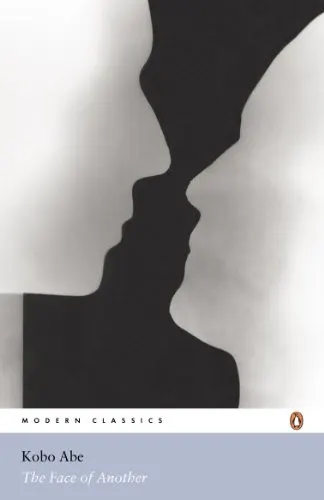
A scientist whose face has been terribly disfigured begins designing a lifelike mask. In lesser hands, that premise would lead to a simple tale of disguise; Abe instead asks whether anonymity releases a hidden self or merely creates a new role to hide inside.
Presented through the man’s writings to his wife, the novel shares Stiller’s charged mixture of self-analysis, marital reckoning, and special pleading. Its narrator is intellectually brilliant, wounded, vain, and capable of turning every confession into a defense. Abe—one of postwar Japan’s most internationally admired novelists—gives the philosophical argument a disturbing physical intimacy: every encounter becomes a test of whether a face creates the person or the person creates the face. Few novels make identity feel so provisional, seductive, and dangerous.
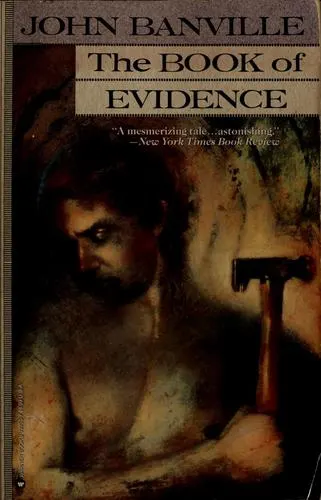
Freddie Montgomery addresses the court in a confession that immediately becomes an exhibition of style. He is witty, cultivated, evasive, and appallingly alert to the effect of his own sentences. Like Stiller, he narrates because others demand an account of who he is; like Stiller, he discovers that language can obstruct judgment as readily as it can reveal truth.
Banville’s Booker-shortlisted novel is darker and more morally abrasive than Frisch’s, but its great pleasure lies in the same unstable border between candour and invention. Freddie can describe himself exquisitely without necessarily knowing himself at all, and the beauty of his prose becomes part of the evidence against him. This is a confession one reads with resistance, fascination, and unwilling admiration—a virtuoso demonstration that the most dangerous fictional character may be the self a narrator composes sentence by sentence.
If you loved Gantenbein
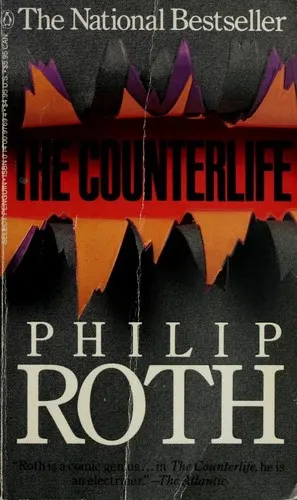
Roth builds this National Book Critics Circle Award winner from incompatible versions of the same lives. Characters revise one another, alternatives acquire the force of fact, and narration becomes an argument about whether anyone exists outside the stories imposed on them.
Like Frisch, Roth makes metafiction feel urgently personal. The structural games are inseparable from sex, marriage, resentment, and the wish to escape one’s assigned identity. It is dazzlingly intelligent but never merely clever: every new possibility exposes another emotional liability. For the exhilarating sensation that a novel is inventing its form while interrogating the person reading it, The Counterlife is indispensable.
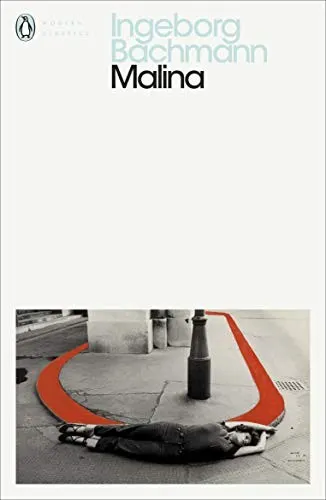
Malina takes the divided self that Gantenbein treats through masks and hypothetical biographies and moves it into a far more feverish register. Its unnamed narrator lives between Ivan, the object of her consuming desire, and Malina, the composed male presence with whom she shares her home. Diary-like passages, dialogue, letters, fairy tale, and dream press against one another as ordinary language begins to prove inadequate.
Bachmann’s only completed novel, the surviving cornerstone of her projected Ways of Death cycle, has become a landmark of postwar German-language literature. Its devotees return to it because its formal fractures do not decorate psychological pain; they embody it. Malina offers the rare, unsettling experience of watching identity happen—and fail to happen—inside sentences.
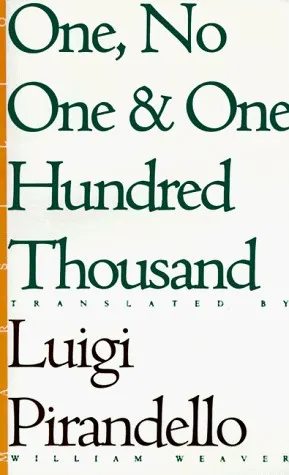
A casual remark from Vitangelo Moscarda’s wife—that his nose tilts slightly—reveals that the man other people see is not the man he imagines himself to be. From that tiny disturbance Pirandello launches a comic, increasingly radical inquiry into personality: every observer creates a different Moscarda, while Moscarda’s attempts to seize control only multiply him further.
The kinship with Gantenbein lies in its central delight and terror: identity is not a hidden essence but a swarm of performances, anecdotes, and viewpoints. Pirandello’s prose can be conversationally funny one moment and philosophically vertiginous the next. This late masterpiece by the future Nobel laureate still feels startlingly modern—a compact demolition of the fantasy that one person can possess one stable life.