Author
Books like Marlon James
9 books we recommend to Marlon James readers, drawn from A Brief History of Seven Killings, Black Leopard, Red Wolf and The Book of Night Women — each with the reason why.
If you loved A Brief History of Seven Killings
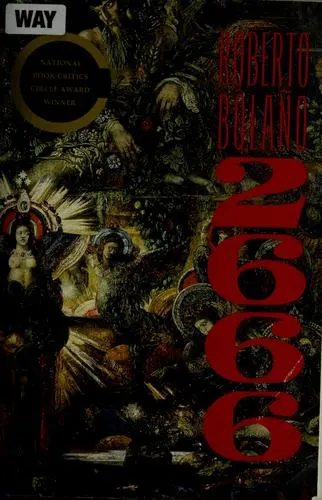
Like James, Bolaño builds a vast narrative from shifting perspectives, abrupt tonal changes, rumors, obsessions, and lives caught in machinery too large to comprehend. What begins with four literary critics searching for an elusive writer gradually widens into a terrifying panorama of art, labor, power, and institutional violence.
The kinship lies especially in the novels’ refusal to provide a safe, authoritative viewpoint. Both demand that readers assemble history from partial testimony while asking what storytelling can do in the face of horror—and whether aesthetic fascination can become complicity. Published posthumously, 2666 quickly became Bolaño’s defining masterpiece. Its scale is intimidating, but its strange momentum and moral force make it one of those rare novels that permanently enlarges a reader’s idea of what fiction can contain.
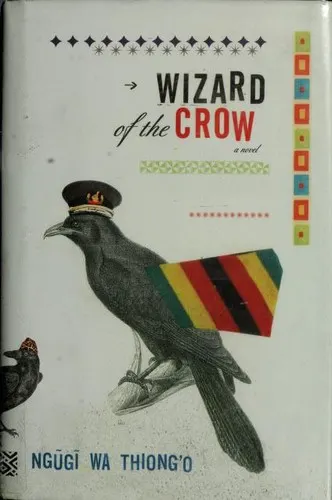
For readers who loved the savage comedy threaded through James’s bloodshed, Wizard of the Crow is indispensable. Ngũgĩ imagines an African dictatorship ruled by an absurd, terrifying tyrant whose vanity projects, courtiers, police, foreign creditors, and bewildered citizens generate a carnivalesque flood of stories.
This is not merely political allegory. Its gossip, folktale transformations, competing narrators, and exuberant exaggerations create a living oral world in which language itself becomes resistance. Ngũgĩ can make authoritarian power look ridiculous without ever making its victims’ suffering trivial. Written originally in Gikuyu by one of the foundational figures of postcolonial literature, the novel has the breadth of an epic and the immediacy of a story told urgently to a crowd. Anyone drawn to James’s fusion of historical anger, verbal invention, and pitch-black humor should not miss it.
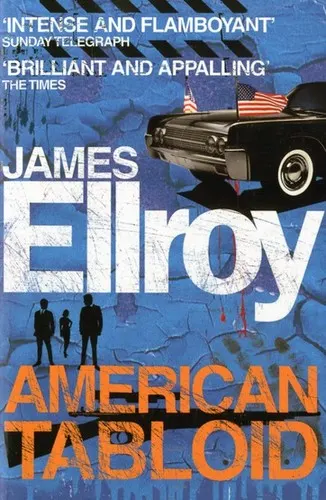
American Tabloid offers the adrenalized, underworld version of the kinship. Ellroy takes three ruthless operators moving among organized crime, law enforcement, intelligence agencies, and political campaigns, then turns mid-century American history into a feverish record of deals, vendettas, surveillance, and betrayal.
Its clipped, percussive prose is far removed from James’s patois-rich polyphony, but the effect is similarly propulsive: history arrives through compromised men whose appetites expose the corruption beneath public mythology. Ellroy’s famous opening claim that America was never innocent announces the novel’s purpose, and the book earns that swagger. Widely regarded as one of his major achievements, it makes conspiracy feel less like a secret master plan than the natural consequence of institutions and criminals feeding each other. If Seven Killings left you craving another novel with speed, brutality, political nerve, and no comforting center, American Tabloid delivers.
If you loved Black Leopard, Red Wolf
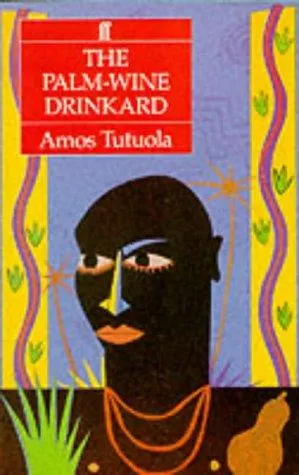
A man ventures into the bush of ghosts to retrieve his dead palm-wine tapster, and the journey becomes an astonishing procession of transformations, monsters, bargains, deaths, and impossible places. Like Marlon James, Tutuola draws on African oral traditions without tidying their strangeness into conventional Western fantasy. His English has a spellbinding logic of its own: repetitive, abrupt, funny, and nightmarish.
Published in 1952, the novel became an internationally celebrated landmark of African literature and influenced generations of writers, even as its deliberately unconventional language provoked debate. It is shorter and more elemental than James’s novel, but it offers the same exhilarating sense that storytelling is older, wilder, and less morally domesticated than the modern novel usually allows.
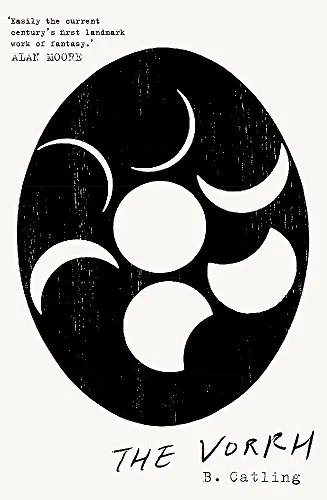
At the edge of an invented colonial city lies the Vorrh, a forest believed to contain Eden—and to unmake the identity of anyone who enters it. Catling does not explain this world so much as plunge you into its fever: hunters, bowmen, uncanny creatures, grotesque institutions, and historical figures coexist in a story governed by dream logic and bodily menace.
What connects it to Black Leopard, Red Wolf is not merely monstrous wilderness but the texture of the reading experience. Both novels demand surrender to baroque language, unstable reality, and narrators whose visions cannot be cleanly trusted. The Vorrh earned a devoted cult readership and extravagant praise from writers including Alan Moore; its admirers recognize it as the rare fantasy novel that feels genuinely discovered rather than manufactured.
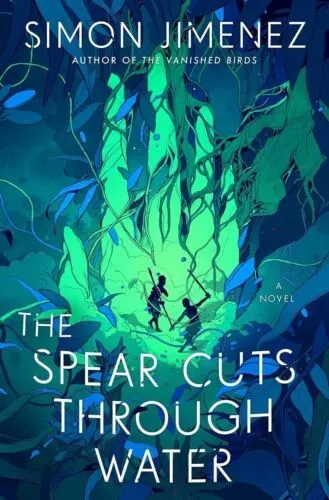
Two warriors must escort an ancient, imperiled goddess across a country ruled by brutal royal sons. That premise opens into something formally dazzling: the journey is also a theatrical performance, a remembered family story, and a myth being created before your eyes. Voices interrupt one another; time folds; intimate gestures suddenly occupy the center of an epic scene.
Jimenez shares James’s fascination with who controls a legend and what violence costs the people turned into its heroes. Yet his emotional register is distinct: amid the cruelty, he makes room for tenderness, queer desire, and the fragile work of trusting another person. Readers often champion the novel for doing what ambitious fantasy promises but rarely achieves—making its form inseparable from its magic. Miss it, and you miss one of the boldest demonstrations that an epic can be both structurally audacious and painfully human.
If you loved The Book of Night Women
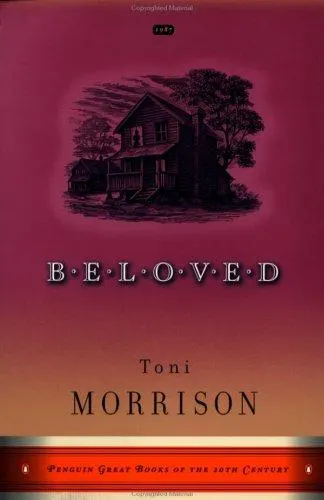
Morrison’s masterpiece begins with a haunted house and a family already living inside the afterlife of slavery. Like Marlon James, she makes history bodily: it inhabits speech, memory, sex, motherhood, and silence. Her language can be incantatory one moment and brutally plain the next, while her women are allowed love, rage, selfishness, courage, and terrible choices.
The Pulitzer helped establish Beloved as an American classic, but its stature comes from the experience of reading it: the novel changes what historical fiction can do. If Lilith’s fierce, compromised struggle moved you, Sethe’s will stay with you just as stubbornly.
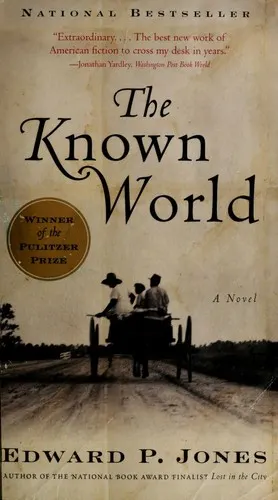
The opening announces the death of Henry Townsend, a Black slaveholder in antebellum Virginia, and from that moral contradiction Jones unfolds an entire community. He moves among enslaved people, owners, families, officials, and fugitives with astonishing authority, revealing how an evil system corrupts every category people use to understand themselves.
What connects it to The Book of Night Women is not simply slavery but its refusal of simplification. Victims can wound others; tenderness survives beside treachery; power changes hands without becoming innocent. Winner of the Pulitzer Prize, The Known World has the breadth of an epic and the intimate precision of gossip overheard in a doorway. Few novels make a whole social order feel so comprehensible—and so appalling.
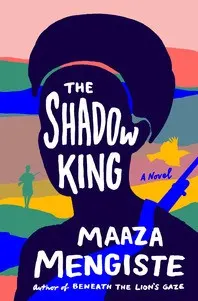
As Mussolini’s army prepares to invade Ethiopia, Hirut is a young servant in a household already charged with resentment and grief. Mengiste gradually enlarges that domestic struggle into a fierce, many-voiced account of women confronting war and the stories men intend to tell about it.
The kinship with James lies in the novel’s ferocity: women seize agency without being purified by it, violence is neither prettified nor reduced to spectacle, and desire remains entangled with domination. Mengiste writes in vivid tableaux, choral passages, and imagined photographs, giving the book an almost operatic momentum. Shortlisted for the Booker Prize, The Shadow King restores women to history while insisting they be remembered in all their dangerous complexity.