Author
Books like Liu Cixin
7 books we recommend to Liu Cixin readers, drawn from The Three-Body Problem, The Three-Body Problem, The Dark Forest and Death's End — each with the reason why.
If you loved The Three-Body Problem
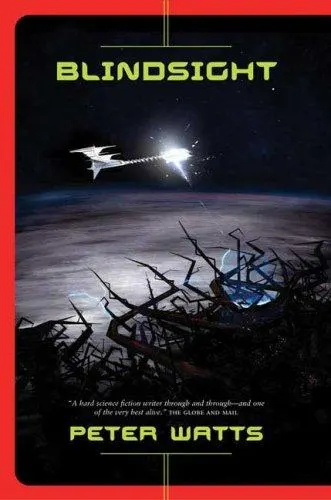
If The Three-Body Problem thrilled you by making first contact feel like an intellectual emergency rather than an interstellar handshake, read Blindsight. After an inexplicable phenomenon surrounds Earth, a radically altered crew is sent to investigate something at the edge of the solar system. Every member embodies a different argument about intelligence, perception, and survival.
Watts, a marine biologist, grounds the novel’s provocations in cognitive science and evolutionary theory. Its central question—whether consciousness is useful at all—is pursued with unnerving rigor, and its aliens feel genuinely alien rather than like humans in disguise. A Hugo finalist that became a fiercely defended cult classic, Blindsight is one of the few first-contact novels capable of making Liu’s universe seem almost reassuring.
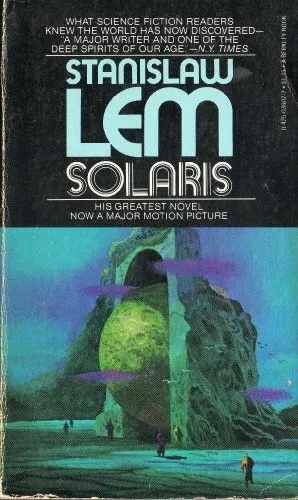
Liu’s novel repeatedly asks whether humanity can understand a civilization whose assumptions are fundamentally unlike ours. Solaris takes that difficulty to its purest and most haunting form. Psychologist Kris Kelvin arrives at a research station orbiting a planet covered by a seemingly sentient ocean; decades of scholarship have produced abundant observations but almost no comprehension.
Lem turns failed science into gripping drama: elaborate taxonomies, rival theories, and meticulous experiments become evidence of the human mind circling something it cannot contain. Yet the novel is also intimate, exposing how the unknown can exploit guilt and desire. One of the defining works of philosophical science fiction, Solaris is essential for anyone who found the limits of knowledge more exciting than the answers in The Three-Body Problem.
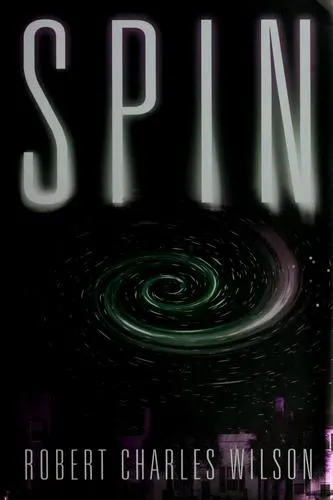
One October night, twelve-year-old Tyler Dupree watches the stars vanish. The explanation, when it begins to emerge, involves astronomical timescales and a transformation of humanity’s place in the cosmos—but Wilson keeps that immensity anchored in Tyler’s lifelong bond with two brilliant, damaged siblings.
This is the match for readers who loved Liu’s ability to make a scientific revelation reshape politics, religion, technology, and ordinary ambition. Wilson is warmer and more character-centered, showing not only how civilization reacts to an impossible fact but how individual people decide whether to study it, exploit it, worship it, or hide from it. Spin won the Hugo Award and remains beloved because its cosmic spectacle never overwhelms its emotional precision: the sky changes, history accelerates, and three lives become impossible to put down.
If you loved The Dark Forest
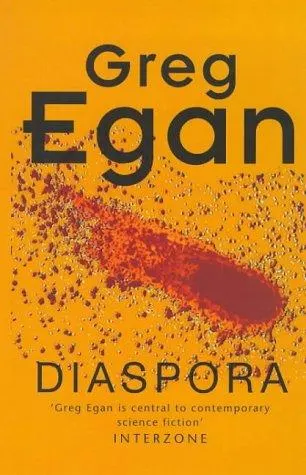
Diaspora begins with the creation of a digital consciousness and expands into one of hard science fiction’s most audacious visions of posthuman civilization. Egan does not merely invoke enormous distances, deep time, strange physics, and alternative forms of existence; he makes the reader think through them.
What it shares with The Dark Forest is the exhilarating sense that ideas themselves are events. Every enlargement of scale changes the meaning of survival, identity, and civilization. Egan’s prose demands attention, but hard-SF readers cherish Diaspora as a high-water mark of the form: a novel whose imagination keeps outrunning what seems possible. If Liu gave you the cosmic sublime, Egan will push you still farther beyond the human frame.
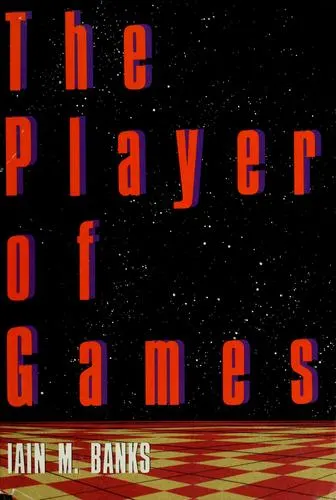
Jernau Morat Gurgeh lives in the abundant, post-scarcity Culture and has mastered nearly every game worth playing. Then he is invited to confront a distant empire through a game so elaborate that it encodes the empire’s entire social order.
Readers who loved Luo Ji’s strategic duels will recognize Banks’s deeper fascination: strategy is never just tactics, but a revelation of values, blind spots, and the structure of a civilization. Banks makes each move carry political and psychological weight while surrounding the contest with wit, menace, and magnificent invention. One of the most beloved entrances to the Culture series, The Player of Games offers a brilliant counterpoint to Liu: equally alert to power and deterrence, but more playful—and more hopeful—about what advanced societies might become.
If you loved Death's End
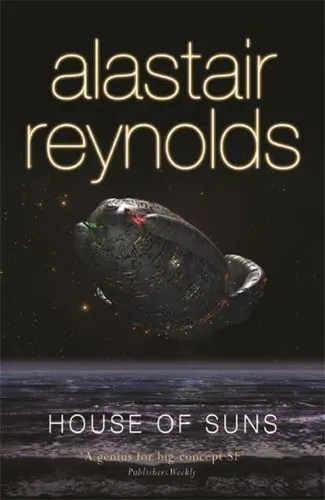
Reynolds captures the exhilaration of deep time without losing the pleasures of narrative momentum. Abigail Gentian's far-future clones—the shatterlings—travel separately through the galaxy, reuniting periodically to exchange memories of civilizations that have risen and vanished during their journeys. When that ancient fellowship is attacked, an enormous historical mystery begins to open.
What makes House of Suns especially satisfying after Death's End is its sense that galactic history has layers: knowledge is incomplete, power is temporary, and even apparently godlike beings remain trapped by distance and time. Yet Reynolds gives this immensity warmth through two shatterlings whose loyalty becomes increasingly moving. Often regarded as one of his finest novels, it is space opera with both a mathematician's sense of scale and a storyteller's instinct for wonder.
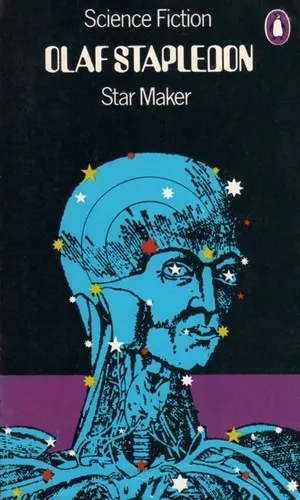
Star Maker offers the rare experience of seeing where cosmic science fiction learned to dream this broadly. Its narrator leaves Earth behind and encounters minds, species, civilizations, and forms of collective existence on an ever-expanding journey through the universe. Written in 1937, it still makes many contemporary novels feel cautious.
The kinship with Death's End lies in Stapledon's willingness to compress epochs, regard entire civilizations as mortal, and ask whether intelligence has any privileged place in the cosmos. The book is less a conventional adventure than a visionary history of existence, filled with ideas later generations of science-fiction writers would spend careers developing. Reading it is like encountering an ancestor of Liu's sublime ambition—and discovering that it remains genuinely strange.