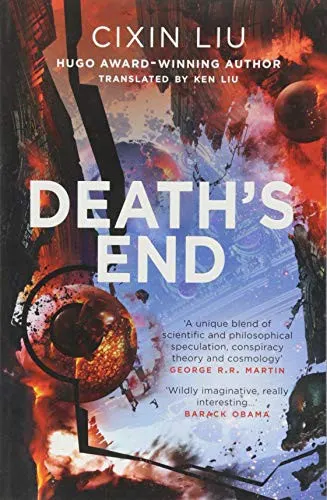
Books like Death's End
—because the real thrill of Death's End is not simply its scale, but the way each astonishing idea forces humanity into a new moral and intellectual position. These three novels deliver that same mixture of cosmic awe, vertigo, and consequence.
If you liked Death's End, you’ll love these
Not lookalikes — kindred books. Each one shares something essential with Death's End, and we tell you exactly what.
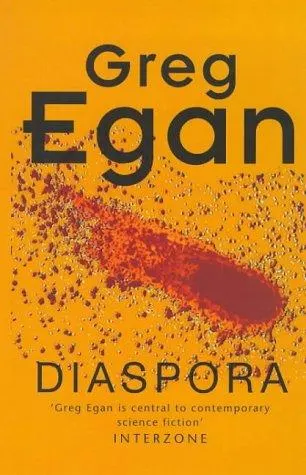
This is perhaps the purest match for readers who loved watching Death's End repeatedly enlarge its frame until ordinary assumptions about life, identity, and the universe became inadequate. Diaspora begins with the birth of a digital consciousness, described with startling technical and imaginative precision, then keeps pushing outward into stranger physics and more radical forms of existence.
Egan never treats science as futuristic decoration: every concept changes what his characters can be and what survival can mean. A landmark of modern hard science fiction, Diaspora has devoted admirers precisely because it attempts things few novels can even articulate. If Liu's audacity left you hungry for another book that thinks on the largest available canvas, this is indispensable.
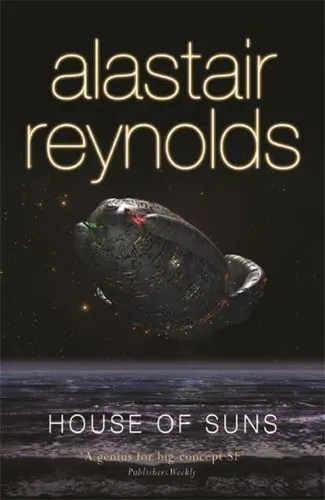
Reynolds captures the exhilaration of deep time without losing the pleasures of narrative momentum. Abigail Gentian's far-future clones—the shatterlings—travel separately through the galaxy, reuniting periodically to exchange memories of civilizations that have risen and vanished during their journeys. When that ancient fellowship is attacked, an enormous historical mystery begins to open.
What makes House of Suns especially satisfying after Death's End is its sense that galactic history has layers: knowledge is incomplete, power is temporary, and even apparently godlike beings remain trapped by distance and time. Yet Reynolds gives this immensity warmth through two shatterlings whose loyalty becomes increasingly moving. Often regarded as one of his finest novels, it is space opera with both a mathematician's sense of scale and a storyteller's instinct for wonder.
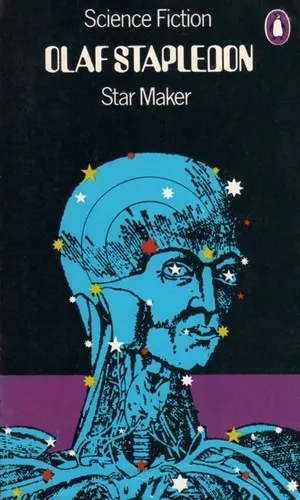
Star Maker offers the rare experience of seeing where cosmic science fiction learned to dream this broadly. Its narrator leaves Earth behind and encounters minds, species, civilizations, and forms of collective existence on an ever-expanding journey through the universe. Written in 1937, it still makes many contemporary novels feel cautious.
The kinship with Death's End lies in Stapledon's willingness to compress epochs, regard entire civilizations as mortal, and ask whether intelligence has any privileged place in the cosmos. The book is less a conventional adventure than a visionary history of existence, filled with ideas later generations of science-fiction writers would spend careers developing. Reading it is like encountering an ancestor of Liu's sublime ambition—and discovering that it remains genuinely strange.