Author
Books like Leo Tolstoy
11 books we recommend to Leo Tolstoy readers, drawn from War and Peace, Anna Karenina, The Death of Ivan Ilyich and Resurrection — each with the reason why.
If you loved War and Peace
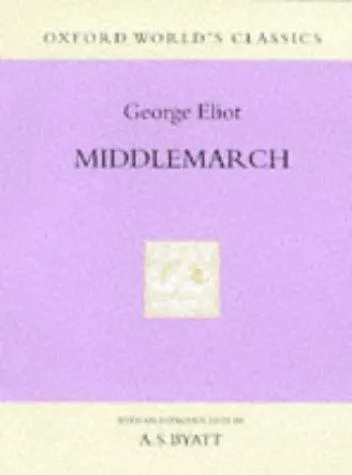
No novelist rivals Tolstoy more closely in the humane art of revising our judgments. In a provincial English town, Dorothea Brooke longs to devote herself to something great, while doctors, clergy, landowners, and hopeful young couples pursue designs of their own. Eliot moves among them with the same balance of irony and mercy that makes even Tolstoy’s vain or foolish characters impossible to dismiss.
The scale here is social rather than military, but the achievement is comparably panoramic: private choices ripple through marriages, careers, inheritances, and an entire community. Virginia Woolf famously called it “one of the few English novels written for grown-up people,” and its stature has only increased. If you treasure War and Peace for teaching you to see more generously, Middlemarch is indispensable.
Grossman took Tolstoy’s capacious form into the darkest machinery of the twentieth century. Around the Battle of Stalingrad, he follows a vast network of soldiers, scientists, mothers, prisoners, bureaucrats, and children, giving each consciousness its irreducible weight. History is immense, but never abstract: an official doctrine, a military order, or a moment of private cowardice enters kitchens and friendships as decisively as an army enters a city.
The Soviet authorities considered the novel so dangerous that the manuscript itself was seized; a surviving copy was smuggled abroad and published years later. That history matters because the book’s moral argument is embodied in its very existence: systems demand simplification, while the novel insists on the stubborn complexity of persons. Among modern epics, this is War and Peace’s most formidable heir—and one of the few books vast enough to make history feel both crushing and intimately human.

It begins with a mother announcing at a wedding that her daughter will be next. From that wonderfully deft opening, Vikram Seth unfolds four interconnected families in newly independent India, where courtship, religion, elections, ambition, and generational conflict continually reshape one another.
What makes the novel Tolstoyan is not merely its famous length or crowded cast, but its pleasure in the full variety of living. Seth can pass from comedy to heartbreak, from domestic bargaining to public upheaval, without treating any sphere as less real than another. His characters are not representatives placed on a historical map; they are contradictory people whose affections make politics personal and whose compromises make ideals costly. Winner of the Commonwealth Writers’ Prize and beloved by generations of readers, A Suitable Boy is the kind of book one finishes feeling not that one has followed a plot, but that one has inhabited a civilization.
If you loved Anna Karenina
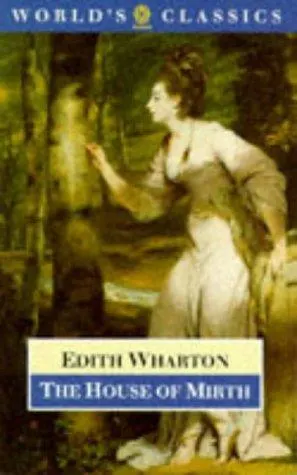
Wharton begins with Lily Bart being observed in a railway station, and from that first scrutiny the novel’s governing tension is clear: Lily is both a person and an object to be assessed. Beautiful, intelligent, nearly thirty, and without enough money, she must maneuver through a New York society whose smiling rituals conceal exact prices.
Tolstoy’s readers will recognize Wharton’s merciless clarity about social judgment—especially the unequal freedoms granted to men and women—but also her refusal to turn Lily into a simple victim. Lily’s pride, taste, generosity, evasions, and appetite for luxury all matter. Wharton’s sentences have the polish of the world she depicts and the blade needed to dissect it. This enduring American classic offers something painfully akin to Tolstoy: the experience of watching a society enforce its values through drawing rooms, invitations, glances, and silence.
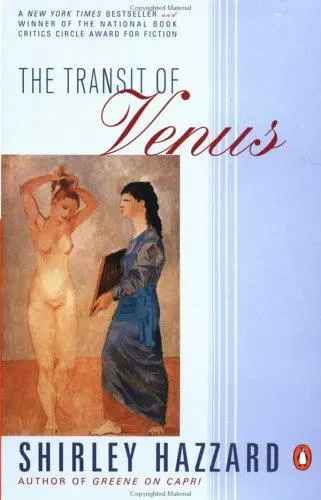
For the reader most captivated by the dangerous grandeur of Anna’s emotional life, Shirley Hazzard offers a twentieth-century masterpiece of love, fate, and self-invention. Two orphaned Australian sisters arrive in postwar England, entering a world whose manners appear orderly while desire moves beneath them with planetary force. The novel announces a death in its opening pages, making every encounter shimmer with foreknowledge.
Hazzard writes with extraordinary compression: a casual remark can expose a marriage, a class system, or a lifetime’s misunderstanding. Her lovers have Tolstoyan depth because passion neither ennobles nor condemns them automatically; it reveals character while also defeating explanation. Winner of the National Book Critics Circle Award and passionately admired by novelists and devoted rereaders, The Transit of Venus is one of those books whose design becomes more astonishing after the final page. Reading it once almost inevitably creates the desire to read it again.
If you loved The Death of Ivan Ilyich
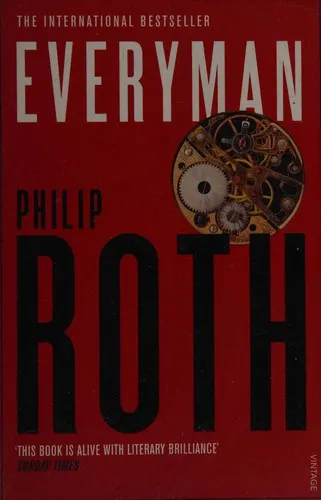
Roth begins at the grave and looks back without sentimentality. Illness, desire, professional success, family failure, and envy of the healthy are rendered with the same frightening plainness Tolstoy brings to Ivan’s sickroom: the body refuses every flattering story the mind tells about it.
Winner of the PEN/Faulkner Award, this severe late masterpiece replaces Tolstoy’s spiritual radiance with something colder but equally clarifying. Few novels make ordinary mortality feel so intimate—or leave the reader so newly conscious of being alive.
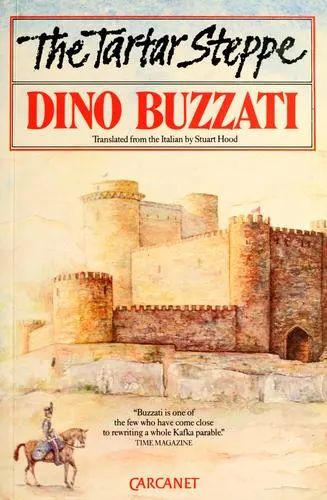
A young officer arrives at a remote fortress where everyone waits for the great event that will justify the place and their lives. Buzzati turns routine, ambition, and hope into a nearly invisible trap: tomorrow will matter, so today can be surrendered.
Like Tolstoy, he understands that a wasted life need not look dissolute; it may look dutiful, respectable, even purposeful. Buzzati’s masterpiece is an Italian classic because its dreamlike simplicity conceals a devastating question: what if the life you are waiting to begin is the life already passing?

In an Amsterdam bar, a brilliant former Paris lawyer buttonholes a stranger and begins to explain himself. His urbane monologue gradually exposes the vanity beneath generosity, public virtue, and moral certainty. The voice is charming, funny, intimate—and mercilessly alert to every maneuver of self-deception.
Readers who admired Tolstoy’s demolition of Ivan’s respectable life will recognize the same moral pressure here, applied through confession rather than illness. Camus’s last completed novel is a slim, unnervingly polished classic: once you have heard its narrator speak, it becomes harder to trust your own innocence.
If you loved Resurrection
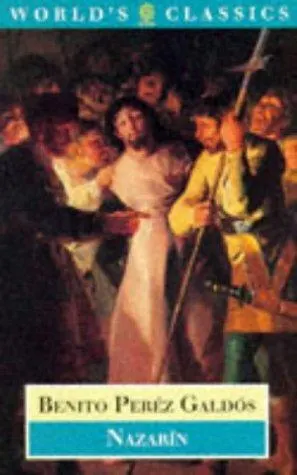
Father Nazario, an impoverished Madrid priest, tries to live the Gospel literally rather than merely preach it. Galdós tests that attempt with Tolstoyan severity: is Nazario a saint, a fool, an egotist, or some troubling mixture of all three?
Like Resurrection, this is Christianity turned against respectable Christian society. Its compassion belongs to beggars and outcasts, while its irony exposes charity as performance and religion as bureaucracy. Galdós, one of the commanding realists of nineteenth-century Europe, makes the spiritual argument inseparable from dirty rooms, hunger, money, and wounded pride. Buñuel later filmed the novel, naturally drawn to its subversive holiness. Anyone moved by Nekhlyudov’s effort to convert remorse into action should not miss this fiercer, stranger experiment in living one’s beliefs.
Ivan Grigoryevich returns after three decades in Soviet prisons and camps to a country where ordinary life has continued without him. From that simple arrival, Grossman opens an inquiry into freedom, cowardice, complicity, and the stories people tell themselves in order to survive.
What links it most deeply to Resurrection is its refusal to isolate guilt in obvious villains. Systems endure because clerks, relatives, neighbors, and frightened decent people make their accommodations; yet Grossman never turns moral judgment into contempt for human weakness. His final novel, published posthumously, has the concentrated force of a testament. It compresses the vast ethical vision of Life and Fate into something leaner and more intimate—a book that can permanently alter how one thinks about responsibility under oppression.
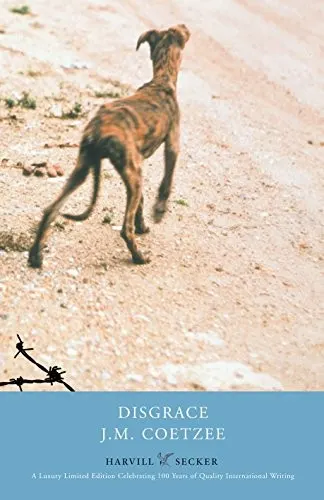
Coetzee begins with David Lurie, a Cape Town professor who has arranged his appetites into a life of cultivated self-satisfaction. When his abuse of power becomes impossible to disguise, he can describe what he has done, but description is not repentance—and public humiliation is not redemption.
That distinction makes Disgrace an essential modern counterpart to Resurrection. Both novels ask whether remorse can escape vanity, whether suffering confers any moral claim, and what restitution could mean when damage cannot simply be reversed. Coetzee’s prose is spare where Tolstoy’s is expansive, but every sentence tightens the moral pressure. The novel’s Booker Prize reflects only part of its stature: readers continue to argue fiercely over its refusals and ambiguities. It offers no consoling conversion, yet its austere search for humility makes it extraordinarily difficult to forget.