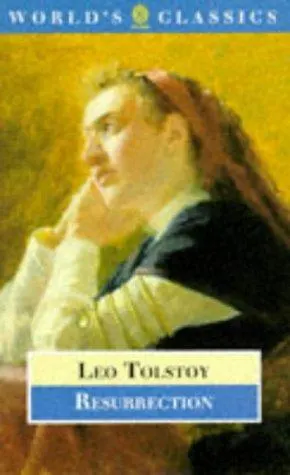
Books like Resurrection
A conscience wakes like a lantern in a dark institution, illuminating not only cruelty and hypocrisy but the bearer’s own compromised heart.
If you liked Resurrection, you’ll love these
Not lookalikes — kindred books. Each one shares something essential with Resurrection, and we tell you exactly what.

Father Nazario, an impoverished Madrid priest, tries to live the Gospel literally rather than merely preach it. Galdós tests that attempt with Tolstoyan severity: is Nazario a saint, a fool, an egotist, or some troubling mixture of all three?
Like Resurrection, this is Christianity turned against respectable Christian society. Its compassion belongs to beggars and outcasts, while its irony exposes charity as performance and religion as bureaucracy. Galdós, one of the commanding realists of nineteenth-century Europe, makes the spiritual argument inseparable from dirty rooms, hunger, money, and wounded pride. Buñuel later filmed the novel, naturally drawn to its subversive holiness. Anyone moved by Nekhlyudov’s effort to convert remorse into action should not miss this fiercer, stranger experiment in living one’s beliefs.
Ivan Grigoryevich returns after three decades in Soviet prisons and camps to a country where ordinary life has continued without him. From that simple arrival, Grossman opens an inquiry into freedom, cowardice, complicity, and the stories people tell themselves in order to survive.
What links it most deeply to Resurrection is its refusal to isolate guilt in obvious villains. Systems endure because clerks, relatives, neighbors, and frightened decent people make their accommodations; yet Grossman never turns moral judgment into contempt for human weakness. His final novel, published posthumously, has the concentrated force of a testament. It compresses the vast ethical vision of Life and Fate into something leaner and more intimate—a book that can permanently alter how one thinks about responsibility under oppression.

Coetzee begins with David Lurie, a Cape Town professor who has arranged his appetites into a life of cultivated self-satisfaction. When his abuse of power becomes impossible to disguise, he can describe what he has done, but description is not repentance—and public humiliation is not redemption.
That distinction makes Disgrace an essential modern counterpart to Resurrection. Both novels ask whether remorse can escape vanity, whether suffering confers any moral claim, and what restitution could mean when damage cannot simply be reversed. Coetzee’s prose is spare where Tolstoy’s is expansive, but every sentence tightens the moral pressure. The novel’s Booker Prize reflects only part of its stature: readers continue to argue fiercely over its refusals and ambiguities. It offers no consoling conversion, yet its austere search for humility makes it extraordinarily difficult to forget.