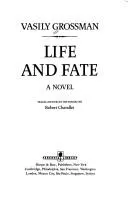
Books like Life and Fate
How can anyone preserve a private conscience when the state treats human beings as expendable? These three novels answer Grossman’s challenge with very different kinds of moral courage.
If you liked Life and Fate, you’ll love these
Not lookalikes — kindred books. Each one shares something essential with Life and Fate, and we tell you exactly what.
Grossman’s final, posthumously published novel is the concentrated aftershock of Life and Fate. Ivan Grigoryevich returns to Moscow after three decades in Soviet prisons and camps, entering a society where nearly everyone has survived by accommodating themselves to lies.
Where Life and Fate builds a vast human world, Everything Flows strips its questions almost bare: What is freedom? Who bears responsibility under tyranny? Can pity survive judgment? Grossman moves fearlessly between intimate encounters and searching reflections on Leninism, famine and Russian history. The book could not be published in the Soviet Union; it reads like a writer saying everything while he still can. Anyone moved by Grossman’s faith in the irreducible value of a single person should not miss this fierce, distilled testament.
A government official is shot almost at random, and Stalin’s machinery must manufacture a conspiracy equal to the crime. From that opening, Victor Serge follows the investigation through offices, prisons and distant outposts, giving accused men, functionaries and frightened witnesses each their full moral weight.
Often considered Serge’s masterpiece, the novel has the panoramic movement of Life and Fate but a sharper, more sardonic pulse. Serge had lived inside the revolutionary world before becoming one of Stalinism’s implacable critics; he therefore understood both the seduction of ideological certainty and the instant when doctrine becomes an alibi for cruelty. His characters are never merely victims or villains. They improvise, betray, endure and occasionally refuse. Few novels show so concretely how a lie becomes an institution—or how stubbornly an individual soul can escape its categories.
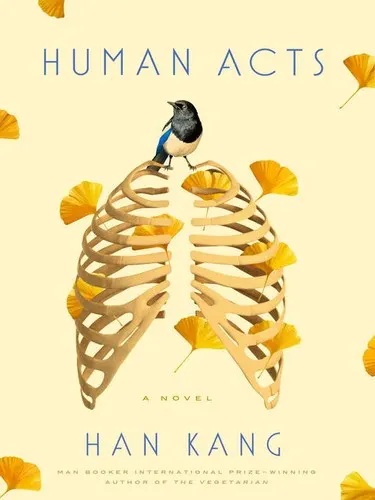
Human Acts begins amid the bodies left after the 1980 Gwangju uprising in South Korea, with a boy helping to identify the dead. Its scale is far smaller than Grossman’s, but its moral vision is comparably immense: every body a world, every official euphemism an assault on reality.
Han Kang, awarded the 2024 Nobel Prize in Literature, writes with devastating restraint. The novel passes among voices marked by state violence, asking what the dead demand from the living and why shame so often attaches itself to the wounded rather than their persecutors. Like Grossman, Han refuses both consoling heroism and dehumanizing statistics; tenderness appears in physical, ordinary acts of witness. Human Acts is brief enough to read in a sitting, but its voices do not leave when the book ends.