Author
Books like John Crowley
8 books we recommend to John Crowley readers, drawn from Little, Big, Engine Summer and Ka – Dar Oakley in the Ruin of Ymr — each with the reason why.
If you loved Little, Big
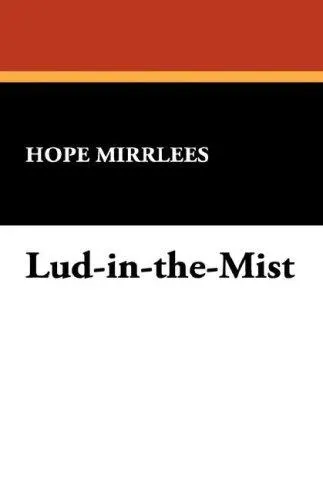
Mirrlees’s 1926 masterpiece understands that the marvelous is most powerful when respectable people have spent generations pretending it does not exist. In prosperous Lud, fairy fruit is contraband and neighboring Fairyland an embarrassment—until the forbidden begins slipping back into domestic life.
Like Crowley, Mirrlees makes enchantment sensuous, dangerous, funny, and inseparable from longing. Her civilized surfaces conceal old songs, irrational customs, and truths that cannot be admitted in daylight. Once neglected, Lud-in-the-Mist has become a touchstone of literary fantasy, cherished by writers and readers who recognize how much later fantasy owes its wit and strangeness. It is the rare precursor to Little, Big that feels not primitive but inexhaustibly alive.
Three friends once attempted an occult act whose meaning remains elusive; afterward, its consequences seep through their ordinary adult lives. Harrison gives us glimpses of the Pleroma, an imagined or inaccessible realm whose beauty may be salvation, delusion, or both.
Where Crowley builds a vast, hospitable labyrinth, Harrison compresses comparable metaphysical yearning into a short, fierce novel. He is especially acute about the cost of wanting another world too badly: enchantment here mingles with failed love, aging, guilt, and the shabby persistence of hope. The book’s cult reputation rests on precisely this refusal to explain away its mystery. Few novels make the unattainable feel so radiant—or leave such an ache when the last page closes.
Alden Dennis Weer appears to be reminiscing about his Midwestern childhood, his relatives, local businesses, courtships, and the rooms of an old house. Yet from the opening image of a fallen tree and a disturbed grave, the calm voice feels fractionally wrong. Stories nest inside memories; incidental objects acquire hidden weight; omissions begin speaking louder than events.
This is kin to Little, Big not through fairies but through architecture. Wolfe constructs a book that seems larger inside than outside, requiring the reader to wander backward through it and reconsider every doorway. Peace has inspired an unusually devoted body of rereaders because it can transform completely without changing a word: pastoral memoir, family chronicle, ghost story, and something darker coexist within the same exquisite sentences. Anyone who loved discovering that Crowley’s tale was secretly shaping its reader should not miss Wolfe’s quieter, more treacherous house of memory.
If you loved Engine Summer

Ruth narrates her unsettled childhood beside a vast, cold lake with the grave simplicity that makes Rush That Speaks so affecting. She notices everything, understands only part of it, and turns that gap between perception and knowledge into poetry. Ordinary rooms and family stories acquire the strangeness of artifacts from a vanished civilization.
Robinson’s celebrated debut is austere, funny, and achingly beautiful, especially about impermanence and the human urge to keep what cannot be kept. Readers who loved Engine Summer for its tender intelligence rather than merely its far-future setting may find Housekeeping its closest emotional relative.
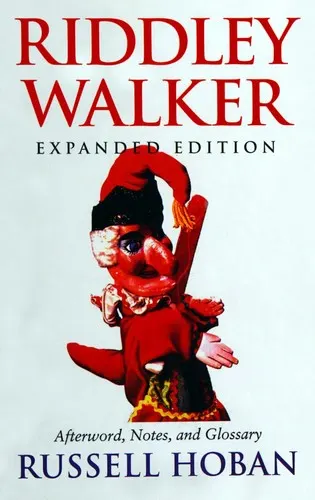
Centuries after catastrophe, twelve-year-old Riddley inherits a damaged language and a society that has turned scraps of technological history into ritual, puppet shows, and myth. The invented dialect initially resists the reader; then it begins to think through you. Puns become archaeological sites, and misunderstandings carry buried truths.
Like Crowley, Hoban asks what survives when knowledge has become story—and whether stories conceal the past or keep its ember alive. Riddley Walker has earned unusually fierce devotion as a cult masterpiece because its linguistic daring is inseparable from its heart. Once its voice catches hold, no other apocalypse sounds quite real enough.
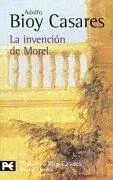
A fugitive hiding on an apparently deserted island begins seeing elegant visitors who behave as though he were not there. His attempt to understand them becomes a compact, haunting inquiry into recording, repetition, desire, and the price of escaping time.
This is the recommendation for readers mesmerized by the deeper architecture of Engine Summer: the way a tale can contain a life, transform its teller, and make preservation indistinguishable from loss. Borges famously praised Bioy Casares’s plot as perfect, but the novel’s lasting power lies in the melancholy beneath its ingenious mechanism. It is short enough to read in an evening and strange enough to remain in memory for years.
If you loved Ka – Dar Oakley in the Ruin of Ymr
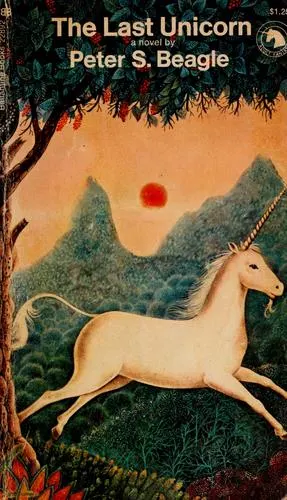
Beagle understands, as Crowley does, that immortality is not a superpower but a radically different way of experiencing loss. His unicorn begins in timeless self-possession, then enters a world where stories decay, creatures forget what they are, and love makes permanence impossible.
This modern classic has inspired fierce devotion because its wit never punctures its wonder: fairy-tale conventions become jokes, wounds, and metaphysical questions. Like Dar Oakley, the unicorn is genuinely nonhuman—beautifully strange even when brought close to us. Few novels make mortality seem so terrible, or so precious.
A fox becomes fascinated by a human household and begins imagining her way toward human life. Johnson refuses to make that transformation easy or sentimental: fox desire, fox memory, and fox morality retain their unsettling independence, while the humans remain equally trapped inside the stories they tell about love.
Drawn from Japanese folklore and told through intimate, competing accounts, this Crawford Award–winning novel shares Crowley’s gift for letting myth feel simultaneously ancient and newly lived. Its transformations are sensuous, its emotional misunderstandings devastating, and its deepest question is pure Ka: can two kinds of being ever truly know one another without one being changed beyond recognition?