Author
Books like John Brunner
6 books we recommend to John Brunner readers, drawn from Stand on Zanzibar, The Sheep Look Up and The Crucible of Time — each with the reason why.
If you loved Stand on Zanzibar
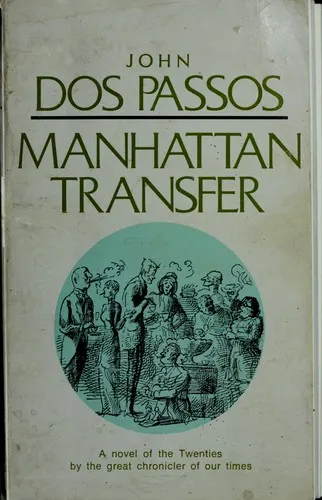
Brunner’s rapid alternation among headlines, slogans, public chatter, and private lives has a crucial ancestor in this 1925 modernist landmark. Dos Passos makes New York itself the central consciousness: characters flare into view, collide, vanish, and reappear while commerce and mass culture speak through them.
What makes the kinship profound is the scale of attention. Individual hopes matter, but so do the impersonal forces shaping them—money, publicity, crowds, technology. Its cinematic cuts still feel daring, and its influence on the twentieth-century social novel is immense. Reading it after Stand on Zanzibar is like discovering the brilliantly engineered machine beneath one of Brunner’s boldest techniques.
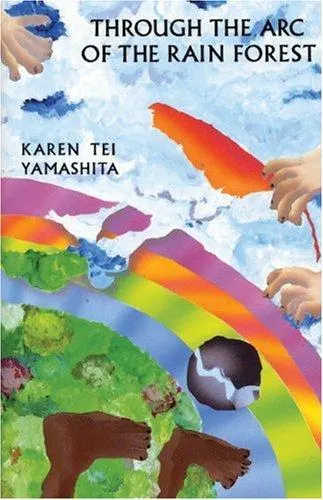
A mysterious object follows a Japanese immigrant to Brazil, where an extraordinary discovery attracts corporations, pilgrims, journalists, and opportunists. Yamashita keeps widening the lens until private eccentricities become a carnival of global consumption, ecological damage, media spectacle, and collective delusion.
Like Brunner, she understands that absurdity is not an escape from realism but one of the best ways to describe a world governed by advertising and runaway systems. The novel is playful, fast, polyphonic, and increasingly disturbing without sacrificing its warmth or comic invention. Winner of an American Book Award, it has become a cult classic of speculative postmodernism—and its audacity deserves a much larger readership.
If you loved The Sheep Look Up
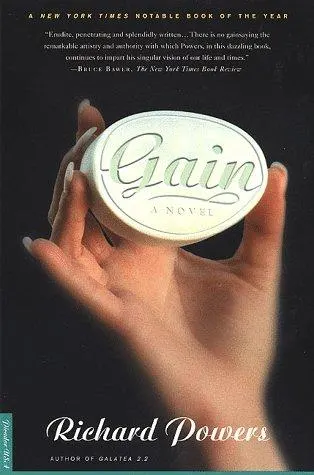
Gain strips away Brunner’s cacophony and examines the same moral horror with clinical patience. One strand follows the growth of a small nineteenth-century business into the multinational Clare corporation; another begins with a woman living in its company town and confronting a grave diagnosis. Products, jobs, civic pride and contamination prove impossible to separate.
Powers’s crucial insight is that corporate harm need not arise from a secret cabal: it can emerge from ordinary ambitions, useful inventions and decisions that appear reasonable one at a time. Years before his Pulitzer-winning The Overstory, he created this colder, more concentrated anatomy of environmental culpability. If Brunner made you furious at a poisoned system, Gain will show you how that system learned to look innocent.
If you loved The Crucible of Time
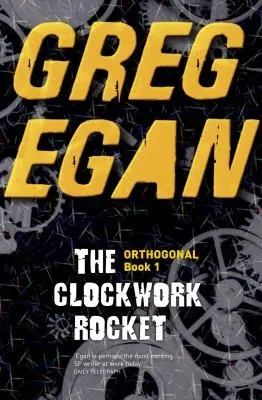
This is perhaps the closest heir to Brunner’s fusion of alien biology, scientific discovery, and species-wide peril. Yalda belongs to a life-form whose reproduction, family structures, and social inequalities arise from a biology unlike ours; she also inhabits a universe governed by different physical laws. When astronomers detect a cosmic threat, understanding nature becomes a practical race for survival.
Egan does not merely decorate the story with exotic physics. He recreates the exhilaration of forming hypotheses, devising experiments, and watching knowledge overturn custom—the very process that gives The Crucible of Time its unusual grandeur. Few hard-SF novels are this intellectually audacious, and fewer still make their audacity serve such an urgent, humane story.
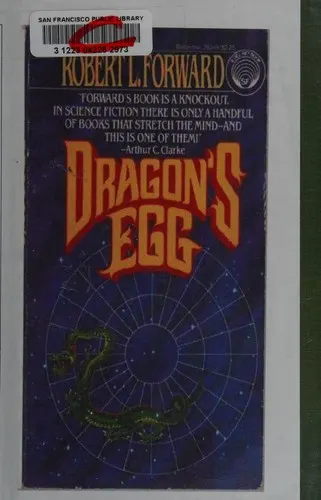
On the surface of a neutron star, the cheela live at a rate so accelerated that entire eras of their history pass during a short human observation mission. Forward follows their emergence into science and civilization while taking the crushing gravity, nuclear matter, and rapid timescale seriously.
The kinship lies in its confidence that an alien people’s intellectual history can itself be a gripping narrative. Inventions are not convenient plot devices: each is a conquest over ignorance, and each changes what the cheela can imagine. Written by a physicist and long regarded as a touchstone of hard science fiction, Dragon’s Egg delivers the rare pleasure of watching minds become equal to an almost inconceivable environment.
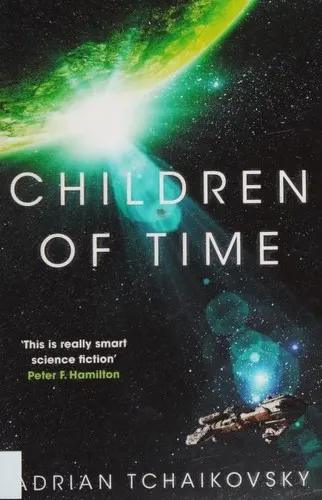
A ruined terraforming project leaves another species to inherit an intended human future. Across generations, Tchaikovsky shows intelligence emerging through bodies, instincts, inherited knowledge, and social arrangements that remain recognizably nonhuman rather than becoming humanity in disguise.
Where Brunner emphasizes civilization’s long struggle to understand and survive, Tchaikovsky makes evolution and culture interact: anatomy shapes technology, technology reshapes society, and old solutions become the foundations of new problems. Winner of the Arthur C. Clarke Award and now one of modern science fiction’s most passionately recommended novels, it earns that devotion by making alien consciousness not merely plausible but emotionally compelling. Its final achievement is to enlarge the reader’s idea of who can possess a history.