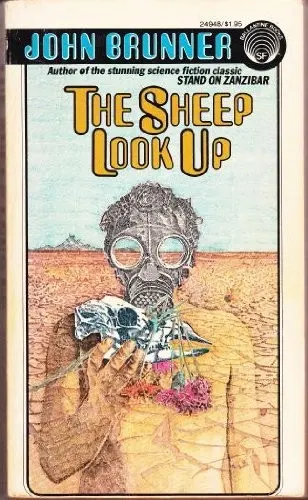
Books like The Sheep Look Up
—because what lingers is not merely the poisoned world, but Brunner’s furious sense that catastrophe is produced by an entire culture speaking at once. These three novels share that systemic vision while finding strikingly different forms for it.
If you liked The Sheep Look Up, you’ll love these
Not lookalikes — kindred books. Each one shares something essential with The Sheep Look Up, and we tell you exactly what.
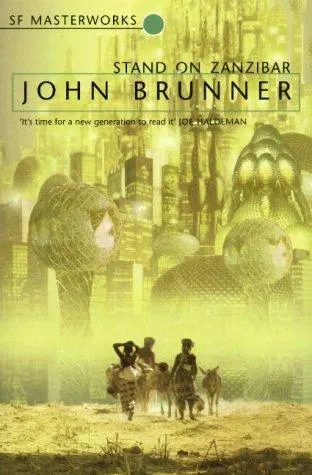
Brunner’s Hugo-winning masterpiece is the clearest answer if you loved the sheer architecture of The Sheep Look Up: headlines, advertisements, slogans, data, overheard voices and conventional narrative all colliding until society itself seems to become the protagonist.
Here the pressure is overpopulation rather than pollution, but the deeper kinship is Brunner’s ability to make information feel physically oppressive. His satire moves at terrifying speed, catching corporate logic, racial tension, celebrity culture and political euphemism in the same net. Hugely influential and still startlingly modern, it is the fullest demonstration of the technique that made The Sheep Look Up so singular.

Yamashita answers ecological devastation with exuberance rather than Brunner’s acid rage. Her Amazon becomes the site of miraculous commodities, ravenous development schemes and a capitalism so feverish that realism can no longer contain it. The result is comic, grotesque and increasingly unnerving.
What will feel familiar is the way private absurdities accumulate into collective disaster: no single villain controls the machine, yet everyone is swept into its appetites. Winner of the American Book Award, this is a cultishly admired feat of ecological imagination—playful enough to charm you before its indictment closes around you.
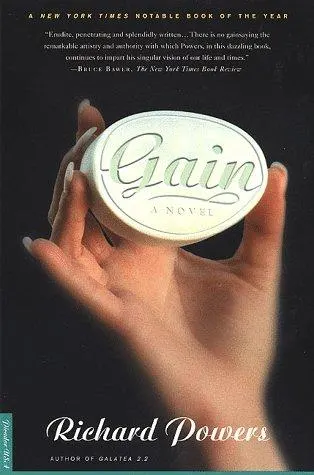
Gain strips away Brunner’s cacophony and examines the same moral horror with clinical patience. One strand follows the growth of a small nineteenth-century business into the multinational Clare corporation; another begins with a woman living in its company town and confronting a grave diagnosis. Products, jobs, civic pride and contamination prove impossible to separate.
Powers’s crucial insight is that corporate harm need not arise from a secret cabal: it can emerge from ordinary ambitions, useful inventions and decisions that appear reasonable one at a time. Years before his Pulitzer-winning The Overstory, he created this colder, more concentrated anatomy of environmental culpability. If Brunner made you furious at a poisoned system, Gain will show you how that system learned to look innocent.