Author
Books like Jennifer Egan
8 books we recommend to Jennifer Egan readers, drawn from A Visit from the Goon Squad, The Candy House and Look at Me — each with the reason why.
If you loved A Visit from the Goon Squad
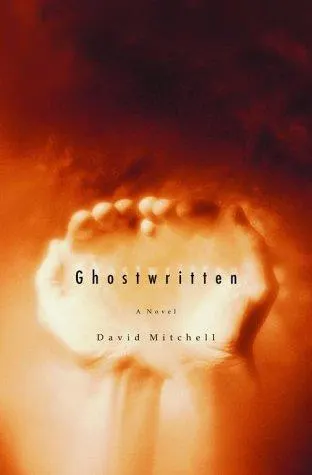
A man fleeing the aftermath of a Tokyo atrocity hands the narrative to someone else—and then the novel keeps moving, crossing borders, consciousnesses, and literary modes. Each voice initially seems to inhabit a separate story; gradually, stray names, consequences, and objects begin to conduct electricity between them.
Mitchell’s acclaimed debut has the same rare confidence as Goon Squad: it trusts readers to enjoy disorientation and then rewards their attention with patterns rather than tidy explanations. The real kinship lies in how both books make peripheral people suddenly central and turn coincidence into an emotional theory of human connection. Ghostwritten offers the addictive pleasure of realizing that the novel has been building a hidden architecture around you.
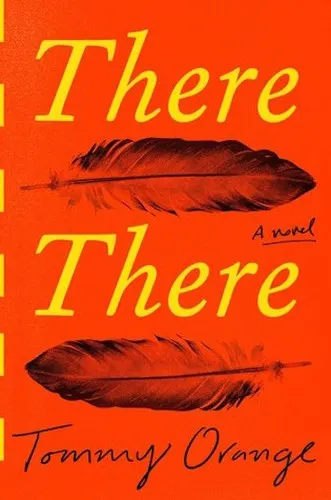
Orange introduces twelve vividly distinct people drawn toward Oakland’s Big Powwow, giving each a voice too particular to be mistaken for anyone else’s. Some are searching for family, some for money or recognition, and some for a usable understanding of what it means to be Native in an urban America that prefers simpler stories.
Like Egan, Orange builds momentum by cutting among lives rather than settling into one protagonist’s orbit. The accumulating perspectives create both intimacy and dread: every new character alters the meaning of those already encountered. A Pulitzer finalist and winner of the PEN/Hemingway Award, There There earned its reputation through this combination of polyphonic daring and fierce emotional immediacy. Its closing movement makes the whole crowded structure feel inevitable—and leaves its voices reverberating long afterward.
If you loved The Candy House
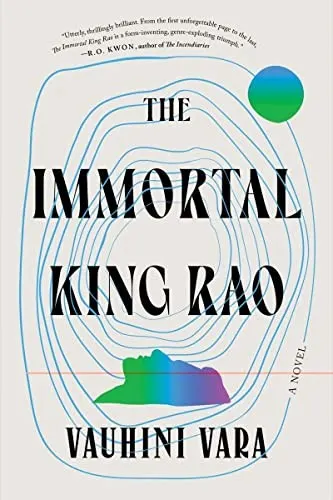
King Rao escapes his enormous, quarrelsome family and builds a technology empire; decades later, his daughter Athena tells his story from prison in a world reshaped by his inventions. Vara moves among family history, corporate mythology, personal testimony, and speculative technology with Egan-like agility.
What makes this Pulitzer finalist such a strong match is its understanding that data never merely preserves a life: it edits, monetizes, and governs it. Yet Vara’s intellectual ambition never smothers the intimate drama between a daughter and the father whose vision has determined her world. It is the rare tech novel capacious enough to contain caste, capitalism, utopian longing, and family resentment—and nimble enough to make them one story.
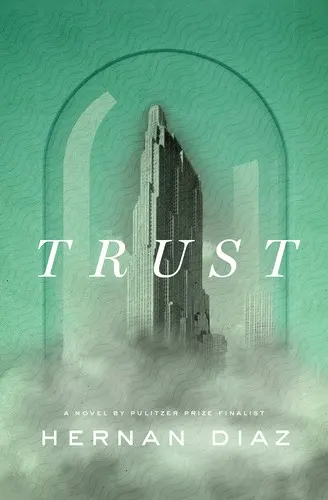
*Trust* begins as a polished period novel about a legendary financier and his enigmatic wife, then makes that book only one piece of a larger contest. Each successive document changes who appears credible, who has been silenced, and who gets to manufacture the official version of a life.
Readers who loved watching *The Candy House* reassign centrality—turning background figures into narrators and apparent facts into somebody’s construction—will find the same exhilaration here. Diaz’s four-part design is not a puzzle-box stunt but a moral instrument: form itself exposes how money controls memory. Winner of the Pulitzer Prize, *Trust* rewards rereading because every voice leaves fingerprints on the others.
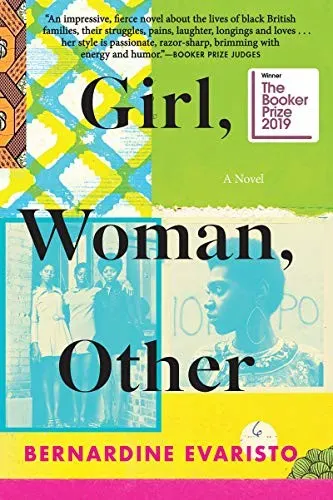
Bernardine Evaristo passes the narrative among twelve predominantly Black British characters, giving each a voice supple enough to hold public conviction and private contradiction at once. Her flowing, lightly punctuated prose can feel spoken, remembered, and performed simultaneously.
The kinship with Egan lies in the accumulating web: someone glimpsed at the edge of one life becomes vivid in another, while friendships, families, rivalries, and accidents quietly redraw the whole book. Evaristo is especially good at the shock of discovering that a person has misunderstood both herself and those closest to her. The Booker-winning result is exuberant, funny, argumentative, and profoundly generous—a crowd of separate lives that gradually becomes a single, unforgettable social organism.
If you loved Look at Me
After receiving an enormous settlement for a mysterious accident, a man becomes obsessed with reconstructing moments that feel authentic. He hires performers, builds sets, and rehearses reality until spontaneous life begins to seem intolerably counterfeit.
Like Look at Me, Remainder turns bodily disruption into a ruthless inquiry: are we ever simply ourselves, or are we always posing for an imagined audience? McCarthy’s deadpan precision makes the narrator’s project at once comic, seductive, and horrifying. Now regarded as a cult landmark of experimental fiction, it takes Egan’s unease about surfaces and pushes it to an unforgettable extreme.

Nik Worth has spent decades inventing the career of a rock star who does not exist outside his own meticulously maintained archive. His sister Denise watches over both Nik and his elaborate private mythology while becoming increasingly anxious about memory, family, and what survives us.
Spiotta understands, as Egan does, that self-invention can be ridiculous, moving, and necessary all at once. The manufactured discographies and reviews are brilliantly funny, but the novel’s real force lies in Denise’s love for her brother and her fear that lived experience is vanishing into documentation. A National Book Critics Circle Award finalist, Stone Arabia is a compact, piercing novel about fame without celebrity—and one of the finest books about the stories people build to keep themselves from disappearing.
Cayce Pollard is a consultant with an almost physical sensitivity to corporate logos. While searching for the maker of enigmatic film clips circulating online, she moves through a world in which taste, grief, commerce, and surveillance have become nearly impossible to separate.
What will grip a Look at Me reader is Gibson’s uncanny perception of culture just before it changes shape. Brands behave like languages; anonymous images create communities; identity becomes information to be decoded and sold. Yet beneath the novel’s polished surfaces is a vulnerable story about loss and the desire to find a human source behind seductive images. Pattern Recognition helped define the early twenty-first-century novel of networked life, and its insights have only grown sharper.