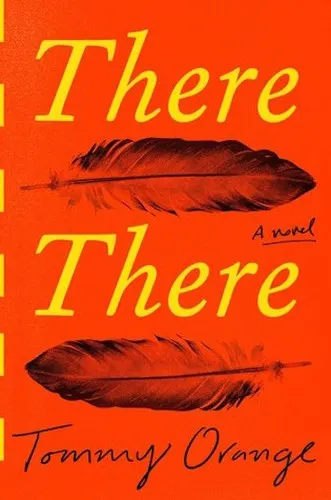
Books like There There
Julie Otsuka turns the pronoun “we” into an entire community—proof that the deepest kinship with Orange lies not in setting but in the way many lives can become one urgent, fractured story. These three novels share his polyphonic force, moral intensity, and gift for making a community feel vividly alive without smoothing away its divisions.
If you liked There There, you’ll love these
Not lookalikes — kindred books. Each one shares something essential with There There, and we tell you exactly what.

Otsuka narrates the lives of Japanese women arriving in early-twentieth-century America through a mesmerizing first-person plural: hopes, marriages, labor, humiliation, children, and self-invention accumulate inside a single choral “we.” As in There There, collective identity never erases individual difference; each variation makes the chorus more piercing.
Winner of the PEN/Faulkner Award, this slender novel has the density and emotional reach of a book several times its length. Its rhythms carry you forward almost musically, until repetition itself becomes suspense. Orange showed you what a multitude can sound like; Otsuka reveals another astonishing possibility for the communal voice.
If you loved how There There lets people contradict one another—how a minor figure in one chapter becomes the wounded center of another—read Erdrich’s breakthrough novel. Across decades, members of two interconnected Ojibwe families tell stories of desire, betrayal, faith, resentment, comedy, and endurance. No narrator owns the truth, and the gaps between accounts are as revealing as the accounts themselves.
Love Medicine won the National Book Critics Circle Award and helped establish Erdrich as one of America’s essential novelists. Yet its stature can obscure how pleasurable it is: earthy, funny, intimate, and full of characters whose worst decisions do not cancel their humanity. Orange’s shifting perspectives owe something to the literary ground Erdrich helped open; missing this book means missing one of polyphonic American fiction’s great living sources.
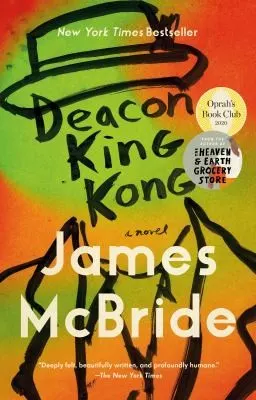
McBride begins with a public act of violence in a Brooklyn housing project, then keeps widening the frame: church women, addicts, police officers, gangsters, old friends, and baffled bystanders all acquire histories, loyalties, and comic specificity. The resulting neighborhood portrait has the converging momentum of There There, but its dominant energy is exuberance—the sense that even amid danger, community is made from gossip, grudges, favors, food, memory, and improbable mercy.
McBride refuses to reduce anyone to victim, criminal, or symbol. His sentences swing, his dialogue crackles, and seemingly stray details lock together with tremendous satisfaction. Widely acclaimed as one of the finest novels of 2020, Deacon King Kong earns that reputation by being both socially exact and irresistibly entertaining: a crowded, compassionate book that makes every life feel consequential.