Author
Books like Hilary Mantel
8 books we recommend to Hilary Mantel readers, drawn from Wolf Hall, A Place of Greater Safety and An Experiment in Love — each with the reason why.
If you loved Wolf Hall
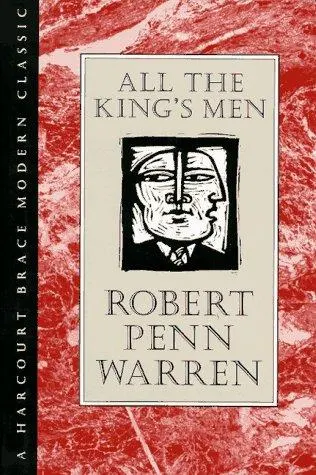
Jack Burden, a journalist turned political operative, serves Willie Stark, a populist governor whose idealism and ruthlessness cannot be neatly separated. Like Cromwell, Jack understands that power works through private weaknesses as much as public institutions: an old letter, a buried grievance, or a family obligation can redirect a state.
Warren’s Pulitzer Prize–winning novel has a more rolling, incantatory style than Mantel’s, but it shares her fascination with intelligence employed in morally contaminated circumstances. Its politicians are neither cynical puppets nor noble abstractions; they are vivid, persuasive people whose motives change under pressure. Few novels make political action feel so intimate—or show so forcefully how the past remains usable ammunition.
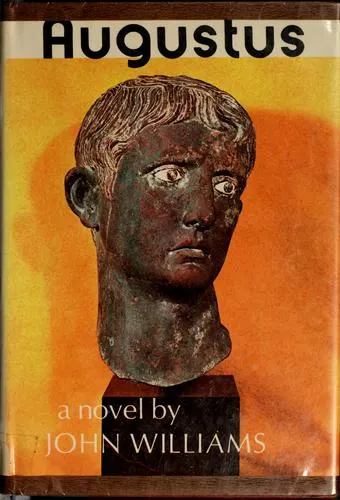
John Williams builds the life of Rome’s first emperor from letters, journals, military dispatches, and hostile recollections. The result is a portrait assembled indirectly: Augustus emerges through the competing judgments of friends, enemies, family, and functionaries, just as Mantel’s Cromwell must be discerned amid rumor, performance, and faction.
What grips is the conversion of administration into drama. Marriage arrangements, appointments, grain supplies, and carefully chosen words become instruments of rule, while every public victory exacts a private cost. Winner of the National Book Award, Augustus is often overshadowed by Williams’s Stoner; it is nonetheless one of the great modern historical novels—formally daring, emotionally restrained, and devastating about the loneliness of remaking a state.
If you loved A Place of Greater Safety
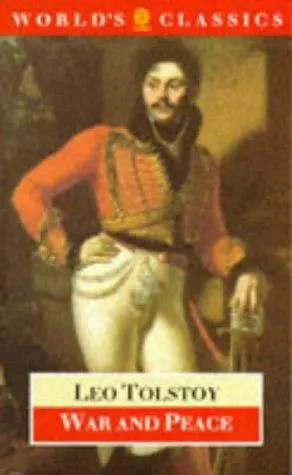
Tolstoy begins at a drawing-room party where gossip, flirtation and an argument about Napoleon are already inseparable. Like Mantel, he makes history feel neither inevitable nor abstract: it emerges from vanity, misjudgment, loyalty, physical fear and thousands of improvised decisions.
Its monumental reputation can obscure how quick, funny and socially exact it is. Tolstoy moves effortlessly from political theory to an embarrassing conversation or a minute shift in affection, while questioning whether celebrated leaders understand events any better than anyone else. If you loved Mantel’s collision of intimate lives with public catastrophe, this is the inexhaustible source.
Évariste Gamelin is a struggling young painter whose austere Jacobin convictions give shape to his humiliations and hopes. Anatole France watches political faith enter the nerves: ideals become tastes, reflexes and permissions. His irony is devastating because he never treats belief as mere hypocrisy; sincerity itself can become dangerous.
Written by a future Nobel laureate, this compact novel has none of a monument’s dust. It is lucid, sensuous and bitterly comic, with the same unsettling traffic between desire and doctrine that animates Mantel’s revolutionaries. Few novels show more precisely how a person can mistake moral certainty for moral innocence.
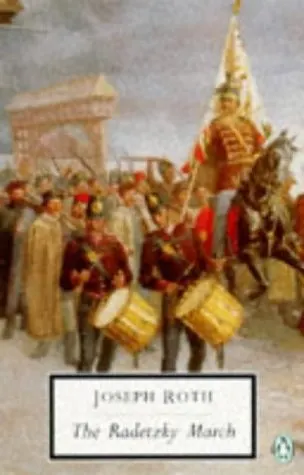
The novel opens with a soldier saving the emperor’s life—and then discovering that official history has improved his brave, accidental act into patriotic legend. From that superb beginning, Roth traces how individuals inhabit a political order whose rituals still look solid even as its meaning drains away.
Where Mantel gives revolution its fever, Roth gives a dying regime its melancholy heartbeat. His characters are compromised, tender, absurd and often unable to name what is happening around them; uniforms, debts, fathers and small social humiliations carry the weight of an empire. A defining novel of Habsburg decline, it leaves many readers devoted to Roth’s rare mixture of elegance, comedy and approaching doom.
If you loved An Experiment in Love
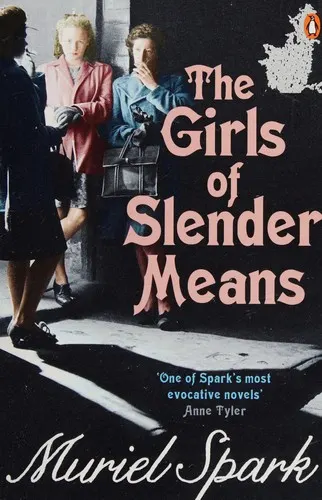
Spark’s young women inhabit a genteel London hostel where dresses, bathwater and tiny portions circulate through an economy of scarcity. As in Mantel, material details become instruments of judgment: who eats, who borrows, who watches, who quietly profits. The comedy is immaculate and merciless, yet an undertow of danger keeps changing the meaning of every joke.
This brief, brilliantly engineered classic offers the same exhilarating sensation of a female world being observed without sentimentality. Spark can expose vanity or betrayal in half a sentence, and her elegant compression makes the novel feel far larger—and more devastating—than its size.
From an uneasy adulthood, Berie recalls the summer when she and her magnetic friend Sils worked at a shabby amusement park in upstate New York. Moore understands that an intense girlhood friendship can contain worship, competition, resentment and a private moral code—all at once.
What will especially speak to a Mantel reader is the retrospective intelligence: the older narrator knows more than the girl did, but cannot quite master or dismiss her. Moore’s wit flashes even when shame and loss press hardest. This slender novel has earned unusually fierce devotion because it captures how friendship can become the vanished country against which the rest of a life is measured.
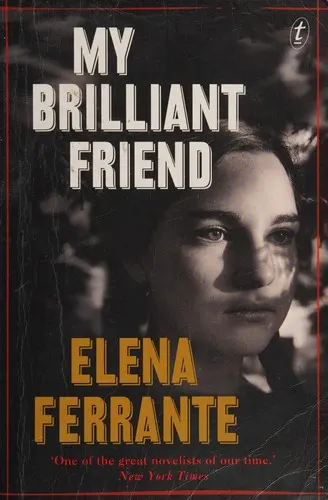
Elena and Lila grow up measuring themselves against each other’s minds. Education promises escape, but every achievement alters the balance between them; admiration can become theft, rivalry can become intimacy, and social ascent carries its own humiliations. Ferrante shares Mantel’s unsparing understanding that intelligence does not free girls from class—it makes them more painfully conscious of its machinery.
The novel’s extraordinary psychological force comes from refusing to simplify either friend into victim, genius or enemy. The first volume of Ferrante’s internationally beloved Neapolitan quartet is already a complete and gripping novel, but its hold is cumulative: once Elena and Lila begin inventing themselves in each other’s gaze, it is very difficult not to follow them further.