Author
Books like George Gissing
8 books we recommend to George Gissing readers, drawn from New Grub Street, The Odd Women and The Nether World — each with the reason why.
If you loved New Grub Street
Balzac’s great novel of literary ambition offers the panoramic counterpart to Gissing’s intimate tragedy. Lucien Chardon begins as a gifted provincial poet dreaming of Paris; Balzac then reveals literature as an ecosystem of printers, booksellers, journalists, patrons and manufactured reputations.
Like Gissing, Balzac understands that the market does more than reward bad work: it teaches writers to alter their desires and call the alteration success. The novel is bustling, seductive and often very funny where New Grub Street is airless, but its intelligence about publicity, compromise and social climbing is just as merciless. Widely regarded as one of Balzac’s masterpieces, it is essential reading for anyone fascinated by Jasper Milvain’s cold recognition that authorship is also commerce.
Gordon Comstock abandons a promising advertising career for a poorly paid bookshop job, convinced that respectable prosperity will corrupt his poetry. What follows is Orwell’s most Gissing-like examination of the artist in poverty: shabby clothes, counted coins, awkward social calls and the gradual conversion of moneylessness into a private theology.
Gordon is no noble martyr. His disgust with commerce feeds vanity, resentment and cruelty, and Orwell makes that self-deception painfully comic. Readers who were divided between sympathy and exasperation over Edwin Reardon will recognize the same trap: integrity may be real, yet the ego built around it can become destructive. Less famous than Orwell’s political landmarks, this is one of his most intimate novels—and one of the sharpest ever written about the romance and degradation of being poor on principle.
If you loved The Odd Women
Wharton shares Gissing’s ruthless understanding that the marriage market is an economic system disguised as romance. Lily Bart is clever enough to read her society perfectly but has neither the money nor the training to stand outside it. Every drawing-room encounter therefore carries material stakes, and every apparent choice has already been narrowed by class and gender.
Yet this is no sociological case study. Lily’s wit, susceptibility to beauty, and talent for hesitation make her painfully alive, while Wharton’s sentences combine comedy with the precision of a knife. Widely regarded as one of the great American social novels, The House of Mirth offers the same exhilarating, terrible spectacle as The Odd Women: intelligence discovering that seeing the trap is not the same as escaping it.
If Mary Barfoot and Rhoda Nunn’s arguments made you want a whole society tested against feminist ideals, read South Riding. Sarah Burton returns to Yorkshire to lead a girls’ school, bringing ambition, reforming zeal, and a determination to enlarge her pupils’ lives. Around her, Holtby builds an extraordinary civic panorama of teachers, councillors, landowners, debtors, and families whose futures depend on such unromantic matters as housing, sanitation, budgets, and education.
Holtby was both a feminist campaigner and a formidable journalist, and her final novel—winner of the James Tait Black Memorial Prize—turns public policy into urgent human drama. Its great kinship with Gissing lies in its refusal to let noble principles float free of money, temperament, or institutions. It is warmer and more expansive than The Odd Women, but no less intelligent about the cost of trying to make freedom practical.
Consequences begins with Alex Clare growing up in an upper-class Catholic family that has prepared her for one acceptable destiny while leaving her almost helpless before life itself. Delafield’s method is quieter than Gissing’s: instead of staging overt ideological combat, she exposes coercion through family phrases, small rebukes, embarrassed silences, and the relentless policing of what a young woman may want.
The result is devastating precisely because nobody needs to behave like a melodramatic villain. Convention does the work. Rediscovered by Persephone Books after decades of neglect, Consequences has become a cherished classic among readers of overlooked women’s writing. Anyone moved by Gissing’s attention to women rendered socially “superfluous” will recognize its moral seriousness—and may find Delafield’s cool restraint even harder to shake.
If you loved The Nether World
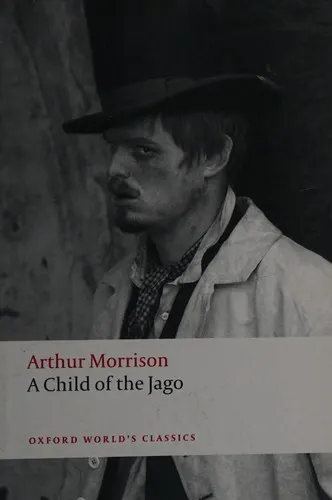
Morrison brings Gissing’s pitiless social vision into an even tighter compass: the Jago, a fictionalized East End rookery where young Dicky Perrott learns that ingenuity, loyalty, and courage are readily bent toward survival. Like Gissing, Morrison refuses to make deprivation picturesque or to treat virtue as a magical escape route.
The novel caused fierce controversy because readers doubted—or preferred to doubt—the world it depicted. Its brutal compression, sardonic humor, and flashes of thwarted tenderness have since made it a landmark of English naturalism. If The Nether World impressed you by making social injustice feel like an atmosphere everyone must breathe, A Child of the Jago is indispensable.
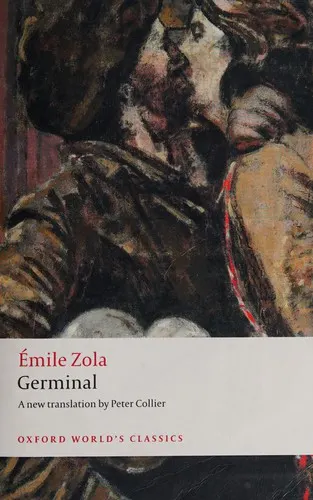
What Gissing does for Clerkenwell, Zola does on a vast, almost geological scale for a French mining community. Germinal begins with an unemployed mechanic arriving at a mine and steadily enlarges until wages, hunger, sex, family loyalty, political conviction, and collective anger become parts of one immense social organism.
Its greatness lies in the combination of documentary exactness and tragic momentum. Zola understands, as Gissing does, that poverty is not an improving moral trial: it exhausts judgment, turns affection into dependence, and makes every small decision costly. Yet Germinal also possesses a collective energy absent from Gissing’s more claustrophobic world. The acknowledged masterpiece of Zola’s Rougon-Macquart cycle, it remains one of the novels by which all later fiction about labor and class is measured.
Barry Hines moves the action to a twentieth-century Yorkshire mining town, but he shares Gissing’s deepest gift: seeing intelligence and sensitivity in a life that respectable society has already dismissed. Billy Casper is bullied at home, humiliated at school, and expected to disappear into the pit; training a kestrel gives him one realm in which patience, knowledge, and discipline matter.
Hines never converts that beauty into easy uplift. The spare dialect-rich prose makes institutions look casually cruel, while Billy’s attention to the bird becomes extraordinarily vivid and precise. Long cherished as a classic of British working-class fiction—and the source of Ken Loach’s beloved film Kes—the novel offers the same painful recognition as The Nether World: human possibility may survive neglect, but survival is not the same as rescue.