Author
Books like Eleanor Catton
3 books we recommend to Eleanor Catton readers, drawn from The Luminaries — each with the reason why.
If you loved The Luminaries
Young John Huffam’s uncertain inheritance draws him into a labyrinth of wills, debts, forged papers and rival families. Like Catton, Palliser makes information itself thrilling: every testimony may be partial, every coincidence engineered, every legal technicality a trapdoor.
Its elaborate fivefold construction rewards the same alert reading as The Luminaries, while its vision of money is equally unsentimental—wealth does not merely motivate people but distorts relationships and reality. This huge, compulsive debut has become a cult favorite among readers who want Victorian narrative abundance fused with modern structural cunning. Finishing it feels less like reaching the end than seeing an enormous hidden mechanism finally click into place.
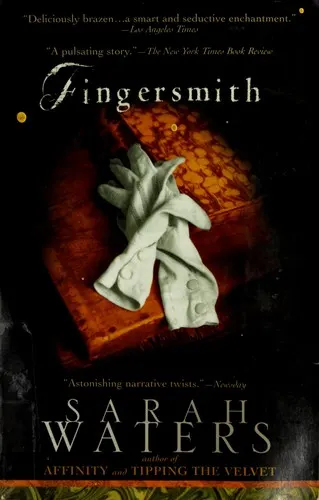
Sue Trinder, raised among thieves in London, agrees to help a charming con man defraud a secluded heiress. That premise opens into a Booker-shortlisted masterpiece of narrative misdirection, charged with desire, confinement and the unstable power of storytelling.
Waters understands, as Catton does, that a revelation should not merely surprise: it should force you to reconsider whose account you trusted and why. Her characters continually read, perform and misread one another, while the novel turns the machinery of the Victorian sensation novel into something psychologically sharper and more intimate. Few books make being deceived feel so exhilarating—or rereading feel so irresistible.
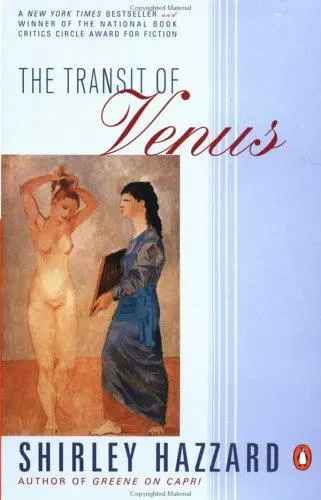
Caroline and Grace Bell, orphaned sisters from Australia, arrive in postwar England and enter lives shaped by love, ambition and social calculation. Hazzard’s scale is more concentrated than Catton’s, but her design is just as astronomical: apparently casual encounters exert gravitational force across decades, and early sentences quietly contain consequences the reader will understand only much later.
Winner of the National Book Critics Circle Award and now widely regarded as Hazzard’s masterpiece, it offers the rare pleasure of discovering that almost nothing in a novel was incidental. Its burnished, exact prose and profound interest in fate make it an ideal next step after The Luminaries—not another puzzle box, but a novel in which destiny hides inside grammar, timing and memory.