Author
Books like Doris Lessing
9 books we recommend to Doris Lessing readers, drawn from The Golden Notebook, The Fifth Child and The Good Terrorist — each with the reason why.
If you loved The Golden Notebook
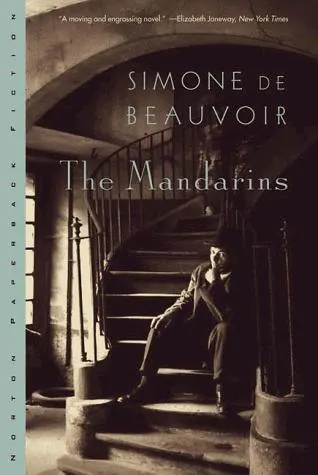
Like The Golden Notebook, this is a novel in which ideas have consequences—in friendships, beds, marriages, and careers. In postwar Paris, writers and activists argue over communism, political independence, and what literature can accomplish, while Anne, a psychoanalyst, observes the emotional wreckage beneath their principles. Beauvoir is merciless about the vanity mixed into commitment and the bad faith concealed inside love.
Winner of the Prix Goncourt, The Mandarins has the authority of a book written from within an intellectual world rather than researched from outside it. Yet its lasting force is intimate: Beauvoir understands that political disillusionment is also a crisis of identity. Readers who admired Lessing’s refusal to separate the woman, the lover, the writer, and the comrade will find an equally uncompromising intelligence here.
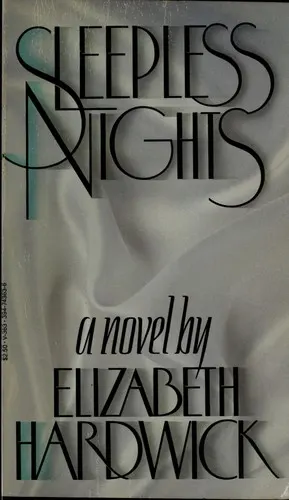
Hardwick’s slender, astonishing novel does with memory what Lessing does with Anna Wulf’s notebooks: breaks it into forms that reveal the falsity of a smooth, continuous life story. Letters, portraits, hotel rooms, overheard remarks, vanished lovers, and encounters with figures such as Billie Holiday flicker through a narrator’s recollections. The fragments accumulate not into a conventional plot but into a sensibility—elegant, lonely, alert, and unsparing.
Published in 1979 and increasingly recognized as a crucial precursor to contemporary autofiction, Sleepless Nights has inspired fierce devotion among writers. Its sentences possess the compression and afterglow of poetry, but its emotional intelligence is novelistic. If The Golden Notebook made fragmentation feel not ornamental but necessary, Hardwick’s book is indispensable.
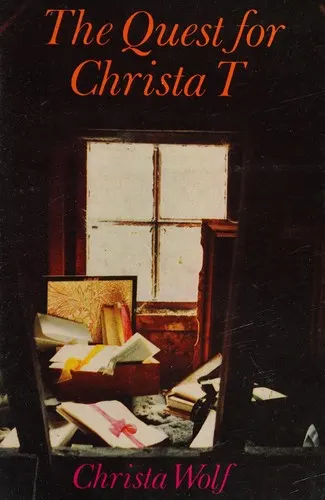
A narrator tries to recover the truth of a dead friend from letters, diaries, remembered scenes, and scraps of testimony. Christa resists every ready-made identity offered to her, including the socially useful roles demanded by the new East Germany. The novel’s broken structure therefore becomes an ethical act: no official narrative, whether political or personal, is allowed to contain her.
Wolf’s 1968 novel became a defining—and controversial—work of East German literature because its scrutiny of socialist conformity came from a writer seriously invested in socialism’s promise. That tension will be instantly recognizable to a reader of Lessing: commitment is neither mocked nor protected from judgment. Brief, searching, and quietly devastating, The Quest for Christa T. asks whether integrity can survive the pressure to become coherent, exemplary, and legible to others.
If you loved The Fifth Child
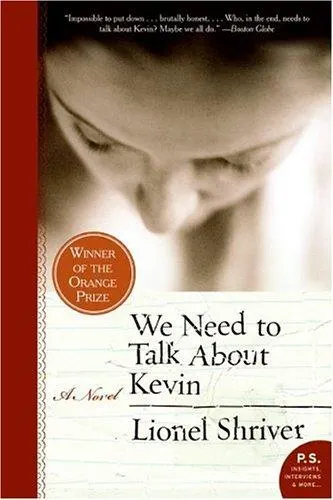
Like Lessing, Shriver enters the forbidden territory of maternal estrangement: what if a mother cannot love her child as she is expected to—and what if her misgivings are justified? Eva’s letters revisit her relationship with her son Kevin under the pressure of public blame, private guilt, and her own merciless intelligence.
Winner of the Orange Prize, this is not merely a novel about a frightening child. It is a ferocious argument about nature, nurture, and the stories families construct to survive themselves. Readers who admired Lessing’s refusal to supply comforting answers will find Shriver equally unsparing, but more expansive and psychologically obsessive.
Stead’s great family novel shows domestic life becoming a totalitarian state. Sam Pollit considers himself a joyous, enlightened father; his household experiences his charisma as an inescapable force. His language, games, ideals, and demands colonize every room, while his wife and children struggle for psychic space.
The kinship with The Fifth Child lies in Stead’s demolition of the happy-family myth and her acute understanding that love can become coercion. Long championed as a neglected masterpiece, the novel has inspired extraordinary devotion because its family feels not merely observed but captured alive. It is larger and more riotous than Lessing’s book, yet just as fearless about the cruelty concealed inside domestic ideals.
Alice lives above her father’s veterinary surgery in a house steeped in menace. Comyns gives her a voice of eerie simplicity: matter-of-fact, vulnerable, and so accustomed to brutality that the strangest events arrive almost quietly. As Alice discovers something uncanny in herself, the novel moves from grim realism into a dark, indelible fable.
Comyns shares Lessing’s gift for making horror feel both supernatural and socially ordinary. The real terror is not simply aberration, but the eagerness of respectable people to exploit, classify, or discard anyone who disrupts their world. A cult classic of English fiction, The Vet’s Daughter is brief enough to read in a sitting and peculiar enough to haunt the imagination for years.
If you loved The Good Terrorist
Conrad’s anarchists possess the same lethal mixture of vanity, grievance, theatrical rhetoric, and practical incompetence as Lessing’s revolutionaries. Adolf Verloc keeps a seedy Soho shop, associates with political extremists, and is pressed into committing an outrage; around him, ideology becomes inseparable from money, marriage, domestic dependency, and wounded pride.
This foundational political novel is far funnier—and more pitiless—than its canonical reputation suggests. Conrad understands, as Lessing does, that terrorism can emerge not from grandeur but from muddle, resentment, and people playing roles they barely comprehend. Its black comedy gradually acquires a terrible moral pressure. Anyone captivated by Lessing’s exposure of revolutionary posturing should read the novel that helped make such exposure possible.
Mike Frame is a comfortable suburban father with a secret: decades earlier, under another name, he belonged to Britain’s militant underground. When the past begins intruding on his present life, he revisits the communes, demonstrations, factional quarrels, erotic entanglements, and escalating commitments through which youthful conviction hardened into something more dangerous.
Kunzru is exceptionally good on the social texture of radicalism—its intoxicating solidarity, competitive purity, borrowed language, and opportunities for self-invention. Like Lessing, he neither ridicules the desire to change an unjust world nor excuses what people do in its name. The result is a tense, searching novel about memory and moral evasion: an ideal companion to The Good Terrorist because it asks what Alice might tell herself after thirty years of rewriting the story.
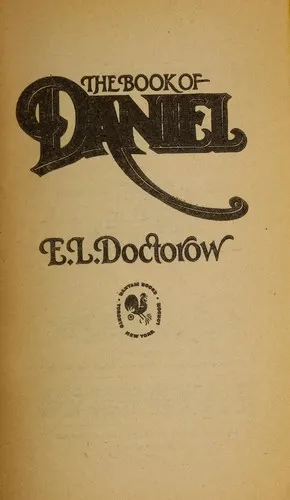
Doctorow approaches revolutionary politics through the damage it leaves inside a family. Daniel, the son of American radicals executed for espionage, tries to turn his parents’ story into an academic dissertation; instead, memory keeps breaking the form apart. He addresses the reader, retreats into irony, lashes out, and circles the question of whether political martyrdom can coexist with parental failure.
Widely regarded as one of Doctorow’s major achievements, the novel has Lessing’s rare ability to honor political anger while scrutinizing the egotism, cruelty, and emotional displacement that may accompany it. Its fractured voice makes ideology feel lived rather than debated: history enters kitchens, marriages, childhoods, and bodies. If The Good Terrorist left you wanting fiction that refuses both romantic celebration and complacent condemnation, The Book of Daniel is indispensable.