Author
Books like Christopher Priest
7 books we recommend to Christopher Priest readers, drawn from The Separation, The Affirmation and The Prestige — each with the reason why.
If you loved The Separation
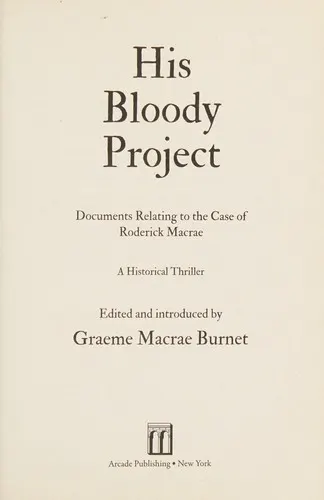
A young Highland crofter confesses to a brutal crime, but Burnet surrounds his account with witness statements, medical reports, and competing interpretations. Every document seems authoritative until another subtly alters its meaning.
Shortlisted for the Booker Prize, this is pseudo-history executed with extraordinary conviction. Like The Separation, it makes reading an act of judgment: facts are plentiful, yet truth keeps retreating behind personality, prejudice, and narrative form. Its tension comes not from discovering what happened, but from realizing how many incompatible things “what happened” can mean.
An elderly man wanders through his memories: childhood episodes, family stories, local scandals, embedded tales. The voice is calm and companionable, but tiny omissions and strange transitions gradually suggest that the book you are reading may not be the book you thought you began.
Peace is one of Wolfe’s most admired standalone novels and a touchstone for readers who love fiction that transforms on rereading. Its affinities with Priest are profound: divided identity, concealed architecture, and the eerie coexistence of mutually troubling explanations. Few novels reward attention so lavishly—or make overlooked details feel so dangerous.
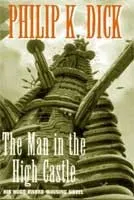
Its Axis-ruled America is not the real reason to read it after The Separation. The true kinship lies in Dick’s obsession with authenticity: counterfeit objects, compromised selves, chance decisions, and a forbidden novel describing another outcome to the war. Alternative history becomes a way of asking whether reality itself can feel fraudulent.
The Hugo-winning novel helped define the genre, yet it remains stranger and less settled than many of its descendants. Dick refuses the comfort of a neatly explained timeline; the ground shifts spiritually and psychologically as well as historically. If Priest’s unresolved realities stayed with you, this is an essential predecessor.
If you loved The Affirmation
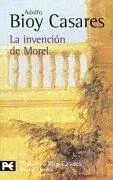
A fugitive reaches an apparently deserted island, only to encounter people who behave as though he does not exist. From that elegant opening, Bioy Casares makes perception itself precarious: repetition may be evidence, madness, or the clue to another order of reality.
Like The Affirmation, this short novel binds love, self-invention, representation, and immortality into one metaphysical knot. Its revelations do not merely solve mysteries; they alter the meaning of what you have already read. Borges famously called its plot perfect, and its precision is genuinely astonishing. Anyone susceptible to Priest’s clean prose and quietly devastating ontological traps should regard this as essential.
Harrison writes about people living in the aftermath of something they cannot adequately explain. From its opening pages, ordinary life feels damaged by an absent event, while the possibility of another, more meaningful realm exerts a dangerous attraction.
The kinship with The Affirmation lies in the emotional function of imaginary worlds. Fantasy here is neither escapism nor a puzzle box alone: it may be revelation, delusion, shared story, or a defense against unbearable disappointment. Harrison—one of modern speculative fiction’s most exacting stylists—keeps those possibilities alive in sentences of bruising beauty. Few novels understand so well that an invented paradise can expose the truth about its inventor even when the paradise itself is false.
If you loved The Prestige

Wolfe offers the same intoxicating sense that every sentence may be evidence. Across three interlocking narratives, questions of cloning, colonial history, memory, and identity become inseparable—and the reader must determine which voices, if any, deserve belief.
Like Priest, Wolfe hides his machinery in plain sight. His compact, fiercely admired novel rewards rereading because its revelations arise not from arbitrary twists but from patterns you failed to recognize. If The Prestige made you want to turn immediately back to page one, this is essential.

Sue Trinder, raised among thieves in Victorian London, is recruited into an elaborate fraud involving a secluded heiress. That premise becomes a virtuoso performance about intimacy, deception, and the dangerous confidence of believing you understand someone else’s role.
Waters combines the precision of a master illusionist with extraordinary emotional force: each carefully managed disclosure changes not only what the reader knows, but whom the reader trusts and loves. Shortlisted for the Booker Prize and widely regarded as Waters’s signature achievement, Fingersmith makes narrative engineering feel thrillingly human.