Author
Books like Ayn Rand
6 books we recommend to Ayn Rand readers, drawn from Atlas Shrugged and The Fountainhead — each with the reason why.
If you loved Atlas Shrugged
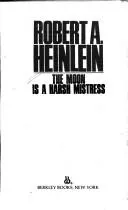
Manny, a politically indifferent computer technician, discovers that Luna’s central computer has become self-aware just as the lunar colony approaches revolt. What follows is a wonderfully concrete collision of engineering, economics and liberty: revolution means calculating food supplies, communication delays and the trajectory of rocks, not merely delivering speeches.
Like Atlas Shrugged, Heinlein’s Hugo winner makes competence thrilling and treats freedom as something intelligent people must build. Its famous maxim, “There ain’t no such thing as a free lunch,” became a libertarian watchword—but the novel endures because its arguments are embedded in wit, friendship and ingenious problem-solving. It is the rare political novel that feels like a machine accelerating under your hands.
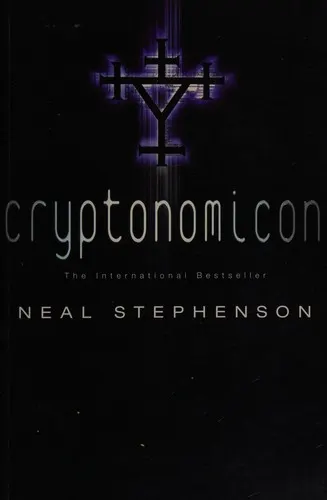
Stephenson braids Second World War codebreaking with a contemporary attempt to create a secure data haven. His heroes are mathematicians, programmers, soldiers and entrepreneurs—the kinds of people who notice how systems actually work while governments, corporations and respectable opinion obscure the truth.
The kinship with Atlas Shrugged lies in its exhilaration before intelligence made useful. Encryption, currencies, logistics and business negotiations become scenes of intellectual combat. Yet Cryptonomicon is funnier, stranger and more morally untidy than Rand: a huge, swaggering novel with the obsessive detail of a technical manual and the momentum of an adventure story. A Locus Award winner and a touchstone of modern technological fiction, it inspires the particular devotion reserved for books that seem to rewire their readers’ brains.
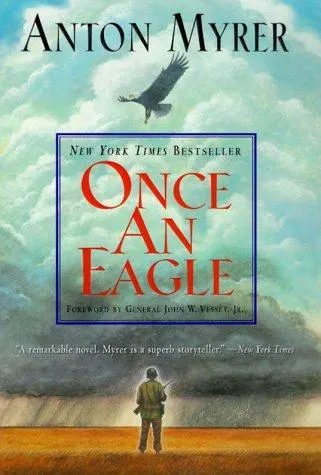
Sam Damon begins as an ordinary young man who enlists and discovers an extraordinary capacity for command. Opposite him stands Courtney Massengale, equally ambitious but gifted chiefly at pleasing institutions and converting appearances into advancement. Their long rivalry turns military life into a searching test of earned authority versus borrowed prestige.
An admirer of Rand will recognize her deepest moral contrast: the independent producer against the second-hander, the person devoted to doing the work against the person devoted to being seen receiving credit. But Myrer complicates heroic individualism by asking what excellence owes to other people. Long treated within the American military as more than entertainment and repeatedly placed on professional reading lists, Once an Eagle has become a novel officers argue with, quote and press on younger colleagues. Its scale and conviction make it feel less like a career story than a life lived at full length.
If you loved The Fountainhead
Martin Eden has Roark’s terrifying capacity to treat other people’s disbelief as irrelevant. A working-class sailor resolves to educate himself and become a writer, attacking books and language with the physical ferocity he once brought to survival. London makes self-creation exhilarating: Martin’s discipline, pride, and refusal of condescension generate the same voltage as Roark standing before a hostile room.
Yet this is no imitation of Rand’s heroism. London subjects radical individualism to harsher psychological and social scrutiny, asking what happens when achievement, recognition, and self-worth become entangled. Often regarded as London’s most autobiographical novel, it has inspired generations of fiercely devoted readers. Anyone stirred by Roark’s refusal to ask permission should encounter Martin Eden’s equally unforgettable rebellion.
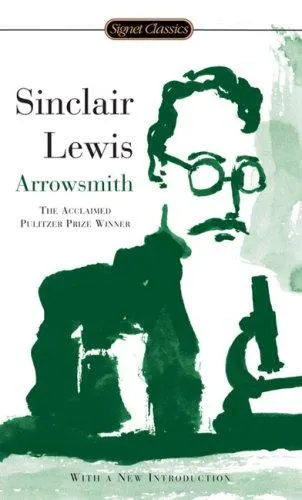
If the most compelling parts of The Fountainhead are its battles over professional integrity, Arrowsmith is indispensable. Martin Arrowsmith enters medicine wanting exact knowledge rather than prestige, fashionable theories, or profitable reassurance. His struggle is not simply against villains but against institutions that reward speed, publicity, and agreeable conclusions over difficult truth.
Lewis brings his celebrated satirical eye to hospitals, universities, philanthropy, and research, while the scientist Paul de Kruif helped give the laboratory world unusual credibility. The novel was awarded the 1926 Pulitzer Prize, which Lewis refused. Its moral question could have been designed for a Rand reader: what is excellent work worth when compromise offers comfort and acclaim? Few novels make intellectual independence feel so concrete—or so costly.
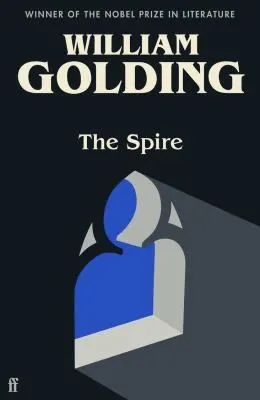
Golding takes the dream of monumental architecture and turns it into a feverish examination of creative will. Dean Jocelin is determined to raise an immense spire above his cathedral, despite warnings that the structure beneath it may be unable to bear the weight. Stone, timber, mud, calculation, faith, and human bodies all resist his vision.
Where Rand gives architectural genius the clarity of sunlight, Golding fills it with shadows. Jocelin’s certainty may be inspiration, vanity, revelation, or madness, and the novel never reduces that ambiguity to a tidy verdict. Written by the future Nobel laureate in compressed, hallucinatory prose, The Spire is a magnificent dark counterpart to The Fountainhead: another novel in which a building becomes the visible form of one person’s soul—and everyone nearby must live beneath it.