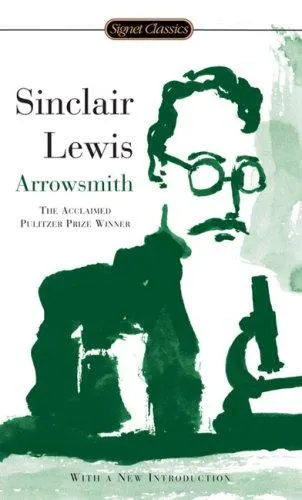
Books like Arrowsmith
You were likely drawn not only to Martin Arrowsmith’s scientific calling, but to Lewis’s harder question: what becomes of a calling when careers, money, love, and institutions begin making claims on it? These three novels pursue that question with equal force.
If you liked Arrowsmith, you’ll love these
Not lookalikes — kindred books. Each one shares something essential with Arrowsmith, and we tell you exactly what.
Tertius Lydgate arrives in Middlemarch with ambitious medical ideas and discovers that knowledge alone cannot defeat money, reputation, local politics, and his own blind spots. Like Lewis, Eliot respects intellectual aspiration without idealizing the aspiring intellectual.
But Middlemarch offers more than a precursor to Martin Arrowsmith. Through Lydgate and the ardent Dorothea Brooke, it examines vocation itself: why gifted people misread their desires, how marriage can redirect a life, and how social pressures become private choices. Eliot’s wit is gentler than Lewis’s satire, but her psychological insight is deeper and even less forgiving. Regularly acclaimed as one of the supreme English novels, Middlemarch is indispensable for anyone haunted by the distance between the work one meant to do and the life one actually makes.
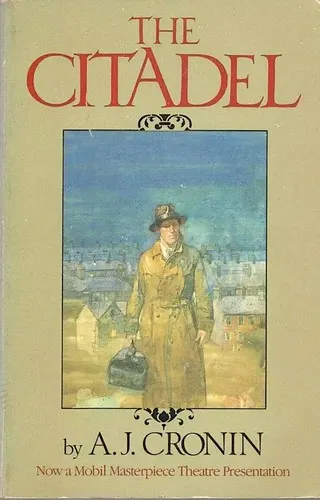
Andrew Manson begins as a young doctor in a Welsh mining community, full of energy and impatient with stale habits. Cronin makes his daily encounters with bad medicine, poverty, bureaucracy, and professional complacency intensely dramatic because every practical decision tests what kind of physician—and person—he intends to become.
What an Arrowsmith reader will recognize is the anger beneath the storytelling: both novels ask why institutions ostensibly devoted to healing so often reward conformity, prestige, and profit instead. Yet The Citadel is warmer and more propulsive than Lewis’s book, with the force of a moral page-turner. Its attack on British medical inequality entered the public conversation that preceded the National Health Service. Few novels have made professional integrity feel so urgent or shown so vividly why reform requires more than good intentions.

Intuition brings Arrowsmith’s central conflict into the modern research laboratory. In a prestigious cancer institute, a struggling postdoctoral researcher suddenly obtains exciting results; colleagues must decide whether they are witnessing a breakthrough, an error, or something less innocent. Goodman understands that science is performed not by disembodied reason but by tired, ambitious, loyal, jealous people competing for grants, credit, and certainty.
Where Lewis uses broad satire and the solitary ideal of the pure investigator, Goodman gives us team science, ambiguous evidence, and motives that cannot be cleanly separated. Her great subject is how people behave when truth matters enormously but remains incomplete. The novel’s unusually convincing laboratory life makes every meeting, data point, and shift of allegiance consequential. It is the contemporary companion Arrowsmith deserves: quieter, more intimate, and devastatingly alert to the compromises hidden inside sincere conviction.