Author
Books like Arnold Bennett
6 books we recommend to Arnold Bennett readers, drawn from The Old Wives' Tale and The Card — each with the reason why.
If you loved The Old Wives' Tale
Richardson’s great Australian trilogy has Bennett’s rare combination of panoramic reach and intimate, unsentimental observation. It begins amid the raw commercial bustle of the goldfields, where Richard Mahony keeps a store and courts the clear-eyed Polly; from those practical beginnings, Richardson builds a searching study of ambition, marriage, money, and character under the pressure of passing years.
Like Bennett, she understands that temperament becomes destiny by increments. Her physical world is solid—rooms, clothes, businesses, social embarrassments—but her deepest subject is how two people experience the same life differently. Long regarded as a masterpiece of Australian fiction, this is the natural next book for anyone who wants another vast domestic chronicle in which affection never clouds judgment.
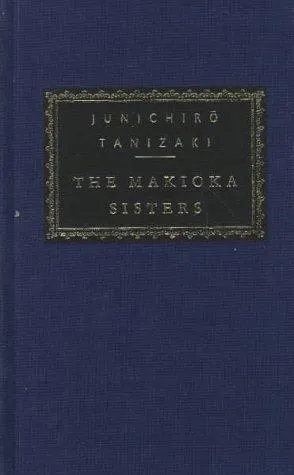
Tanizaki makes family routine inexhaustibly absorbing. Four sisters, marriage negotiations, household rivalries, illnesses, clothes, letters, and seasonal observances accumulate into a portrait of a family trying to preserve its idea of itself. As in Bennett, the women are sharply individuated, and the novel refuses to reduce any of them to a type: prudence, vanity, loyalty, and rebellion coexist within the same person.
Its beauty lies in repetition subtly altered by time. Cherry blossoms return; ceremonies recur; yet the family’s world is quietly shifting beneath them. Often considered Tanizaki’s masterpiece, The Makioka Sisters offers the same deep pleasure as The Old Wives’ Tale: immersion so complete that domestic details acquire the gravity of history.
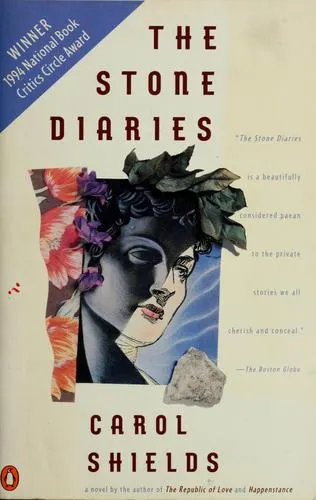
The Stone Diaries takes the whole span of an unexceptional woman’s life and asks how much of any life can truly be known. Daisy Goodwill’s story begins with an extraordinary account of her birth, then unfolds through memories, photographs, letters, and other people’s versions of her—forms that sometimes illuminate her and sometimes obscure her completely.
Shields is more formally playful than Bennett, but she shares his tenderness toward ordinary existence and his refusal to sentimentalize age, disappointment, or domestic work. The novel’s Pulitzer Prize feels especially fitting: it demonstrated, with wit and quiet audacity, that a life easily overlooked can sustain major art. Its final effect is both intimate and immense.
If you loved The Card
Lucia is Denry’s magnificent social counterpart: a tireless self-inventor who treats village prestige as an empire to be conquered. Music, culture, parties, and conversational alliances become instruments in campaigns conducted with sublime confidence. Benson understands, as Bennett does, that small communities can contain ambitions of Napoleonic scale.
Yet the comedy is affectionate rather than cruel. Lucia’s pretensions are transparent, but her energy gives the book its sparkle. This opening volume of Benson’s enduringly beloved Mapp and Lucia sequence introduces a comic world so complete that generations of readers have settled into it for all six books. Missing Lucia would mean missing one of English fiction’s great performers.
Mr Polly initially seems Denry’s opposite: an unhappily married shopkeeper oppressed by business, boredom, and his own sense of failure. But Wells gives him the same essential resource Bennett gives Denry—the capacity to turn ordinary life into an adventure through sheer improvisation.
The novel’s comedy springs from shop signs, money worries, romantic notions, and Mr Polly’s gloriously mangled vocabulary, while its deeper pleasure lies in Wells’s refusal to believe that a modest life must remain a defeated one. Often regarded as one of Wells’s finest comic novels, it reveals the warmth and verbal playfulness obscured by his reputation as a prophet of science fiction. Anyone who loves Bennett’s belief in audacity as a form of intelligence should read it.
For the pure exhilaration of following an incorrigible man who converts every obstacle into another opportunity, meet Gulley Jimson. An ageing painter with no money, few scruples, and absolute faith in his vocation, he narrates his own misadventures in a voice bursting with jokes, appetite, biblical thunder, and cunning.
Cary’s comedy is rougher and more anarchic than Bennett’s, but Jimson possesses Denry’s gift for making the world yield to nerve. He is impossible, exasperating, and intensely alive; beneath the farce lies a serious vision of creative compulsion. Widely regarded as Cary’s masterpiece—and later memorably adapted for film by Alec Guinness—the novel offers one of literature’s most irresistible rogues. Once Jimson begins talking, not reading on becomes very difficult.