Author
Books like Amitav Ghosh
9 books we recommend to Amitav Ghosh readers, drawn from The Shadow Lines, Sea of Poppies and The Hungry Tide — each with the reason why.
If you loved The Shadow Lines

In an aging Old Delhi house, two sisters revisit a childhood whose grievances have hardened into family mythology. Desai moves through time as memory does: circling, correcting, and suddenly illuminating moments that once seemed trivial. Partition remains largely beyond the walls, yet its logic of separation enters every room.
Shortlisted for the Booker Prize, this is a quieter novel than The Shadow Lines but an equally exact one. Desai makes a family home hold an entire historical consciousness—and reveals reconciliation not as forgetting, but as learning to see the past whole.
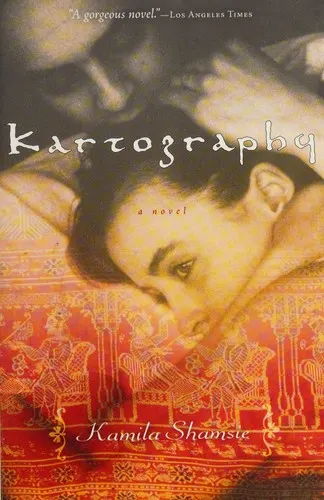
Raheen and Karim grow up inseparable in Karachi, surrounded by parents whose romantic history is entangled with the violence of 1971. Shamsie turns maps, changed names, jokes, and family evasions into evidence: every intimate bond carries a disputed version of the city’s past.
What makes Kartography irresistible is its combination of political intelligence and youthful velocity. Its lovers and friends are witty, infuriating, and alive; history matters because it has entered their vocabulary and damaged their capacity for trust. Few novels so vividly show how inherited silences become emotional borders.

A chance meeting in a railway station begins a decades-long sequence of conversations with an architectural historian who seems haunted by absences he cannot name. Sebald’s long, hypnotic sentences drift through stations, fortresses, photographs, and half-recovered memories until buildings themselves appear to remember what nations suppress.
Winner of the National Book Critics Circle Award and now regarded as a landmark of modern fiction, Austerlitz offers the deepest formal kinship here: history arrives indirectly, through digression and belated recognition. Like Ghosh, Sebald abolishes the boundary between private memory and public catastrophe. The result is strange, patient, and devastating.
If you loved Sea of Poppies
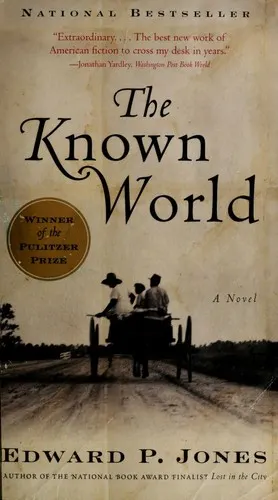
Jones builds a whole society around the unsettling historical fact of Black slaveholders in antebellum Virginia. Like Ghosh, he refuses to reduce history to a contest between symbolic heroes and villains: every person has appetites, evasions, loyalties, and blind spots, while the institution surrounding them corrupts even ordinary gestures.
The novel’s omniscient voice moves freely among lives and across time, making minor figures suddenly central and revealing how an entire world is held together by law, money, rumor, and violence. Winner of the Pulitzer Prize, The Known World is one of the rare historical novels whose moral complexity matches its imaginative abundance. If Ghosh made you feel history operating through a crowd of unforgettable individuals, Jones’s masterpiece is indispensable.
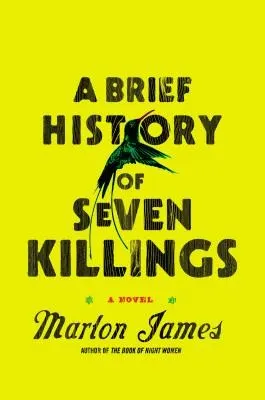
For the reader who loved Ghosh’s linguistic daring, this Booker Prize winner offers a thrilling new chorus. James tells his story through a multitude of competing voices—intimate, boastful, frightened, calculating—rendered in prose that shifts its rhythm and vocabulary with every speaker. No neutral authority smooths them into a single official account.
The novel begins around the attempted assassination of Bob Marley in 1976, but its true subject is how power travels: through neighborhoods, political factions, intelligence agencies, music, money, and fear. It demands attention, then rewards it with the sensation of hearing a society speak all at once. Few contemporary novels equal its velocity or vocal range.

Catton’s immense pleasure lies in orchestration. In a New Zealand gold-rush town, a secret gathering draws the reader into a web of vanished men, disputed fortunes, concealed motives, and intersecting testimony. The cast is large, but each new perspective alters the shape of what came before; reading becomes an act of navigation much like following the shifting alliances aboard the Ibis.
Beneath the elaborate mystery is a sharp understanding of colonial capitalism: how quickly value can be manufactured, stolen, transported, or mistaken for virtue. Catton won the Booker Prize at twenty-eight for this audaciously structured novel, and its intricacy never excludes warmth, wit, or human longing. Anyone who relished the teeming architecture of Sea of Poppies should experience the satisfaction of watching The Luminaries lock into place.
If you loved The Hungry Tide
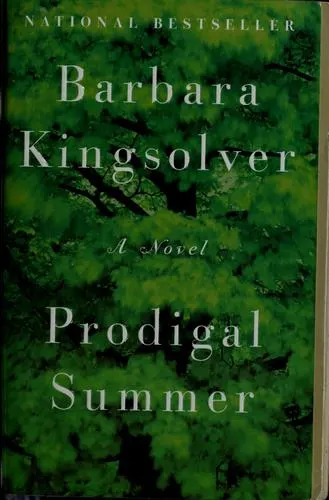
Kingsolver makes ecology feel intimate: predators, farms, insects, and human appetites all belong to the same intricate system. Across three interwoven stories in Appalachia, scientific disputes become personal conflicts, while attraction repeatedly unsettles the characters’ confident ideas about nature and themselves.
Like Ghosh, Kingsolver can explain an ecosystem without draining it of mystery. Her landscape is sensuous, argumentative, and alive with consequences. If you loved the way Piya’s science and Fokir’s instinct offered different forms of knowledge, Prodigal Summer’s competing visions of stewardship will feel irresistible.
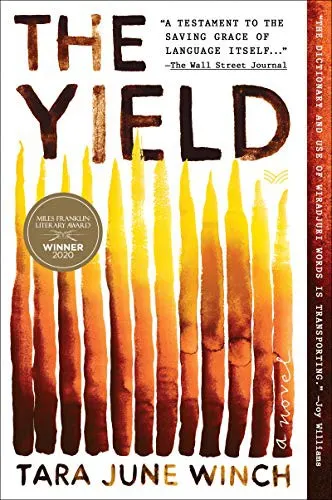
Winner of Australia’s Miles Franklin Award, The Yield is built from three voices: a young Aboriginal woman returning home, her grandfather’s dictionary of the Wiradjuri language, and an old missionary’s testimony. Together they uncover a history that official records have distorted or erased.
Readers who treasured Nirmal’s notebook—and The Hungry Tide’s conviction that language can preserve lives excluded from history—will recognize the kinship immediately. Yet Winch’s form is wholly her own: every recovered word becomes a piece of country, memory, and resistance. The result is both an absorbing family novel and a powerful demonstration that naming a world can help save it.

A silent elderly man arrives in England seeking asylum; another exile, linked to the history he carries, is asked to interpret for him. From that opening, Gurnah constructs a subtle duel of memory in which hospitality, betrayal, migration, and storytelling refuse to settle into a single authoritative account.
This Booker-longlisted novel by the Nobel laureate will especially reward anyone fascinated by the failures of translation in The Hungry Tide. Gurnah understands that people separated by language, class, and historical injury may still become responsible for hearing one another. His restrained prose gradually reveals enormous emotional depths, making By the Sea one of those novels whose quietness only increases its hold on you.