Author
Books like Aminatta Forna
8 books we recommend to Aminatta Forna readers, drawn from The Memory of Love, The Hired Man and Ancestor Stones — each with the reason why.
If you loved The Memory of Love
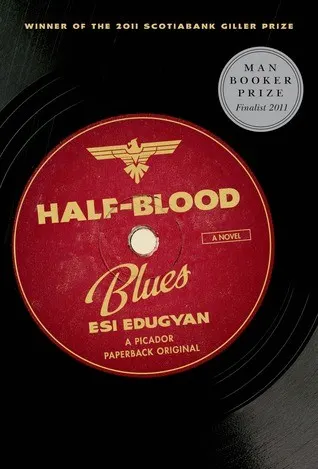
Sid Griffiths, an elderly Black jazz musician, has spent decades living with what happened to his brilliant young bandmate in Nazi-occupied Paris. His account moves between the musicians’ perilous wartime existence and a late return to Europe, gradually exposing the jealousy, cowardice, loyalty, and self-deception embedded in his memories.
A reader who admired Elias Cole’s seductive, compromised testimony will recognize Edugyan’s achievement: confession becomes suspense. Like Forna, she understands that betrayal rarely feels like betrayal to the person committing it; it is assembled from fear, desire, and small acts of moral surrender. Yet the novel also has the volatile energy of jazz—competitive, improvisatory, hungry for freedom. Winner of Canada’s Giller Prize and shortlisted for the Booker, it is the rare historical novel whose deepest drama lies not in what history did to its characters, but in what they did to one another.
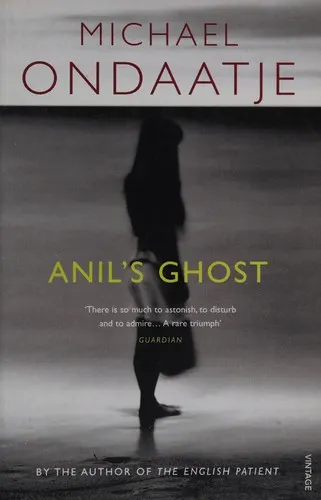
Anil Tissera, a forensic anthropologist working abroad, returns to Sri Lanka to investigate evidence of political killings. Beside her stands Sarath, an archaeologist whose loyalties and silences are difficult to read; around them are doctors, artists, and damaged families trying to preserve human meaning amid terror.
The kinship with The Memory of Love lies in the attention paid to skilled hands. Forna’s Kai operates on bodies while confronting injuries that surgery cannot mend; Ondaatje’s characters similarly examine bones, reconstruct faces, and tend wounds as if exact physical care might resist the erasure of a life. His luminous, fragmentary prose refuses the consolations of a conventional thriller: uncertainty is not a puzzle-box trick but the moral atmosphere of political violence. This Giller Prize–winning novel is among Ondaatje’s finest works, intimate and grave, with images that remain lodged in the mind long after its mysteries recede.
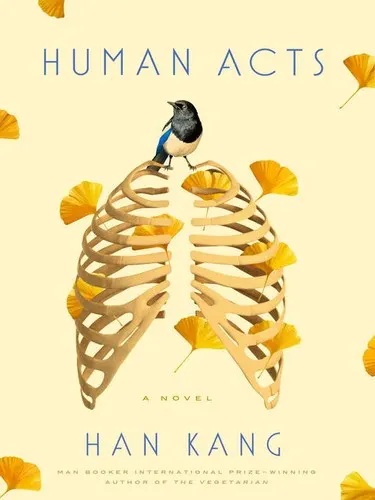
In the aftermath of the 1980 Gwangju uprising, a boy searches among the bodies gathered in a public building. From that harrowing beginning, the novel passes through multiple voices, tracing how state violence persists in flesh, language, shame, and the lives of survivors.
Where Forna approaches collective trauma through overlapping desires and guarded recollections, Han strips the question to its nerve: what does one human being owe another when brutality has made ordinary decency dangerous? Her prose is controlled rather than sensational, and that restraint makes every gesture of care—a hand laid on a body, a name remembered—feel momentous. Human Acts helped establish the 2024 Nobel laureate as one of the essential novelists of historical memory. It is shorter and starker than The Memory of Love, but it shares its deepest conviction: the dead remain present not as abstractions, but as claims upon the living.
If you loved The Hired Man
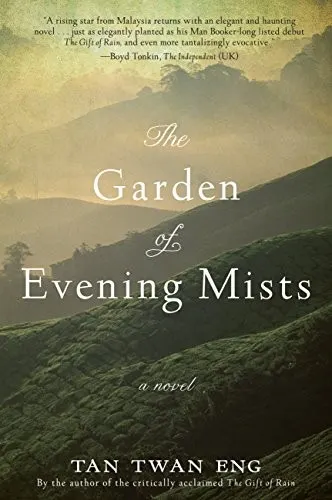
Here, as in The Hired Man, transforming a piece of land becomes inseparable from confronting what happened on it. In postwar Malaya, Yun Ling Teoh—scarred by her imprisonment in a Japanese camp—asks an enigmatic former gardener to the emperor of Japan to create a memorial garden. Their collaboration places beauty, resentment, discipline, and historical guilt in continual tension.
Tan makes gardening feel like an art of memory: every stone and sightline conceals intention, just as Forna’s Croatian house and countryside carry meanings invisible to visitors. The novel is more sensuous and ceremonious than Forna’s, but equally alert to the danger of turning atrocity into a comforting story. Winner of the Man Asian Literary Prize and shortlisted for the Booker, it has the rare authority of a novel whose beauty cannot be separated from its moral severity.
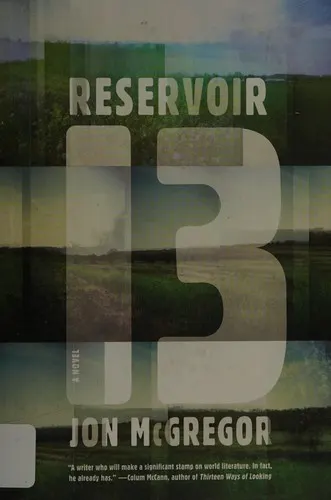
A thirteen-year-old girl disappears while visiting an English village. McGregor then refuses the conventional satisfactions of a thriller: the seasons continue, animals breed and die, marriages alter, children grow up, and the village absorbs the disappearance without ever escaping it.
That makes Reservoir 13 an unexpectedly close companion to The Hired Man. Both novels show how a community’s public routines coexist with private knowledge, and how landscape can seem indifferent while retaining every human trace. McGregor’s patient, recurring sentences create an accumulation of tiny details until ordinary life itself becomes suspenseful. The Costa Novel Award winner is formally daring but intensely readable—a hypnotic book that changes your sense of what a community is and what it means for a place to remember.
If you loved Ancestor Stones
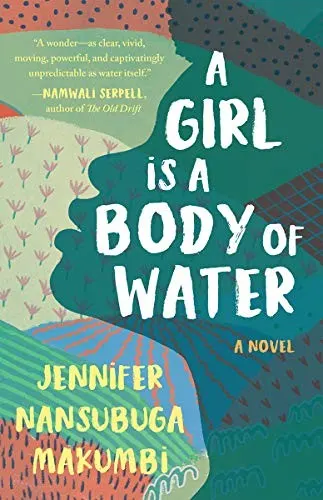
Kirabo, raised by grandparents in 1970s Uganda, begins searching for the mother she has never known. That search opens into a wonderfully unruly female world of rival explanations, buried grievances, folklore, desire and inherited power.
Like Ancestor Stones, Makumbi’s novel distrusts any single, tidy account of the past. Women tell stories that contradict one another; gossip becomes an archive; bawdy comedy sits beside cruelty. Makumbi, one of Uganda’s most admired contemporary novelists, writes with enormous warmth and narrative abundance. This is the rare family epic in which discovering where you come from also means discovering how thoroughly women’s histories have been edited—and how gloriously they can be reclaimed.
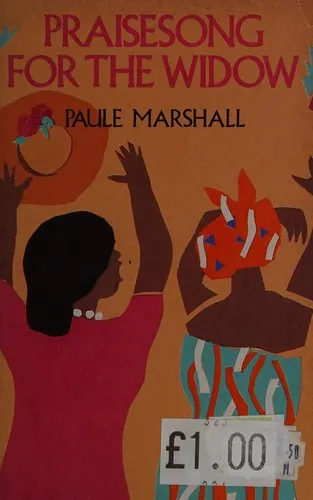
Avey Johnson is an affluent, respectable widow on a Caribbean cruise when an inexplicable inner disturbance pulls her away from the life she has carefully constructed. Marshall makes that unease feel physical: memory rises through music, gesture, appetite and the body before Avey can put it into words.
Readers who loved the ancestral presence in Ancestor Stones will recognize Marshall’s conviction that the dead are not merely remembered; they exert pressure on the living. Yet this American Book Award winner is no pious tale of roots. It is psychologically exact about assimilation, lost intimacy and the cost of treating inheritance as embarrassment. Its closing emotional force has made it a cherished classic of Black diasporic literature.
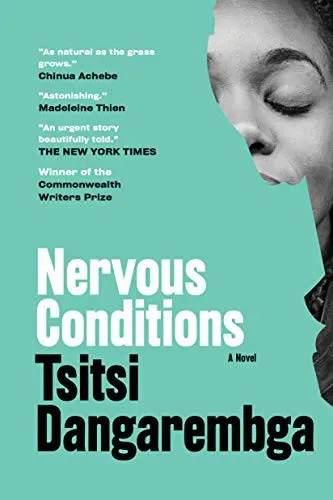
Tambu recalls the childhood in colonial Rhodesia that begins, with startling frankness, around her brother’s death and her hunger for education. Her voice is controlled, observant and quietly incendiary: she can see the injustice around her, but not always the forms it has taken inside her own ambitions.
What links Dangarembga to Forna is the intelligence with which both portray women negotiating systems that cannot be reduced to “tradition” versus “modernity.” Tambu, her cousin Nyasha, her mother, Maiguru and Lucia each understand freedom differently, and their conflicts give the novel its bite. The first English-language novel by a Black Zimbabwean woman, it won the Commonwealth Writers’ Prize for Africa and has become a modern classic. Few novels show so precisely how history enters a household, a meal, a girl’s education—and finally her mind.