Author
Books like Agatha Christie
9 books we recommend to Agatha Christie readers, drawn from And Then There Were None, Murder on the Orient Express, Towards Zero and Five Little Pigs — each with the reason why.
If you loved And Then There Were None
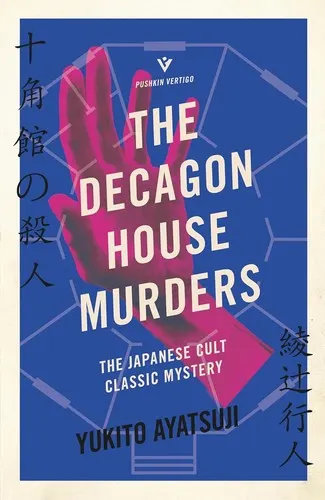
Seven university mystery enthusiasts visit an isolated island whose previous occupants died violently. Ayatsuji openly salutes Christie, but this is no imitation: he turns the reader’s familiarity with classic detective fiction into a weapon, planting assumptions as carefully as clues.
Published in 1987, the novel helped launch Japan’s enormously influential shin-honkaku revival of intricate, fair-play mysteries. Its architecture is immaculate, its atmosphere steadily curdles, and its most famous revelation lands with breathtaking economy. For anyone who wants another mystery that feels like an elegant machine designed to trap both characters and reader, this is indispensable.
A man wakes in a forest without his memories and learns that he must solve a murder at a decaying country estate—but each day he will experience events through a different guest’s body. The result is a grand, feverish puzzle in which personality itself becomes evidence.
Like Christie, Turton understands the pleasure of a strictly bounded game: a fixed cast, a limited span of time, and clues whose significance changes whenever your viewpoint shifts. Yet his Costa First Novel Award winner is more baroque and nightmarish, combining country-house detection with the disorientation of a bad dream. Its sheer clockwork audacity makes finishing it feel like escaping an ingenious maze.
When a celebrated novelist is found dead, Detective Kyoichiro Kaga must sift through testimony, manuscripts, and competing versions of the victim’s life. Higashino’s real subject is not merely what happened but how a convincing story can make guilt look like innocence—and malice like truth.
This is the recommendation for readers who loved Christie’s ruthless control of perspective. Higashino repeatedly gives you a satisfying explanation, then exposes the unnoticed premise holding it together. One of Japan’s most acclaimed crime writers, he writes with cool, almost invisible precision; beneath that restraint lies a vicious understanding of vanity and resentment. Few novels demonstrate so elegantly that solving a murder may be easier than understanding it.
If you loved Murder on the Orient Express
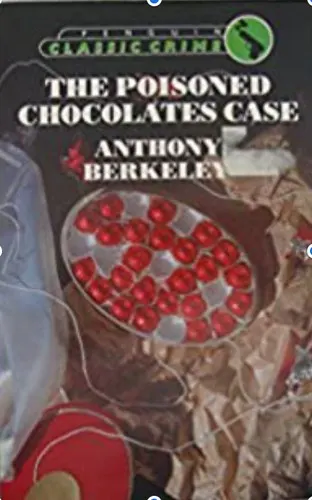
A group of gifted amateur detectives investigates a poisoned box of chocolates, each proposing a different solution from the same evidence. Berkeley turns deduction into intellectual combat: every explanation feels definitive until another observer rearranges the facts more persuasively.
Like Christie, he understands that a great reveal must be both surprising and retrospectively inevitable. This witty, merciless 1929 classic—written by a founder of the Detection Club—remains one of the Golden Age’s boldest demonstrations of how easily logic can become misdirection.
Higashino reveals the central crime almost immediately: a desperate woman and her daughter receive help from their brilliant, intensely private mathematician neighbor. The suspense lies not in identifying the culprit but in discovering the true design of the deception as a physicist matches wits with the man who constructed it.
The logic is beautifully exact, yet the book’s real force is emotional and moral. As in Christie’s finest work, solving the case does not simplify it; knowledge makes judgment harder. Winner of Japan’s prestigious Naoki Prize, this is a modern classic whose final implications linger long after its ingenious machinery has clicked into place.
If you loved Towards Zero
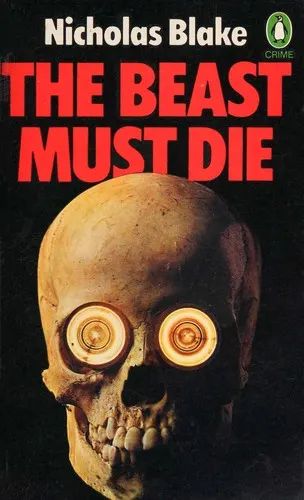
It opens with a chilling declaration of intent from a bereaved father determined to identify and kill the driver who struck his son. Like Towards Zero, it asks not merely who committed a crime but how grief, hatred and opportunity can converge upon one fatal point.
Blake—better known as poet Cecil Day-Lewis—constructs the book with Christie-like control, yet gives its emotions unusual weight. The diary form creates dangerous intimacy, while detective Nigel Strangeways must distinguish planned guilt from actual guilt. Often considered Blake’s finest mystery, and memorably filmed by Claude Chabrol, it is both an ingenious puzzle and a fierce study of vengeance.
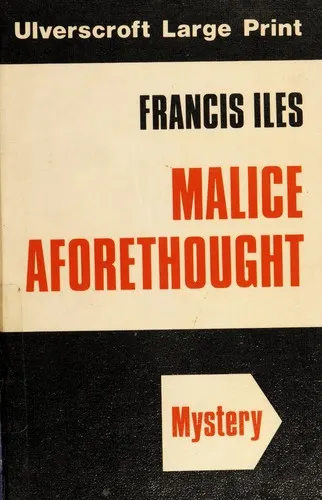
The first sentence calmly reveals that Dr Bickleigh has decided to murder his wife. That apparent surrender of mystery is the novel’s masterstroke: suspense comes from watching private resentments harden into intention while wondering what vanity, lust and self-deception will upset the design.
A lover of Towards Zero will recognize the fascination with murder as a destination reached through character. Iles observes a respectable community with poisonous wit, making every social humiliation and marital cruelty consequential. This 1931 landmark helped establish the psychological crime novel, and its cool, intimate menace still feels startlingly modern.
If you loved Five Little Pigs
Confined to a hospital bed, Inspector Alan Grant becomes fascinated by a portrait of Richard III and begins reinvestigating the centuries-old case against him. With no crime scene to search, he must weigh documents, reputations, motives, and the distortions created by repetition.
Readers who loved Poirot reconstructing a long-buried murder will recognize the peculiar excitement of detection across time. Tey makes archival reasoning feel urgent, while asking how official stories harden into truth. Its enduring status as a classic of crime fiction rests on that rare feat: it can make you distrust history with the exhilaration of solving a first-rate puzzle.
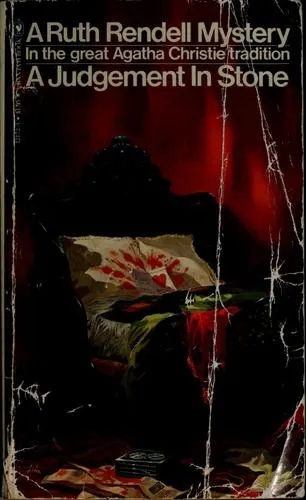
Rendell’s famous opening immediately identifies the killer and victims; the mystery is how an apparently ordinary domestic arrangement became inevitable catastrophe. From there, tiny humiliations, misunderstandings, and concealed fears accumulate with dreadful precision.
This is the book for readers who found Five Little Pigs moving not merely because Poirot solved it, but because he recovered the emotional shape of a tragedy. Rendell, one of psychological crime fiction’s acknowledged masters, understands that motive can be more gripping than identity. The result is coldly controlled, socially acute, and almost impossible to stop reading even as disaster approaches.