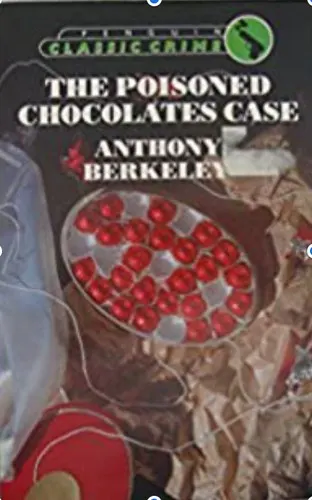
Books like The Poisoned Chocolates Case
…because the real thrill was never simply identifying the murderer: it was watching ingenious minds arrange the same facts into rival, persuasive patterns. These three novels turn detection into similarly exhilarating games of interpretation.
If you liked The Poisoned Chocolates Case, you’ll love these
Not lookalikes — kindred books. Each one shares something essential with The Poisoned Chocolates Case, and we tell you exactly what.
A locked-room murder attracts three celebrated amateur sleuths, each a wickedly recognizable parody of a Golden Age giant: one aristocratic, one fastidious and foreign, one clerical and intuitive. Each constructs an elegant explanation—while the stolid Sergeant Beef keeps insisting that ordinary police work matters.
Bruce’s cult classic offers the closest equivalent to Berkeley’s round-robin pleasure: competing solutions reveal as much about the detectives’ habits and vanity as about the crime. Yet the parody never cheapens the puzzle. It is affectionate, tightly engineered, and capped by the delicious spectacle of genre conventions being defeated from within.
Years ago, reclusive mathematician Grant McAllister wrote seven murder stories designed around the logical ingredients of detective fiction. Now an editor visits him to prepare a new edition—and notices that the stories contain discrepancies he cannot satisfactorily explain.
Pavesi recreates Berkeley’s intoxicating mixture of fiction, criticism, and intellectual combat. Every embedded mystery is both a puzzle and an argument about how puzzles work; every conversation between author and editor subtly changes the evidence. The result is not merely clever but compulsive: it teaches you its rules, invites you to become the next detective, and then makes you distrust the very act of interpretation.
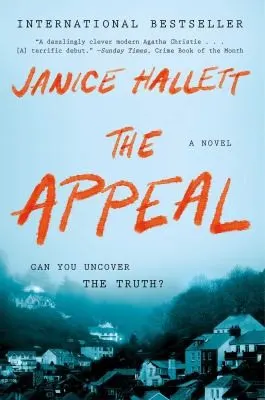
There is no conventional narrator here. Instead, two law students sift through emails, texts, letters, and announcements exchanged by the members of an amateur theatre company, trying to determine what happened and which details everyone else overlooked.
The form produces the same pleasure as Berkeley’s succession of theories, but transfers the work to the reader. A pompous sign-off, an oddly timed message, or a conspicuous silence may overturn your understanding of an entire relationship. Hallett also has Berkeley’s eye for the comedy of self-important groups: alliances, grudges, and performances leak through every message. A major word-of-mouth bestseller, it made the dossier mystery feel newly alive—and it is almost impossible to read without forming, revising, and fiercely defending your own solution.