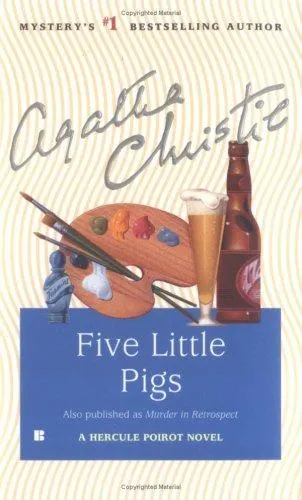
Books like Five Little Pigs
The ideal reader delights in mysteries where facts stay fixed but human recollections bend them—where detection becomes an inquiry into character, memory, and the stories people tell about guilt.
If you liked Five Little Pigs, you’ll love these
Not lookalikes — kindred books. Each one shares something essential with Five Little Pigs, and we tell you exactly what.

A celebrated crime club considers an unsolved poisoning, and its members successively construct different solutions from the same evidence. Each explanation appears persuasive—until another intelligence rearranges the details and exposes its weaknesses.
Like Five Little Pigs, this Golden Age landmark makes interpretation itself suspenseful. Berkeley, a founder of the Detection Club, turns fair-play deduction into a dazzling contest between narratives. Few mysteries demonstrate so entertainingly that clues do not speak: detectives make them speak.
Confined to a hospital bed, Inspector Alan Grant becomes fascinated by a portrait of Richard III and begins reinvestigating the centuries-old case against him. With no crime scene to search, he must weigh documents, reputations, motives, and the distortions created by repetition.
Readers who loved Poirot reconstructing a long-buried murder will recognize the peculiar excitement of detection across time. Tey makes archival reasoning feel urgent, while asking how official stories harden into truth. Its enduring status as a classic of crime fiction rests on that rare feat: it can make you distrust history with the exhilaration of solving a first-rate puzzle.
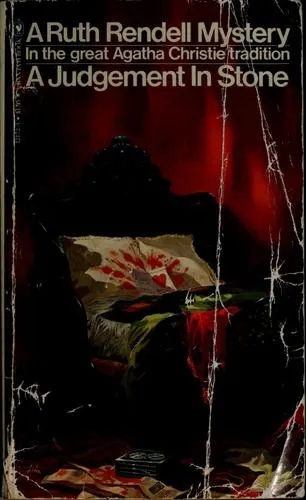
Rendell’s famous opening immediately identifies the killer and victims; the mystery is how an apparently ordinary domestic arrangement became inevitable catastrophe. From there, tiny humiliations, misunderstandings, and concealed fears accumulate with dreadful precision.
This is the book for readers who found Five Little Pigs moving not merely because Poirot solved it, but because he recovered the emotional shape of a tragedy. Rendell, one of psychological crime fiction’s acknowledged masters, understands that motive can be more gripping than identity. The result is coldly controlled, socially acute, and almost impossible to stop reading even as disaster approaches.