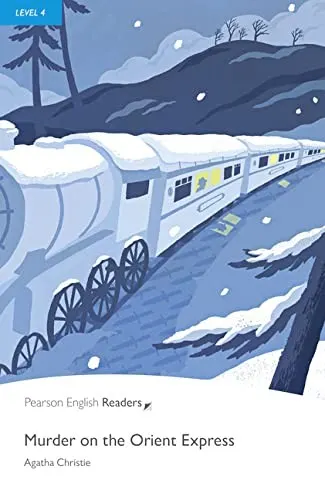
Books like Murder on the Orient Express
You already know the pleasure of watching an immaculate puzzle deepen into a test of judgment. These three novels offer that same rare combination: audacious construction, concealed motives, and solutions that alter how you see everyone involved.
If you liked Murder on the Orient Express, you’ll love these
Not lookalikes — kindred books. Each one shares something essential with Murder on the Orient Express, and we tell you exactly what.

A group of gifted amateur detectives investigates a poisoned box of chocolates, each proposing a different solution from the same evidence. Berkeley turns deduction into intellectual combat: every explanation feels definitive until another observer rearranges the facts more persuasively.
Like Christie, he understands that a great reveal must be both surprising and retrospectively inevitable. This witty, merciless 1929 classic—written by a founder of the Detection Club—remains one of the Golden Age’s boldest demonstrations of how easily logic can become misdirection.
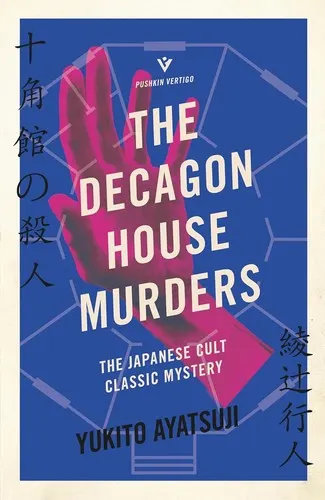
Seven university mystery enthusiasts travel to an isolated island and stay in a bizarre ten-sided house, while ominous events begin unfolding both there and on the mainland. Ayatsuji makes the limited cast, precise geography, and smallest scraps of information matter; reading it becomes an exhilarating contest between author and reader.
Published in 1987, the novel helped ignite Japan’s hugely influential shin-honkaku revival of rigorous, fair-play mysteries. Its culminating stroke has earned generations of devoted readers, and it delivers the same shock Christie achieves when an apparently orderly collection of suspects suddenly forms an entirely new pattern.
Higashino reveals the central crime almost immediately: a desperate woman and her daughter receive help from their brilliant, intensely private mathematician neighbor. The suspense lies not in identifying the culprit but in discovering the true design of the deception as a physicist matches wits with the man who constructed it.
The logic is beautifully exact, yet the book’s real force is emotional and moral. As in Christie’s finest work, solving the case does not simplify it; knowledge makes judgment harder. Winner of Japan’s prestigious Naoki Prize, this is a modern classic whose final implications linger long after its ingenious machinery has clicked into place.