Author
Books like Yukio Mishima
7 books we recommend to Yukio Mishima readers, drawn from Confessions of a Mask, The Temple of the Golden Pavilion and The Sailor Who Fell from Grace with the Sea — each with the reason why.
If you loved Confessions of a Mask

Dazai’s narrator survives by playing the fool, turning charm into camouflage for a terror of being seen. Readers who recognized themselves in Kochan’s calculated expressions and ceaseless self-surveillance will find an unnerving counterpart here: another man who experiences ordinary social life as theater and suspects that no authentic self exists beneath the role.
A modern Japanese classic with an extraordinarily devoted readership, No Longer Human is plainer and more desperate than Mishima, but equally ruthless about complicity in one’s own concealment. Its apparent simplicity is a trap; few novels make alienation feel so intimate or leave such a lasting doubt about where confession ends and performance begins.

The Immoralist offers the dangerous pleasure of watching a cultivated man reinterpret his life under the pressure of newly awakened appetite. Like Confessions of a Mask, it is structured as a confession yet refuses the comfort of repentance: its speaker analyzes himself elegantly, persuasively, and perhaps dishonestly, making the reader both confidant and judge.
Gide’s spare, sensuous novel became a landmark of twentieth-century literature because it treats liberation not as an uncomplicated good but as an idea with victims, evasions, and seductive rhetoric. Anyone captivated by Mishima’s tension between discipline and forbidden desire should read this brilliant precursor—the book’s moral unease only deepens after its final page.

Baldwin takes the shame, concealment, and divided desire that Kochan intellectualizes and makes them emotionally immediate. His American narrator, living in Paris, has built his masculinity as a defensive fiction; when he meets Giovanni, desire threatens not merely his plans but the entire identity through which he has learned to appear acceptable.
Published in 1956 and now regarded as a defining queer novel, Giovanni’s Room has the compressed force of tragedy and some of Baldwin’s most beautiful prose. It is less fascinated by the mask as aesthetic object than by what the mask does to other people. That difference makes it essential: after Mishima’s dazzling anatomy of secrecy, Baldwin reveals its human cost.
If you loved The Temple of the Golden Pavilion

After an accident disfigures him, a scientist designs a lifelike mask and records the experiment for his estranged wife. Like Mizoguchi, he converts bodily shame into an elaborate philosophy, treating other people as evidence in a private case against the world.
Abe’s cool, exact prose makes each rationalization sound plausible just before revealing its perversity. One of the great postwar Japanese novels, The Face of Another offers the same unnerving pleasure as Mishima’s book: watching formidable intelligence become the servant of resentment.
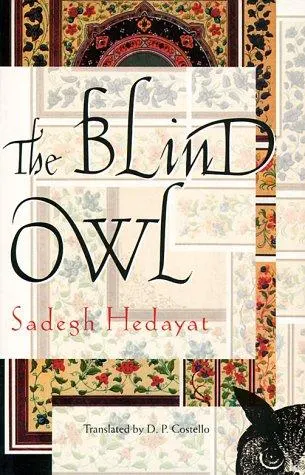
Hedayat’s nameless narrator writes a confession to his own shadow while an image of impossible beauty returns in increasingly distorted forms. Here, as in The Temple of the Golden Pavilion, beauty does not redeem ordinary life; it humiliates it, poisoning desire with the knowledge that possession can only corrupt the ideal.
But where Mishima is lucid and architectural, Hedayat is feverish and circular. Images recur like fragments of a nightmare that cannot decide whether it is memory, fantasy, or guilt. This brief, hypnotic novel became a foundational work of Persian modernism; anyone drawn to Mizoguchi’s poisoned inwardness should experience its darker, dream-bound counterpart.
The aristocratic des Esseintes withdraws from society to construct a completely artificial world governed by his exquisite tastes—colors, perfumes, paintings, jewels, rare books. His pursuit of perfection gradually exposes the hostility concealed inside aesthetic refinement.
That is the deepest kinship with Mishima: both novels ask what happens when beauty ceases to be one value among others and becomes an absolute, licensed to judge life itself. Huysmans renders obsession through sumptuous, almost narcotic catalogues, making taste feel at once magnificent and diseased. A defining novel of the Decadent movement, Against Nature helped shape the aesthetic imagination of writers from Wilde onward; it remains the indispensable novel of beauty cultivated past the point of sanity.
If you loved The Sailor Who Fell from Grace with the Sea

McEwan’s first novel enters a household from which adult authority is slowly disappearing. Its adolescent narrator, Jack, watches his siblings with a mixture of detachment, rivalry, desire, and incomprehension; together they begin forming a private moral climate in which ordinary taboos lose their stability.
What connects it to The Sailor is not merely youthful transgression, but the sealed logic children can build against the adult world. McEwan’s prose is spare, tactile, and unnervingly calm, making domestic objects and bodily details feel illicit. The book helped earn the young author his early “Ian Macabre” reputation, and its disturbing intimacy remains difficult to shake.