Author
Books like William Makepeace Thackeray
6 books we recommend to William Makepeace Thackeray readers, drawn from Vanity Fair and The Luck of Barry Lyndon — each with the reason why.
If you loved Vanity Fair
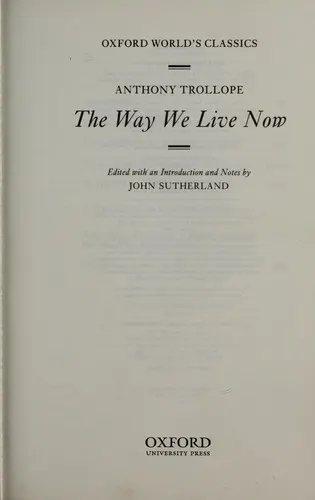
Trollope offers the closest equivalent to Thackeray’s crowded social theatre: politicians, aristocrats, writers, heiresses, and speculators all orbit the financier Augustus Melmotte, whose wealth matters far more to London than its mysterious origins. Meanwhile, Lady Carbury tries to manufacture literary fame through flattery and strategic publicity.
What makes this Trollope’s acknowledged satirical masterpiece is not merely its attack on financial corruption, but its understanding that fraud succeeds because respectable society wants it to. Like Vanity Fair, it moves between amused intimacy and moral disgust, exposing whole systems through small acts of vanity and self-deception. Its world is irresistibly entertaining precisely because almost everyone is compromised.
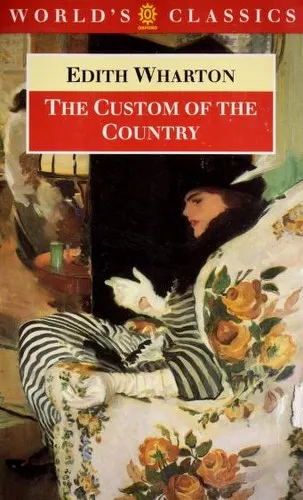
In Undine Spragg, Wharton created one of the few social climbers who can stand beside Becky Sharp without seeming like an imitation. Newly arrived in New York society, Undine possesses beauty, appetite, and an unerring instinct for what other people can do for her. She is less witty than Becky but even more elemental: desire stripped of self-knowledge.
Wharton’s method is colder and more compressed than Thackeray’s. She does not banter with the reader; she lets drawing rooms, marriages, clothes, and money reveal their own brutal logic. The result is one of American fiction’s great comedies of acquisition, polished to a merciless shine. Undine’s momentum is so powerful that disapproval becomes suspense: you keep reading to discover what she will want next—and what wanting it will cost everyone else.
Mr Biswas is no conquering opportunist: he is touchy, unlucky, absurdly proud, and perpetually at odds with the enormous family into which he marries. Yet his struggle to possess a house of his own becomes both a comic campaign against humiliation and a deeply moving claim to individual existence.
Often regarded as Naipaul’s masterpiece, the novel shares Vanity Fair’s rare ability to enlarge rather than diminish its characters through ridicule. Its narrator sees every boast, grudge, shabby scheme, and domestic defeat, but never reduces Mr Biswas to a joke. The book is expansive, bustling, and extraordinarily funny; underneath its comedy lies the conviction that even a foolish person’s longing for dignity is sacred. Readers who love Thackeray’s fusion of satire and pathos should not miss it.
If you loved The Luck of Barry Lyndon
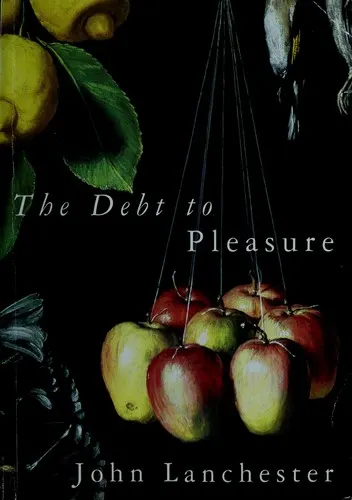
Tarquin Winot’s culinary memoir is cultured, funny, fastidious—and increasingly disquieting. Recipes, travel notes and aesthetic judgments become instruments of vanity as Tarquin displays the same fatal confidence as Barry: both men assume that command of style can settle questions of character.
Winner of the Whitbread First Novel Award, Lanchester’s debut is a compact virtuoso performance. Its special pleasure lies in reading simultaneously with and against its narrator, catching the meanings concealed by his immaculate phrasing. Anyone who relished Barry’s unconscious self-indictment will find Tarquin irresistible company, though not company to trust.
Barry boasts; John Dowell, Ford’s narrator, hesitates, corrects himself and appears almost painfully ingenuous. But the effect is comparably treacherous. As Dowell recounts the entanglements of two affluent couples, chronology loops and innocent remarks acquire new meanings. The reader must reconstruct the emotional truth from a man who may not understand—or may prefer not to understand—his own story.
Often regarded as Ford’s masterpiece and one of the supreme novels of unreliable narration, The Good Soldier replaces Thackeray’s broad comic swagger with intimate, devastating irony. It offers the rare exhilaration of discovering that the form of a man’s story is itself his most revealing confession.
Hogg gives us a man whose certainty of his own righteousness licenses every appetite. The novel first presents events through an editor’s pieced-together account, then hands the narrative to the accused himself. That double structure turns reading into judgment: every claim of spiritual privilege exposes another crack in the claimant’s moral vision.
The comedy is blacker and the atmosphere more uncanny than in Thackeray, but the kinship is profound. Like Barry, Hogg’s sinner is his own defense counsel and his own most damaging witness. Long neglected and later championed by writers including André Gide, this 1824 Scottish classic now seems astonishingly modern—a fierce, ambiguous study of vanity disguising itself as destiny.