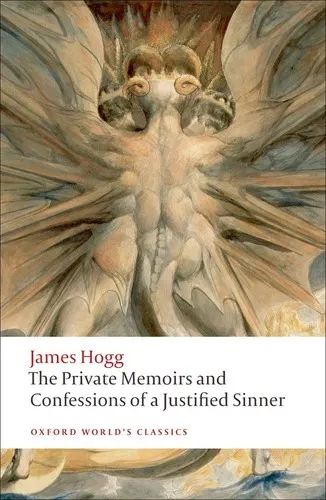
Books like The Private Memoirs and Confessions of a Justified Sinner
After Hogg’s masterpiece, one craves another book in which confession becomes self-incrimination, comedy darkens into metaphysical terror, and neither psychology nor the supernatural can fully explain what has happened.
If you liked The Private Memoirs and Confessions of a Justified Sinner, you’ll love these
Not lookalikes — kindred books. Each one shares something essential with The Private Memoirs and Confessions of a Justified Sinner, and we tell you exactly what.
A Capuchin monk drinks a forbidden elixir and finds his identity beginning to fracture. Hoffmann gives Hogg’s admirers the same intoxicating mixture of religious mania, guilty appetite, doubles and unstable testimony: every apparent explanation opens another trapdoor.
Published only a few years before Hogg’s novel, this landmark of German Gothic fiction helped define the literature of the doppelgänger. Its feverish excess is the point. Like Robert Wringhim’s confession, Medardus’s account makes damnation feel simultaneously supernatural, psychological and self-authored.
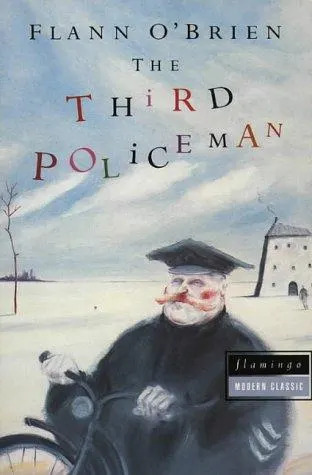
Hogg’s savage comedy is as important as his horror, and Flann O’Brien understood how to make metaphysical dread hilariously absurd. His unnamed narrator—a vain scholar with blood on his conscience—enters a world governed by impossible police stations, alarming bicycles and footnotes devoted to a preposterous philosopher.
The result is a logical nightmare told with serene precision. Like Justified Sinner, it traps a morally blinkered narrator inside the consequences of his own ideas while leaving the reader several steps ahead and nowhere near safety. Rejected in O’Brien’s lifetime, it became a fiercely loved cult classic; its peculiar combination of slapstick, murder and eternity remains inimitable.
At first, Alden Dennis Weer’s recollections of an affluent Midwestern childhood seem gentler than Hogg’s confession. Yet odd repetitions, evasions and displaced details steadily make the memoir feel haunted—not merely by ghosts, but by everything its narrator cannot or will not admit.
Wolfe turns reading into detection: anecdotes nest inside anecdotes, innocent phrases acquire sinister weight, and certainty recedes whenever you approach it. Few novels so thoroughly reward the suspicion Hogg teaches—that an editor, memoirist or respectable gentleman may reveal most when he believes he is concealing himself. Often singled out by Wolfe’s devoted readers as his masterpiece, Peace virtually demands rereading; the second encounter can feel like discovering another novel hidden inside the first.