Author
Books like William Gaddis
5 books we recommend to William Gaddis readers, drawn from The Recognitions and J R — each with the reason why.
If you loved The Recognitions
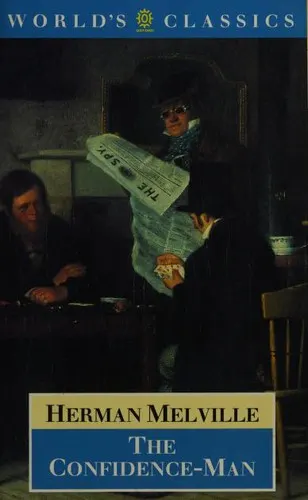
On April Fools’ Day, aboard a Mississippi steamboat pointedly named the Fidèle, strangers test one another’s charity, credulity, and appetite for belief. Identities shift; conversations become traps; confidence may mean trust, fraud, or both.
This is the nineteenth-century ancestor The Recognitions seems to demand: a novel in which authenticity cannot be separated from performance, and metaphysical inquiry arrives disguised as salesmanship. Melville keeps changing rhetorical styles—sermon, philosophical dialogue, commercial pitch, vaudeville routine—until the reader must decide whether skepticism itself is another con. Long neglected after its 1857 publication, it is now recognized as one of Melville’s strangest and most audacious books. Few novels so ruthlessly implicate the reader in the desire to be deceived.
A historian named William Kohler sits down to write the introduction to his major study of Nazi Germany and instead begins excavating his own rancorous life. The result is not a confession seeking absolution but a monumental demonstration of how intelligence, grievance, and beautiful language can collaborate in bad faith.
Readers who admired Wyatt’s spiritual ordeal will recognize Gass’s refusal to separate aesthetics from moral danger. The prose is sensuous, punning, typographically inventive, and often savagely funny; songs, lists, emblems, lectures, and domestic debris accumulate into an architecture as deliberate as Gaddis’s. Gass spent twenty-six years on the novel, which won the American Book Award and remains a fiercely argued-over landmark of postwar fiction. It is repellent, magnificent, and unforgettable—the kind of book whose sentences keep sounding in the mind long after one has escaped its narrator.
If you loved J R
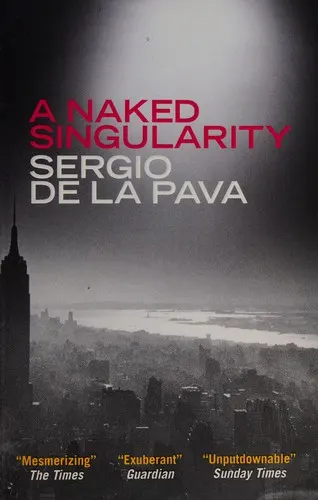
Casi, an overworked New York public defender, moves through courtrooms where law has become an improvisation conducted at punishing speed. The dialogue crackles, digresses and collides; intellectual arguments, workplace absurdity and urban chaos keep threatening to overwhelm the story even as they propel it.
Like Gaddis, De La Pava understands systems as both ridiculous and terrifying: nobody fully controls them, yet everyone learns to speak their language. The novel’s audacity earned it a remarkable passage from self-publication to the PEN/Robert W. Bingham Prize. It is one of the few post-Gaddis maximalist novels with comparable comic velocity—and its own unmistakable moral pressure.
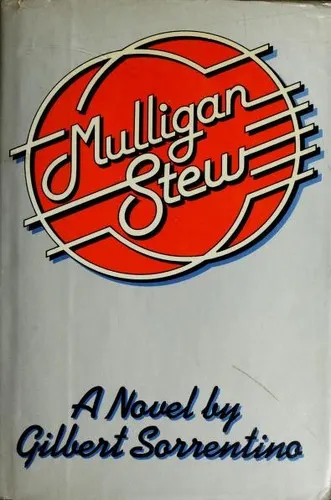
This cult masterpiece begins with a bad novelist attempting to write a murder mystery using characters borrowed from other writers. From there, Sorrentino constructs a mutiny of forms: letters, notebooks, questionnaires, lists, scraps of manuscripts and voices that sabotage one another.
A reader who loved piecing J R together without a supervising narrator will relish how Mulligan Stew makes confusion participatory. Its satire of literary ambition is savage, but the real pleasure is inexhaustible invention: every discarded cliché becomes material for another joke or formal ambush. Since its 1979 publication, its reputation among writers and adventurous readers has only deepened. Skipping it means missing one of American metafiction’s funniest and most gloriously unmanageable performances.
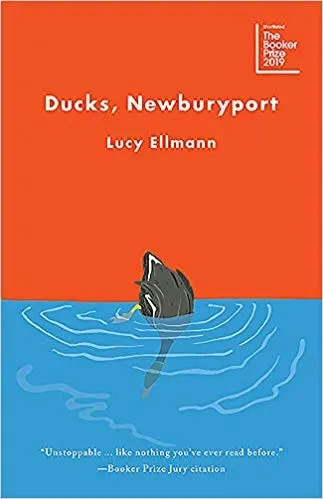
Lucy Ellmann transforms the anxious thoughts of an Ohio baker and mother into a vast, nearly unbroken sentence. Advertising slogans, recipes, films, family memories, political dread and verbal tics circulate through her mind until contemporary America seems to be speaking through one person.
Where J R builds its world from overheard conversation, Ellmann builds hers from consciousness colonized by everything it has heard. The result is not merely a stunt: beneath the comedy and obsessive repetition lies fierce attention to care, vulnerability and the cost of remaining human amid relentless commercial and informational noise. Winner of the Goldsmiths Prize and shortlisted for the Booker, Ducks, Newburyport proves that maximalism can be intimate as well as monumental. Once its rhythm takes hold, its thousand pages feel less excessive than necessary.