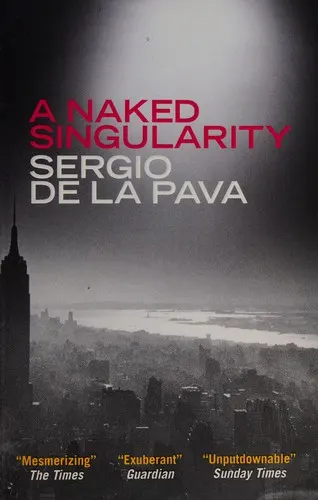
Books like A Naked Singularity
Its inexhaustible appeal lies in the sensation of being trapped inside a brilliant mind that can turn courts, boxing, physics, ethics, and sheer absurdity into one accelerating argument. These novels offer that same rare combination of intellectual abundance, comic force, and moral urgency.
If you liked A Naked Singularity, you’ll love these
Not lookalikes — kindred books. Each one shares something essential with A Naked Singularity, and we tell you exactly what.
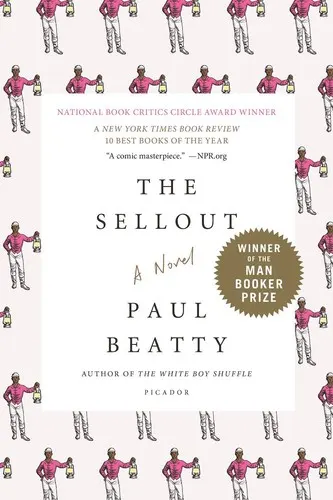
Beatty’s Booker Prize–winning satire begins with its narrator before the Supreme Court, then unleashes a ferociously funny examination of race, law, language, and American self-deception. Like de la Pava, Beatty treats legal institutions as both deadly mechanisms and elaborate absurdist theater.
The deeper kinship is verbal: jokes become arguments, arguments mutate into riffs, and outrageous conceits expose truths that sober realism could not reach. The Sellout is shorter and more compressed than A Naked Singularity, but nearly every sentence has comparable velocity and intellectual mischief. Missing it would mean missing one of contemporary fiction’s most exhilarating demonstrations that comedy can be a form of ruthless moral precision.
If what you loved was de la Pava’s refusal to choose between philosophical inquiry, low comedy, violence, obsessive digression, and a huge immersive story, Adam Levin’s thousand-page cult novel is the natural next commitment. Its narrator, Gurion Maccabee, is a hyperarticulate ten-year-old confined to a disciplinary program, where school bureaucracy, religious speculation, adolescent hierarchy, and revolutionary possibility become inseparable.
Gurion’s consciousness dominates the book as completely as Casi’s dominates A Naked Singularity: dazzling, exasperating, persuasive, and always capable of turning a tangent into the real subject. Levin earns the novel’s immense scale by making thought itself suspenseful. Readers devoted to maximalist fiction cherish The Instructions because it offers not merely a plot but an entire private cosmology—and the unnerving pleasure of living inside it.
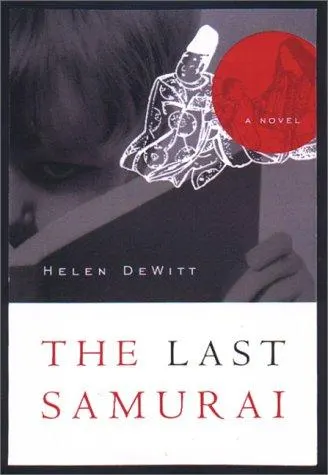
Helen DeWitt’s novel shares de la Pava’s deepest conviction: intelligence is not decoration but drama. Sibylla, a fiercely learned single mother, raises her precocious son amid ancient Greek, Japanese, mathematics, linguistics, and repeated viewings of Kurosawa’s Seven Samurai. Their hunger for knowledge is exhilarating, but DeWitt never sentimentalizes brilliance; she asks what it can rescue, what it cannot, and what obligations it creates.
The prose changes shape to follow the characters’ thinking, making reading feel like discovery rather than passive observation. Initially mishandled by its publisher, The Last Samurai gradually acquired a passionate reputation and was triumphantly restored to print by New Directions; it is now widely regarded as a modern classic. For a reader who loved de la Pava’s audacity and humane intellectual seriousness, DeWitt’s singular masterpiece is essential.