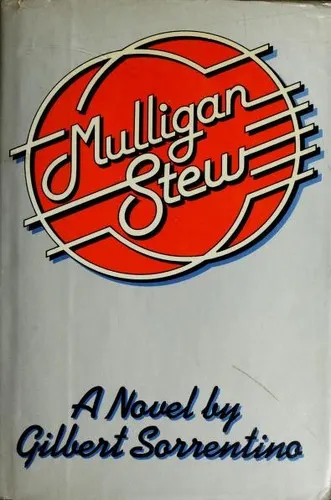
Books like Mulligan Stew
A publisher’s rejection reaches Antony Lamont, and he promptly converts humiliation into proof of everyone else’s stupidity. These three novels share Sorrentino’s delight in exposing how fiction is assembled—and how gloriously its machinery can malfunction.
If you liked Mulligan Stew, you’ll love these
Not lookalikes — kindred books. Each one shares something essential with Mulligan Stew, and we tell you exactly what.
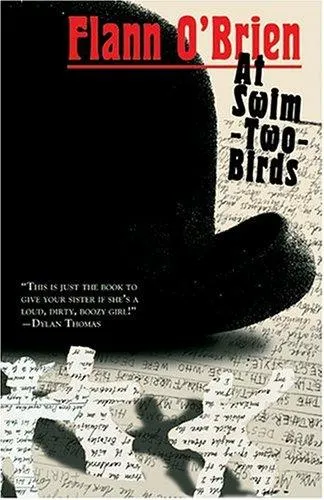
This is Mulligan Stew’s indispensable ancestor: Sorrentino even appropriated Antony Lamont from O’Brien’s cast. A feckless student constructs a book from incompatible genres, borrowed figures and unruly narrative layers, while the distinction between author and character becomes increasingly precarious.
O’Brien’s comedy is lighter and more buoyant than Sorrentino’s, but it springs from the same conviction that bad writing can become magnificent material in the right hands. Its mock scholarship, recycled clichés and collisions of literary registers helped establish it as one of the foundational comic novels of metafiction. Reading it after Mulligan Stew feels less like tracing an influence than discovering the brilliantly unstable book with which Sorrentino was conducting a decades-later argument.
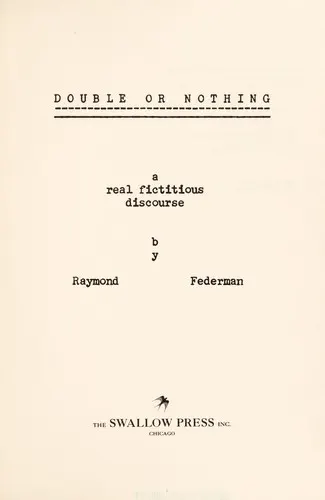
A would-be writer shuts himself in a room to compose a story, carefully calculating his supplies of noodles and other necessities. Soon the preparations, diagrams, inventories, revisions and typographical arrangements overwhelm the supposedly intended narrative.
Federman makes the physical page perform the comedy: words bunch together, wander, form shapes and expose composition as a mixture of compulsion, evasion and play. Where Sorrentino parodies a whole filing cabinet of literary debris, Federman turns one writer’s procrastination into an exuberant visual machine. Long regarded as a landmark of American experimental fiction, Double or Nothing offers the rare pleasure of watching a novel fail to begin so inventively that its failure becomes the novel—and becomes impossible to forget.
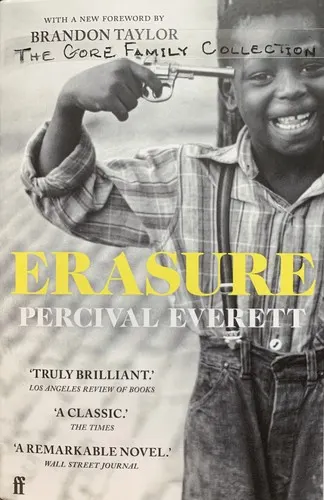
Thelonious Ellison is an intellectually severe novelist whose books attract respectful neglect while the literary marketplace rewards crude ideas about what a Black writer should produce. Everett turns his predicament into a ferocious inquiry into authorship, authenticity and the appetite for counterfeit experience.
A Mulligan Stew reader will recognize the lethal ear for received language: Everett does not merely ridicule bad prose but asks who validates it, who profits from it and why audiences may prefer it to difficult art. Yet beneath the formal games and publishing satire lies real fury about family, identity and artistic compromise. Erasure became one of Everett’s defining novels, winning the Hurston/Wright Legacy Award and acquiring an even wider readership after inspiring American Fiction. Missing it would mean missing one of the sharpest demonstrations that metafiction can wound as powerfully as it entertains.