Author
Books like Valeria Luiselli
6 books we recommend to Valeria Luiselli readers, drawn from Lost Children Archive and Faces in the Crowd — each with the reason why.
If you loved Lost Children Archive
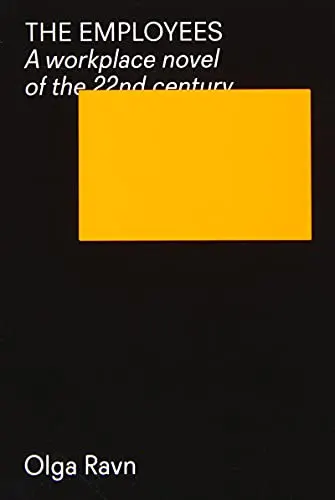
A commission interviews the human and humanoid workers aboard a spaceship after strange objects arrive from a distant planet. Their numbered statements form the entire novel: contradictory, yearning, sometimes darkly funny fragments in which bureaucratic evidence becomes intimate confession.
Like Lost Children Archive, this International Booker–shortlisted novel understands that an archive is never neutral. Who records testimony? What gets omitted? Can a collection of voices become a community—or a case file? Ravn compresses grief, labor, desire, and personhood into fewer than 150 pages. It is a small, uncanny book with an emotional afterimage far larger than its size.
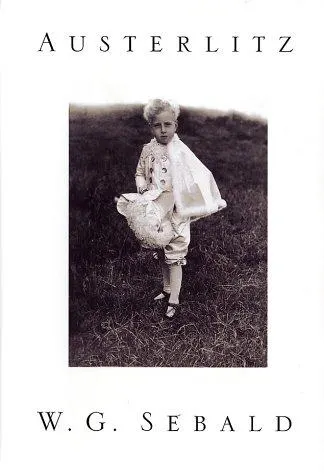
Austerlitz begins with a chance meeting in an Antwerp railway station and unfolds through conversations, photographs, architectural histories, and long, tidal sentences. Its central consciousness approaches the past indirectly, through buildings, scraps of evidence, and memories that seem to belong partly to other people.
Luiselli’s photographs, inventories, echoes, and borrowed texts owe something to the literary territory Sebald transformed. But the deeper kinship lies in their caution about turning displacement into a satisfying story. Widely regarded as Sebald’s masterpiece, Austerlitz makes research feel haunted and digression feel inexorable. After reading it, photographs in novels—and perhaps photographs altogether—will no longer seem like innocent proof.
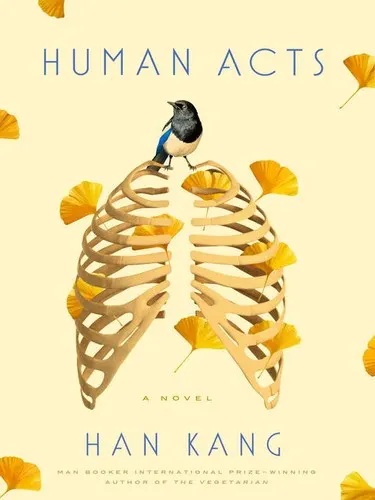
In the aftermath of the 1980 Gwangju uprising, a boy searches among the dead for his friend. From that opening, Han Kang builds a choral novel in which perspective and address keep shifting, forcing the reader to confront both the necessity and the danger of speaking for people subjected to state violence.
Where Luiselli asks how art can attend to migrant children without appropriating their suffering, Han asks what language can do before cruelty that was meant to erase its victims. Her prose, translated by Deborah Smith, is lucid, restrained, and devastating; tenderness appears not as consolation but as resistance. Human Acts became one of the defining works of the Nobel laureate’s international reputation because it does something exceedingly rare: it makes formal beauty answerable to the dead.
If you loved Faces in the Crowd
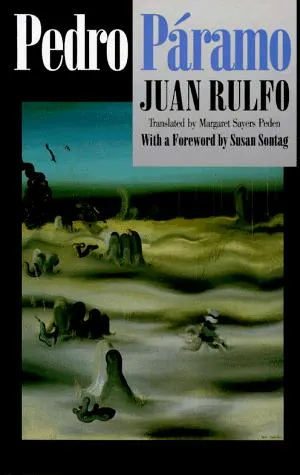
Rulfo’s brief masterpiece offers the same exhilarating uncertainty about who is speaking, from where, and even from what side of existence. A young man arrives in Comala looking for his father; almost immediately, testimony, memory, and murmured voices begin to displace ordinary narration. As in Faces in the Crowd, the reader must assemble a world from charged fragments rather than receive it whole.
Its ghosts are not decorative supernatural elements: they are how history persists inside language. Rulfo’s compression, abrupt transitions, and haunting acoustics helped transform Latin American fiction, and the novel remains astonishingly modern. Anyone moved by Luiselli’s crowded, porous consciousness should experience the book that made silence itself feel polyphonic.

Offill turns the life of a writer, wife, and mother into a constellation of tiny paragraphs: jokes, quotations, household disasters, intellectual curiosities, and flashes of dread. Luiselli’s readers will recognize the tension between artistic selfhood and domestic repetition, as well as the way a narrator can divide herself into competing versions merely by changing how she tells the story.
This was Offill’s breakthrough and became one of the most admired—and imitated—fragmentary novels of recent decades, but its architecture never feels like a trick. Each white space registers something unsaid; each shard acquires pressure from its neighbors. It is funny, wounded, fiercely intelligent, and so economical that rereading feels less optional than inevitable.
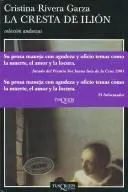
A man living beside the sea is visited by two women, one of whom bears the name of the Mexican writer Amparo Dávila. From that wonderfully disquieting entrance, certainty begins to erode: gender, authorship, memory, and the boundary between literary history and invention all become unstable.
Rivera Garza, now internationally celebrated as one of Mexico’s most audacious writers, shares Luiselli’s fascination with the people erased behind official stories—and with the dangerous intimacy of borrowing another writer’s voice. Yet her prose has a darker, more feverish pressure, making the novel feel like a locked room whose walls keep shifting. It is slim, eerie, intellectually daring, and capable of permanently changing how you think about who has the right to narrate whom.