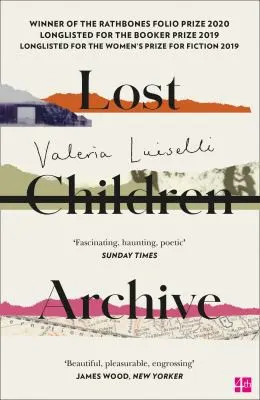
Books like Lost Children Archive
Olga Ravn’s The Employees leaves Luiselli’s family car for a spacecraft, yet it preserves what matters most: voices gathered into an unstable archive, objects charged with memory, and the question of whether documentation can recover lives or only expose their absence. The other two choices likewise turn formal invention into an ethics of attention.
If you liked Lost Children Archive, you’ll love these
Not lookalikes — kindred books. Each one shares something essential with Lost Children Archive, and we tell you exactly what.
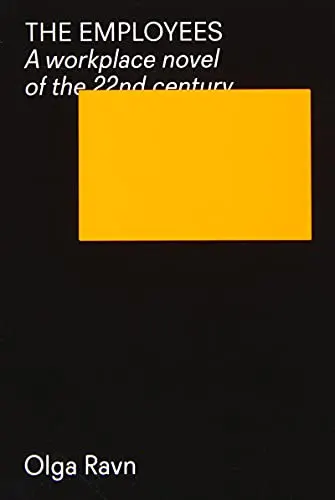
A commission interviews the human and humanoid workers aboard a spaceship after strange objects arrive from a distant planet. Their numbered statements form the entire novel: contradictory, yearning, sometimes darkly funny fragments in which bureaucratic evidence becomes intimate confession.
Like Lost Children Archive, this International Booker–shortlisted novel understands that an archive is never neutral. Who records testimony? What gets omitted? Can a collection of voices become a community—or a case file? Ravn compresses grief, labor, desire, and personhood into fewer than 150 pages. It is a small, uncanny book with an emotional afterimage far larger than its size.
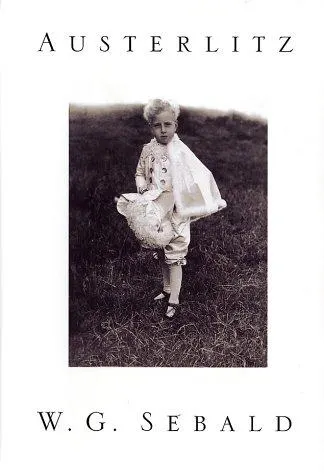
Austerlitz begins with a chance meeting in an Antwerp railway station and unfolds through conversations, photographs, architectural histories, and long, tidal sentences. Its central consciousness approaches the past indirectly, through buildings, scraps of evidence, and memories that seem to belong partly to other people.
Luiselli’s photographs, inventories, echoes, and borrowed texts owe something to the literary territory Sebald transformed. But the deeper kinship lies in their caution about turning displacement into a satisfying story. Widely regarded as Sebald’s masterpiece, Austerlitz makes research feel haunted and digression feel inexorable. After reading it, photographs in novels—and perhaps photographs altogether—will no longer seem like innocent proof.
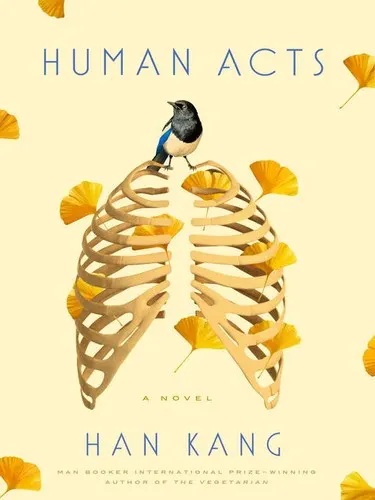
In the aftermath of the 1980 Gwangju uprising, a boy searches among the dead for his friend. From that opening, Han Kang builds a choral novel in which perspective and address keep shifting, forcing the reader to confront both the necessity and the danger of speaking for people subjected to state violence.
Where Luiselli asks how art can attend to migrant children without appropriating their suffering, Han asks what language can do before cruelty that was meant to erase its victims. Her prose, translated by Deborah Smith, is lucid, restrained, and devastating; tenderness appears not as consolation but as resistance. Human Acts became one of the defining works of the Nobel laureate’s international reputation because it does something exceedingly rare: it makes formal beauty answerable to the dead.