Author
Books like Susanna Clarke
6 books we recommend to Susanna Clarke readers, drawn from Piranesi and Jonathan Strange & Mr Norrell — each with the reason why.
If you loved Piranesi
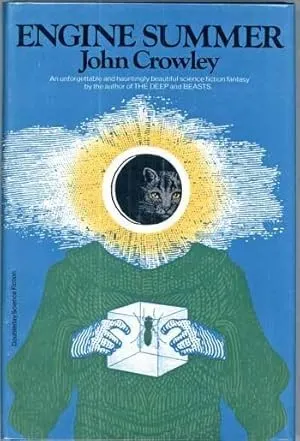
Like Piranesi, Crowley’s novel is carried by a narrator whose innocence is not simplicity but a distinctive way of knowing. Rush That Speaks recounts his life in a far-future community, using familiar words whose meanings have shifted over centuries. Gradually, the reader understands more—and sometimes less—than he does.
Crowley makes strangeness feel intimate: customs, stories, and ruined technologies acquire the radiance that Piranesi finds in statues and tides. A Nebula Award finalist that has inspired unusually devoted readers, Engine Summer is brief, lucid, and quietly devastating. Its final effect is so beautiful and uncanny that finishing it feels like discovering another room inside the book you thought you had read.
A fugitive hides on an apparently deserted island, only to find elegantly dressed strangers behaving as though he were not there. From that opening, Bioy Casares constructs a metaphysical mystery as clean and intricate as clockwork.
A Piranesi reader will recognize the pleasure of watching a solitary observer catalogue an impossible world, trusting careful description even when reality itself becomes doubtful. But this is no mere puzzle: loneliness, desire, and the wish to preserve beauty give its ingenious structure genuine pathos. Borges famously praised it as a nearly perfect novel, and its influence has spread through generations of speculative fiction and film. At barely novella length, it achieves what much larger books never manage: an impossible place you will continue trying to understand long after leaving it.
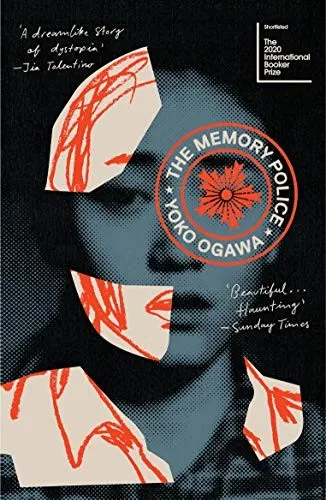
On Ogawa’s unnamed island, things disappear—not only objects, but the inhabitants’ ability to remember why they mattered. A novelist keeps writing while the quiet machinery of forgetting closes around her.
Where Piranesi asks how memory shapes identity and whom we should trust with our minds, Ogawa asks what remains when memory is steadily taken away. Her prose is spare and dreamlike, yet the vanished things—a ribbon, a fragrance, a small treasured object—leave palpable absences. The result is both political nightmare and tender study of people trying to shelter one another.
The English translation became a finalist for both the National Book Award and the International Booker Prize, but its deepest claim is emotional: Ogawa makes loss feel like a physical alteration of the world. Readers who loved Piranesi’s gentleness in the presence of terror should not miss it.
If you loved Jonathan Strange & Mr Norrell
The respectable citizens of Lud insist that neighbouring Fairy is vulgar superstition—even as illicit fairy fruit begins slipping across the border. Mirrlees treats enchantment not as a tidy system but as something seductive, destabilising and impossible for sensible institutions to contain.
This compact 1926 novel shares Clarke’s gift for making bureaucracy, law and social embarrassment integral to the fantastic. Its wit gradually yields to genuine strangeness, and its Fairy is as beautiful and perilous as anything beyond Clarke’s King’s Roads. Long neglected, it is now revered as one of modern fantasy’s secret foundations. It achieves in fewer than 250 pages what many sagas never manage: the sense that reality has opened onto something ancient and intoxicating.
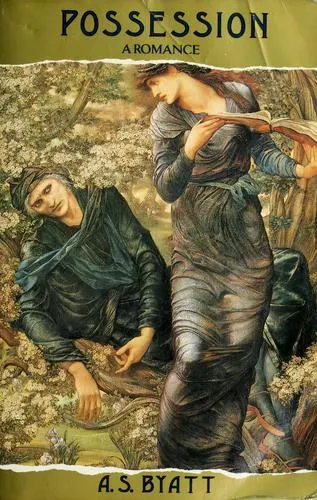
A scholar finds an unexpected draft of a letter hidden inside an old book, and an apparently settled corner of literary history begins to shift. Byatt builds the resulting mystery from poems, diaries, correspondence and rival interpretations, creating an invented archive so convincing that reading it feels like conducting research in a parallel world.
There is little literal magic here, but it offers the same pleasure as Clarke’s footnotes and historical fabrications: scholarship becomes adventurous, comic, competitive and emotionally dangerous. Its Victorian voices are not decorative pastiche; they become fully inhabited lives. Winner of the Booker Prize and still Byatt’s most beloved novel, Possession is the rare literary puzzle whose intellectual exhilaration deepens rather than smothers its romance.
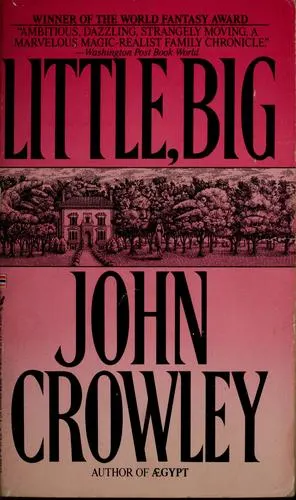
Smoky Barnable walks toward the extraordinary house called Edgewood to marry Daily Alice, entering a family whose history seems entangled with a larger, half-glimpsed realm. Crowley never reduces that realm to rules or lore. It remains oblique—visible in patterns, stories, architecture and coincidences—until ordinary domestic life feels inseparable from myth.
Where Clarke’s novel expands from drawing-room comedy into vast, unsettling legend, Little, Big performs a similarly audacious change of scale across generations. Crowley’s prose is warmer and more lyrical, but he shares Clarke’s patience and her refusal to make Faerie safe or easily explained. A World Fantasy Award winner with exceptionally devoted admirers, it is one of those novels readers spend years pressing into other people’s hands.