Author
Books like Sinclair Lewis
6 books we recommend to Sinclair Lewis readers, drawn from It Can't Happen Here and Arrowsmith — each with the reason why.
If you loved It Can't Happen Here
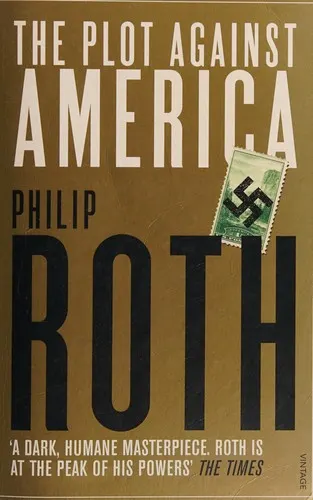
Roth makes authoritarianism frighteningly intimate. His counterfactual America is experienced through a Jewish family in Newark, so national politics enters the novel as dinner-table arguments, neighborhood rumors, compromised friendships, and a child’s dawning fear. Like Lewis, Roth understands that democratic failure begins not with uniforms in the streets but with respectable euphemisms and citizens eager to be reassured.
One of Roth’s most admired late novels, it has the density of lived memory despite its invented history. Its great achievement is to make political catastrophe feel both unimaginable and already under way.
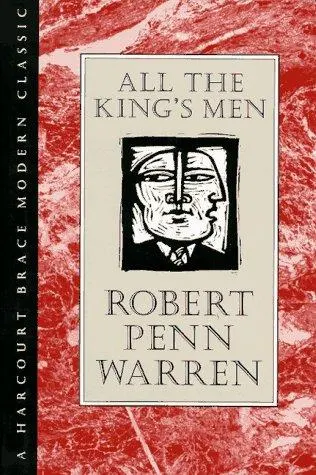
If Buzz Windrip fascinated you as much as he appalled you, meet Willie Stark: a populist politician whose genuine insight into inequality becomes inseparable from manipulation, intimidation, and power. Warren is less interested in labeling a demagogue than in showing why intelligent people serve one—and how moral surrender is accomplished through hundreds of seemingly practical decisions.
The novel’s sumptuous, searching prose gives political corruption the weight of tragedy. Winner of the Pulitzer Prize and still the definitive American novel of charisma and complicity, it offers something Lewis largely withholds: the intoxicating view from inside the machine.
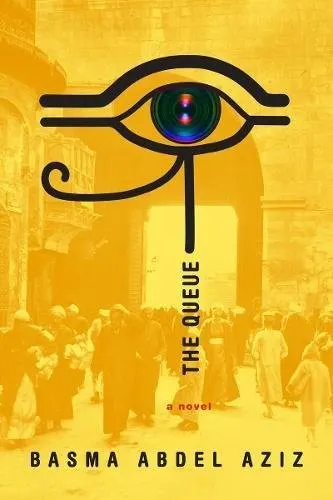
A mysterious authority called the Gate has closed, yet citizens must still obtain its permission for nearly everything. They form a queue and wait. From that brutally simple premise, Abdel Aziz constructs a deadpan nightmare in which paperwork rewrites reality, official language defeats eyewitness testimony, and obedience persists even when the state barely needs to enforce it.
Where Lewis attacks dictatorship through broad satire and urgent argument, Abdel Aziz uses compression, repetition, and bureaucratic absurdity. This acclaimed Egyptian dystopia is short enough to read in a sitting but difficult to shake: it reveals how authoritarian power can reside not only in a leader, but in procedures people have been trained to accept.
If you loved Arrowsmith
Tertius Lydgate arrives in Middlemarch with ambitious medical ideas and discovers that knowledge alone cannot defeat money, reputation, local politics, and his own blind spots. Like Lewis, Eliot respects intellectual aspiration without idealizing the aspiring intellectual.
But Middlemarch offers more than a precursor to Martin Arrowsmith. Through Lydgate and the ardent Dorothea Brooke, it examines vocation itself: why gifted people misread their desires, how marriage can redirect a life, and how social pressures become private choices. Eliot’s wit is gentler than Lewis’s satire, but her psychological insight is deeper and even less forgiving. Regularly acclaimed as one of the supreme English novels, Middlemarch is indispensable for anyone haunted by the distance between the work one meant to do and the life one actually makes.
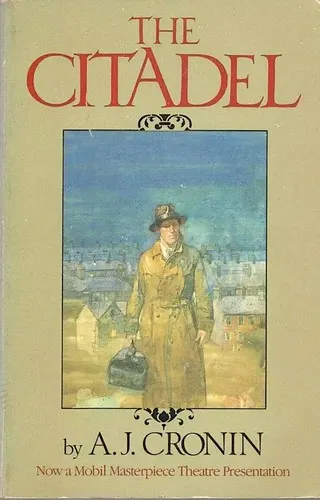
Andrew Manson begins as a young doctor in a Welsh mining community, full of energy and impatient with stale habits. Cronin makes his daily encounters with bad medicine, poverty, bureaucracy, and professional complacency intensely dramatic because every practical decision tests what kind of physician—and person—he intends to become.
What an Arrowsmith reader will recognize is the anger beneath the storytelling: both novels ask why institutions ostensibly devoted to healing so often reward conformity, prestige, and profit instead. Yet The Citadel is warmer and more propulsive than Lewis’s book, with the force of a moral page-turner. Its attack on British medical inequality entered the public conversation that preceded the National Health Service. Few novels have made professional integrity feel so urgent or shown so vividly why reform requires more than good intentions.
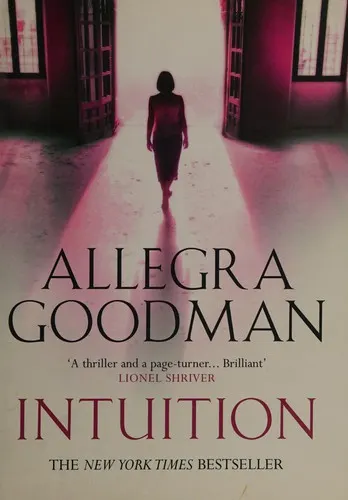
Intuition brings Arrowsmith’s central conflict into the modern research laboratory. In a prestigious cancer institute, a struggling postdoctoral researcher suddenly obtains exciting results; colleagues must decide whether they are witnessing a breakthrough, an error, or something less innocent. Goodman understands that science is performed not by disembodied reason but by tired, ambitious, loyal, jealous people competing for grants, credit, and certainty.
Where Lewis uses broad satire and the solitary ideal of the pure investigator, Goodman gives us team science, ambiguous evidence, and motives that cannot be cleanly separated. Her great subject is how people behave when truth matters enormously but remains incomplete. The novel’s unusually convincing laboratory life makes every meeting, data point, and shift of allegiance consequential. It is the contemporary companion Arrowsmith deserves: quieter, more intimate, and devastatingly alert to the compromises hidden inside sincere conviction.