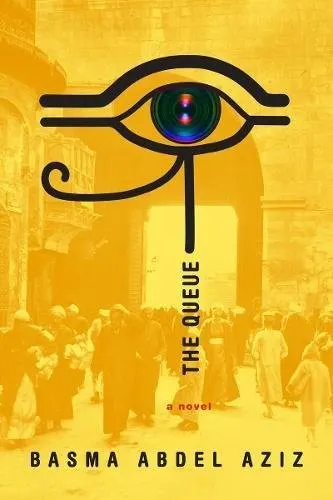
Books like The Queue
The Queue’s cruelest joke is that the Gate scarcely needs to act: forms, rumors, medical records, and the hope of permission teach everyone to police reality on its behalf.
If you liked The Queue, you’ll love these
Not lookalikes — kindred books. Each one shares something essential with The Queue, and we tell you exactly what.

A man appears before an unnamed committee whose questions, demands, and authority remain maddeningly unexplained. As in The Queue, absurd procedure is not an ornamental metaphor but the regime’s actual method: obedience is extracted through uncertainty, delay, and the victim’s desperate effort to satisfy rules no one will clarify.
Ibrahim’s short, ferocious novel also exposes the alliance between political power and consumer culture. Its deadpan voice makes each escalation both funnier and more menacing. A landmark of modern Arabic satire, The Committee feels like a close artistic ancestor to Abdel Aziz’s novel—leaner, stranger, and savage enough to leave a permanent bruise.
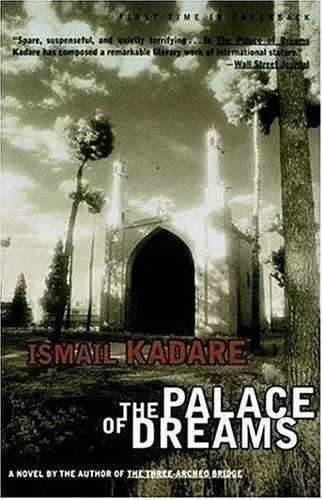
Kadare imagines an imperial institution that gathers and interprets its subjects’ dreams. When Mark-Alem begins work there, its endless departments and obscure classifications initially seem merely cumbersome; gradually, bureaucracy acquires the atmosphere of myth and nightmare.
What will grip a lover of The Queue is the recognition that authoritarian systems do not only suppress facts—they manufacture meanings. A misplaced file, an ambiguous symbol, or an interpretation by an unseen official can determine reality. One of Kadare’s defining novels, The Palace of Dreams turns paperwork into metaphysical terror: the state has not stopped at governing public life but has entered the last private territory, the sleeping mind.
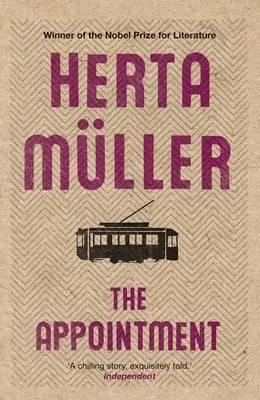
A woman rides a tram toward another interrogation by the Romanian secret police. The journey keeps opening into memories, observations, and fears, while the summons ahead exerts its steady gravitational pull. Müller shows how repression corrupts time itself: waiting becomes punishment, repetition becomes menace, and ordinary objects seem contaminated by surveillance.
The kinship with The Queue lies in this intimate anatomy of living under arbitrary authority. Yet Müller’s language is sharper and more sensuous, full of startling images that capture a mind forced to remain vigilant. The Nobel laureate is at her most concentrated here. The Appointment offers no comfortable distance from state power; it makes you feel that power in the body, minute by minute.