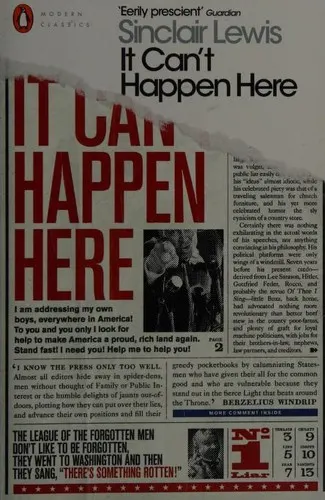
Books like It Can't Happen Here
It Can’t Happen Here and Philip Roth’s The Plot Against America are companion alarms, each locating democracy’s collapse amid ordinary American resentments, comforts, and assurances that everything will be fine.
If you liked It Can't Happen Here, you’ll love these
Not lookalikes — kindred books. Each one shares something essential with It Can't Happen Here, and we tell you exactly what.
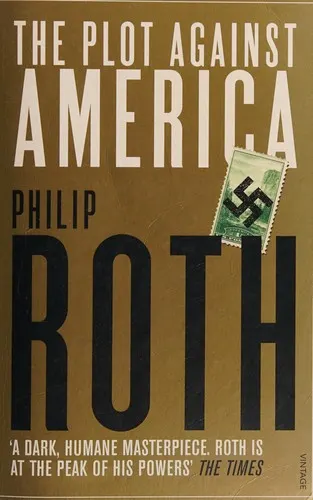
Roth makes authoritarianism frighteningly intimate. His counterfactual America is experienced through a Jewish family in Newark, so national politics enters the novel as dinner-table arguments, neighborhood rumors, compromised friendships, and a child’s dawning fear. Like Lewis, Roth understands that democratic failure begins not with uniforms in the streets but with respectable euphemisms and citizens eager to be reassured.
One of Roth’s most admired late novels, it has the density of lived memory despite its invented history. Its great achievement is to make political catastrophe feel both unimaginable and already under way.
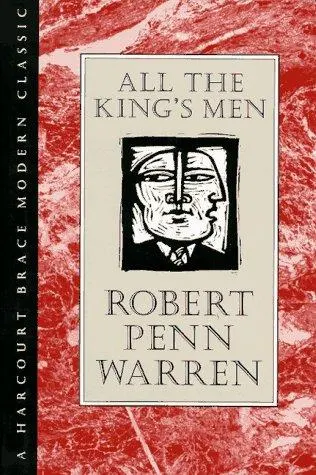
If Buzz Windrip fascinated you as much as he appalled you, meet Willie Stark: a populist politician whose genuine insight into inequality becomes inseparable from manipulation, intimidation, and power. Warren is less interested in labeling a demagogue than in showing why intelligent people serve one—and how moral surrender is accomplished through hundreds of seemingly practical decisions.
The novel’s sumptuous, searching prose gives political corruption the weight of tragedy. Winner of the Pulitzer Prize and still the definitive American novel of charisma and complicity, it offers something Lewis largely withholds: the intoxicating view from inside the machine.
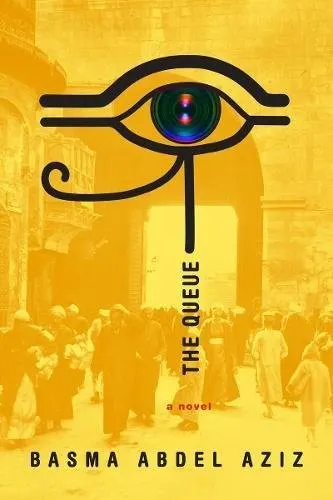
A mysterious authority called the Gate has closed, yet citizens must still obtain its permission for nearly everything. They form a queue and wait. From that brutally simple premise, Abdel Aziz constructs a deadpan nightmare in which paperwork rewrites reality, official language defeats eyewitness testimony, and obedience persists even when the state barely needs to enforce it.
Where Lewis attacks dictatorship through broad satire and urgent argument, Abdel Aziz uses compression, repetition, and bureaucratic absurdity. This acclaimed Egyptian dystopia is short enough to read in a sitting but difficult to shake: it reveals how authoritarian power can reside not only in a leader, but in procedures people have been trained to accept.