Author
Books like Saul Bellow
9 books we recommend to Saul Bellow readers, drawn from Herzog, The Adventures of Augie March and Henderson the Rain King — each with the reason why.
If you loved Herzog
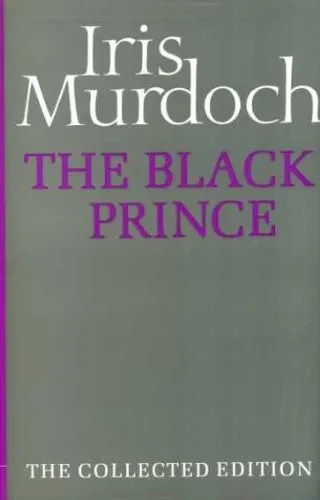
Bradley Pearson, a retired tax inspector convinced he is destined to write a masterpiece, begins an account of artistic struggle amid importunate relatives, disastrous friends, and his own magnificently unreliable judgments. Like Moses Herzog, he is both penetrating and absurd: a man whose intelligence exposes every motive except, perhaps, his own.
Murdoch makes philosophy feel dangerous rather than decorative. Her shifting prefaces and testimonies turn interpretation itself into a contest, while Bradley’s lofty aesthetic declarations continually collide with bodily embarrassment and domestic chaos. Winner of the James Tait Black Memorial Prize, The Black Prince is one of Murdoch’s most admired novels—and among the few that can match Herzog’s fusion of metaphysical seriousness, farce, and merciless self-revelation.
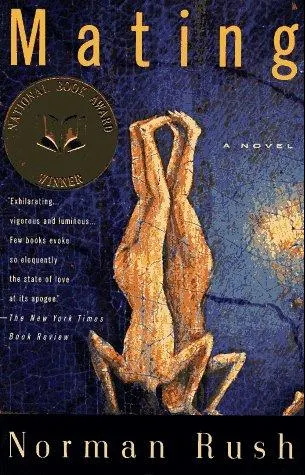
An unnamed American researcher in Botswana narrates her fascination with Nelson Denoon, a charismatic intellectual attempting to build an experimental community. What matters most is the velocity of her mind: she analyzes desire, power, anthropology, feminism, and every stray remark with exhilarating, often self-incriminating precision.
Readers who loved Herzog’s sense that thought can be appetite, defense mechanism, and comic affliction will recognize the pleasure immediately. Yet Rush’s narrator has her own fiercely original cadence—learned, slangy, competitive, and intimate—and the courtship becomes a battle between rival theories of love and freedom. Mating won the National Book Award, but its lasting distinction is rarer: readers devoted to it tend to speak of its voice as though they once knew the person speaking.
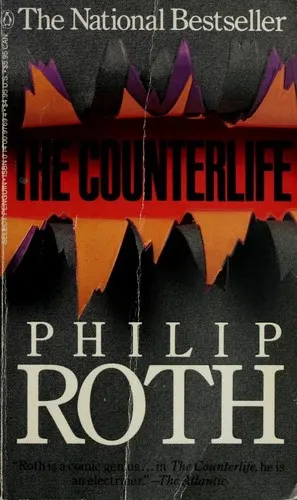
Nathan Zuckerman enters a story of brothers, marriage, illness, Jewish identity, and the lives people imagine when the one they have becomes intolerable. Roth gives him Herzog’s appetite for argument, but makes the novel’s very structure argumentative: motives are revised, stories contradict one another, and identity becomes something composed under pressure.
The comedy is sharp without reducing anyone to a joke. Every debate has emotional stakes; every confident explanation risks becoming another form of evasion. The National Book Critics Circle recognized The Counterlife, and it remains one of Roth’s boldest achievements—a novel in which intellectual combat produces not abstraction but intimacy. If Herzog made you love watching a formidable mind cross-examine its own life, leaving this unread would mean missing one of that art’s great performances.
If you loved The Adventures of Augie March
Ellison’s narrator shares Augie’s defining struggle: everyone he encounters wants to turn him into an instrument, a symbol, or a type, while his unruly consciousness resists possession. His voice can swing from philosophical argument to street comedy to jazzlike improvisation, giving the novel Bellow’s sense that thinking itself is a dramatic adventure.
The difference makes the kinship more powerful. Where Augie’s openness generates comedy, Ellison shows how dangerous an imposed identity can become. The narrator begins underground, surrounded by stolen electric light, explaining why society refuses to see him; the story grows from that unforgettable declaration of selfhood. Winner of the 1953 National Book Award—one year before Augie March won the same prize—Invisible Man is its darker, fiercer companion, and one of the essential American novels of freedom.
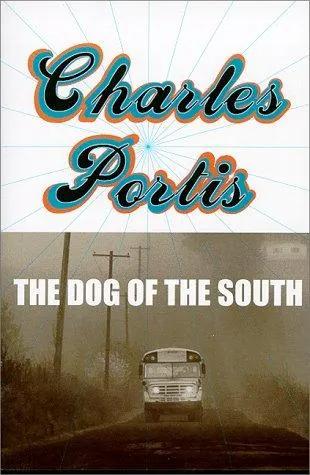
Read this for the pure pleasure of keeping company with Ray Midge, whose wife has disappeared with another man—and with Ray’s car and credit cards. He follows their trail south, narrating with the solemn precision of an accountant trapped inside a farce. Like Augie, he is susceptible to eccentrics, grand explanations, dubious schemes, and the possibility that the next encounter might reveal how life works.
Portis’s comedy is drier than Bellow’s but just as dependent on character: every obsession becomes a worldview, every scrap of dialogue a small masterpiece of misalignment. Long cherished as a cult classic, the novel now sits securely within Portis’s Library of America canonization. Readers who love Augie for the sensation of an unpredictable mind moving through an even less predictable world should not miss one of America’s funniest road novels.
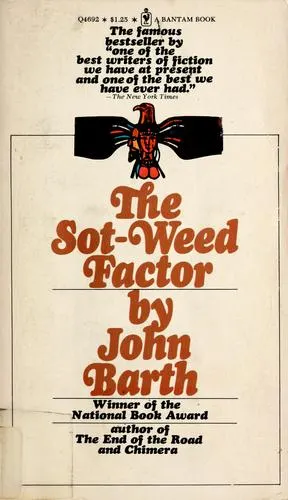
Ebenezer Cooke is a naïve poet sent to colonial Maryland with literary ambitions and almost no defenses against reality. The world instantly treats him as raw material for its deceptions. What follows is not simply a picaresque adventure but a colossal comedy about whether anyone can remain the author of himself amid other people’s plots—the question beating beneath Augie’s refusal to be recruited.
Barth writes with delighted excess: mock-heroic speeches, low jokes, philosophical games, impostures, and stories nested inside stories. Yet beneath the virtuosity is real affection for a hero whose innocence is both ridiculous and oddly noble. A foundational comic epic of American postmodernism, The Sot-Weed Factor offers the same rare abundance as Bellow’s novel: the feeling that language can barely keep up with the number of characters, ideas, appetites, and accidents bursting into existence.
If you loved Henderson the Rain King
Voss is not a match merely because it sends an overbearing Westerner into unfamiliar country. Its real kinship with Bellow lies in the spectacle of a man trying to bully existence into disclosing its meaning. White subjects that hunger to fierce irony without belittling it: Voss is absurd, imperious and genuinely possessed by transcendence.
The prose is denser and more visionary than Bellow’s, flashing between grotesque comedy, physical ordeal and mystical intensity. Winner of the inaugural Miles Franklin Award, it became one of the novels on which White’s Nobel reputation rests. Anyone moved by Henderson’s bellowing need to become spiritually alive should encounter this darker, stranger masterpiece of the same need.

Imagine Henderson’s spiritual emergency translated into a brilliant Southern farce about lust, despair, technology and the possible end of civilization. Dr. Tom More is a disgraced psychiatrist, prodigious drinker and unreliable Catholic who believes his invention can diagnose—and perhaps repair—the divided modern soul. His ingenuity is inseparable from his talent for wrecking his own life.
Percy gives abstract questions comic machinery: faith and alienation become bodily, embarrassing and dangerously practical. Yet beneath the apocalyptic jokes is the same conviction that ordinary success can conceal a lethal deadness. This is Percy at his most exuberant and mischievous, a cult favorite whose antic surface hides one of American fiction’s sharpest diagnoses of spiritual malaise.
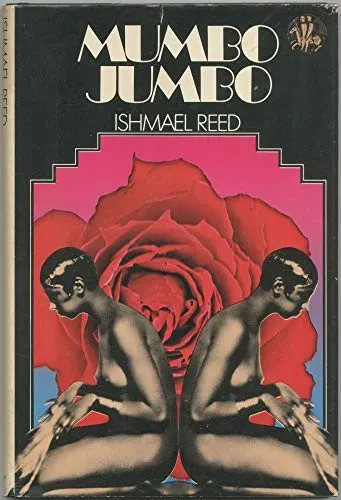
What Bellow achieves through Henderson’s volcanic voice, Reed achieves through a whole culture breaking into motion. A mysterious phenomenon called Jes Grew spreads music, dancing and unruly pleasure, alarming those who depend on order, repression and official history. The novel behaves like the force it describes: it samples detective fiction, myth, photographs, footnotes, slang and conspiracy into a jubilant literary collage.
A National Book Award finalist, Mumbo Jumbo became a landmark of postmodern and Black experimental fiction, but its intellectual importance understates how much fun it is. Like Henderson, it distrusts bloodless rationality and asks whether vitality itself can carry spiritual knowledge. Read it for the rare exhilaration of a novel whose form seems to dance free of every cage built for it.