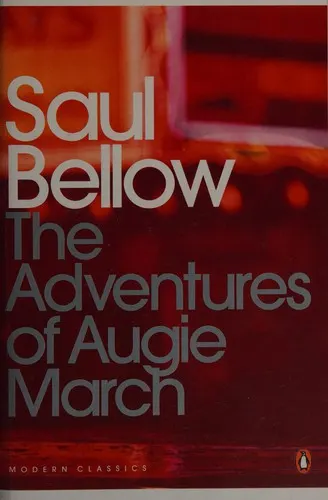
Books like The Adventures of Augie March
Three roads branch from Augie’s Chicago: one descends beneath a city, one rattles south in a battered car, and one runs backward into a counterfeit colonial America. On each, a magnificently talkative wanderer meets people determined to write his part for him.
If you liked The Adventures of Augie March, you’ll love these
Not lookalikes — kindred books. Each one shares something essential with The Adventures of Augie March, and we tell you exactly what.
Ellison’s narrator shares Augie’s defining struggle: everyone he encounters wants to turn him into an instrument, a symbol, or a type, while his unruly consciousness resists possession. His voice can swing from philosophical argument to street comedy to jazzlike improvisation, giving the novel Bellow’s sense that thinking itself is a dramatic adventure.
The difference makes the kinship more powerful. Where Augie’s openness generates comedy, Ellison shows how dangerous an imposed identity can become. The narrator begins underground, surrounded by stolen electric light, explaining why society refuses to see him; the story grows from that unforgettable declaration of selfhood. Winner of the 1953 National Book Award—one year before Augie March won the same prize—Invisible Man is its darker, fiercer companion, and one of the essential American novels of freedom.
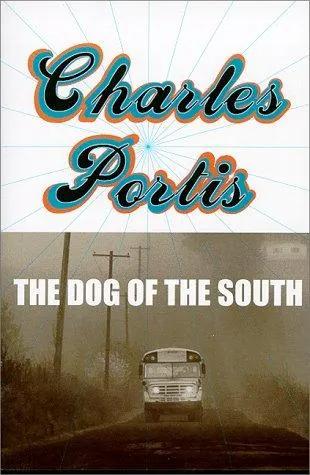
Read this for the pure pleasure of keeping company with Ray Midge, whose wife has disappeared with another man—and with Ray’s car and credit cards. He follows their trail south, narrating with the solemn precision of an accountant trapped inside a farce. Like Augie, he is susceptible to eccentrics, grand explanations, dubious schemes, and the possibility that the next encounter might reveal how life works.
Portis’s comedy is drier than Bellow’s but just as dependent on character: every obsession becomes a worldview, every scrap of dialogue a small masterpiece of misalignment. Long cherished as a cult classic, the novel now sits securely within Portis’s Library of America canonization. Readers who love Augie for the sensation of an unpredictable mind moving through an even less predictable world should not miss one of America’s funniest road novels.
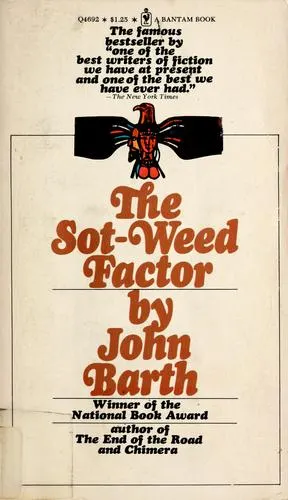
Ebenezer Cooke is a naïve poet sent to colonial Maryland with literary ambitions and almost no defenses against reality. The world instantly treats him as raw material for its deceptions. What follows is not simply a picaresque adventure but a colossal comedy about whether anyone can remain the author of himself amid other people’s plots—the question beating beneath Augie’s refusal to be recruited.
Barth writes with delighted excess: mock-heroic speeches, low jokes, philosophical games, impostures, and stories nested inside stories. Yet beneath the virtuosity is real affection for a hero whose innocence is both ridiculous and oddly noble. A foundational comic epic of American postmodernism, The Sot-Weed Factor offers the same rare abundance as Bellow’s novel: the feeling that language can barely keep up with the number of characters, ideas, appetites, and accidents bursting into existence.