Author
Books like Samuel Beckett
5 books we recommend to Samuel Beckett readers, drawn from Molloy and The Unnamable — each with the reason why.
If you loved Molloy
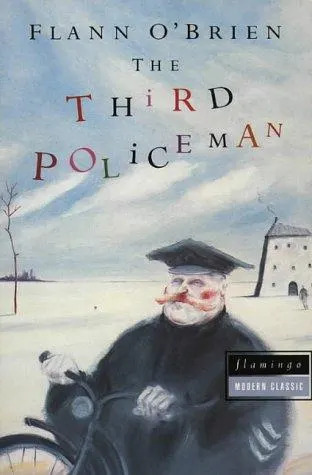
O’Brien offers the purest match for Beckett’s ability to make philosophical bewilderment irresistibly funny. An unnamed narrator enters an Irish police station where bicycles acquire alarming metaphysical importance and every explanation makes the world less explicable. The prose remains serenely logical even as logic becomes a trap.
Written in 1940 but published only after O’Brien’s death, it grew into a fiercely loved cult classic. Its deadpan inventions are memorable, but its deeper kinship with Molloy lies in the dread beneath the jokes: identity, causation, and even ordinary objects will no longer hold still. Missing it means missing one of the twentieth century’s funniest nightmares.
If Molloy’s self-interrupting monologues were what seized you, Bernhard’s Correction is essential. A narrator sorts through the papers of Roithamer, an obsessive intellectual who designed an uncompromising cone-shaped house for his sister. Every judgment is revised, intensified, attacked, and revised again; thought proceeds not toward certainty but toward annihilation.
Bernhard, one of the defining postwar Austrian novelists, turns repetition into pressure and syntax into a form of captivity. Yet the ferocity is exhilarating, and often brutally comic. Correction does not imitate Beckett’s spareness: it answers it with torrents. Few novels show so concretely how perfectionism, love, and self-correction can become indistinguishable from destruction.
Markson begins with a woman who may be the last person alive, typing fragments about art, history, memory, and the places she has wandered. Her claims contradict one another; names and facts migrate; loneliness appears indirectly, through the obsessive rearrangement of cultural debris. As in Molloy, unreliability is not a puzzle to solve but the very substance of consciousness.
This formally radical novel earned a devoted following among experimental writers and readers, with David Foster Wallace among its most ardent champions. Its pages look airy, but the cumulative effect is devastating: jokes, corrections, and stray recollections slowly disclose a mind trying to keep itself company. It is one of those rare cult novels whose admirers sound evangelical because no other book quite does what it does.
If you loved The Unnamable
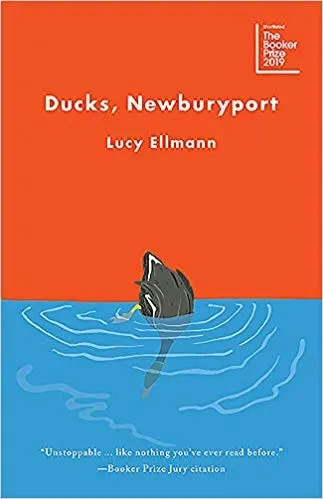
Ellmann exchanges Beckett’s void for suffocating abundance. Almost the entire novel pours through one woman’s mind in a vast, comma-driven sentence, repeatedly snagging on the phrase “the fact that.” Domestic errands, mass shootings, old films, illness, motherhood, and ecological fear become parts of one compulsive verbal weather system.
A lover of The Unnamable will recognize the deeper mechanism: speech continuing because silence feels like annihilation. But where Beckett pares consciousness down, Ellmann makes it ingest a whole culture. The result is funny, panicked, intimate, and formally astonishing. Winner of the Goldsmiths Prize and shortlisted for the Booker, it is not merely a celebrated stunt; its enormous sentence becomes a place you inhabit. Missing it means missing one of contemporary fiction’s boldest demonstrations that ordinary consciousness can be as strange and inexhaustible as Beckett’s abyss.
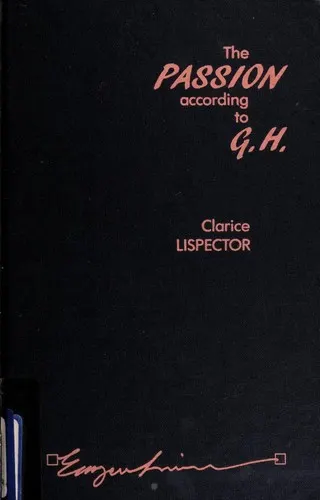
A wealthy woman enters her maid’s vacated room and encounters something that begins to dissolve every reassuring idea she has about herself. From that stark opening, Lispector turns confession into an ordeal: the speaker addresses an imagined hand-holder while language strains to approach an experience that may lie beyond personality, morality, and even the human.
This is Beckett’s metaphysical pressure with a different temperature—sensuous, feverish, almost devotional. G.H. does not simply wonder who is speaking; she feels the category of “I” being stripped away. Lispector’s repetitions circle what cannot be stated, each return altering the thought, until abstraction becomes physically immediate. Widely regarded as one of her masterpieces, the novel has inspired unusually fervent readers because it does not describe an encounter with the unknowable so much as stage one inside the reader. For anyone moved by The Unnamable’s impossible demand to speak what has no name, this is essential.