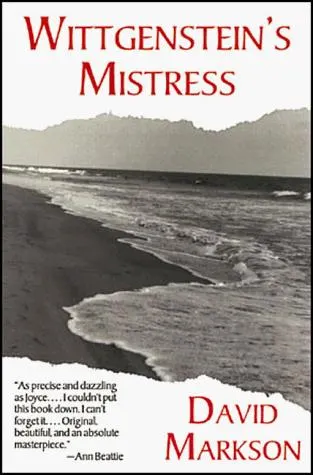
Books like Wittgenstein's Mistress
The ideal reader for Wittgenstein's Mistress delights in fragments that behave like proofs, allusions that slowly disclose an emotional life, and comedy so dry it almost conceals the abyss beneath it. These three novels make similarly audacious forms feel not ornamental but necessary.
If you liked Wittgenstein's Mistress, you’ll love these
Not lookalikes — kindred books. Each one shares something essential with Wittgenstein's Mistress, and we tell you exactly what.
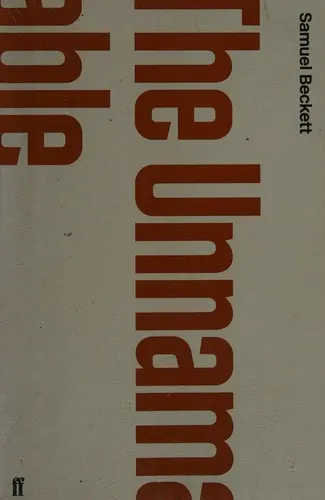
A voice speaks because it cannot stop, questioning its identity, its surroundings, and even the language with which it conducts the inquiry. The result is philosophy under extreme pressure: propositions are made, revised, mocked, and dismantled until uncertainty itself becomes a kind of drama.
Beckett’s novel is an essential ancestor to Markson’s, but it is no museum piece. Its black comedy, syntactic momentum, and stubborn need to continue make consciousness feel both like a trap and a heroic improvisation. This culminating volume of Beckett’s great postwar trilogy remains one of the radical achievements behind his Nobel-winning reputation—and few books come closer to the lonely, hilarious extremity of Wittgenstein's Mistress.
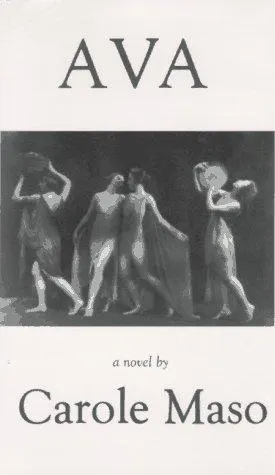
During the final day of Ava Klein’s life, memories, quotations, lovers, landscapes, and stray sensations arrive in brief, luminous passages. White space becomes rhythm; recurrence becomes structure. Rather than explain Ava, the novel lets a self emerge through what her mind cannot help returning to.
Where Markson turns cultural debris into an anatomy of solitude, Maso makes fragments pulse with sensuality and grief. AVA is warmer and more musical, but it shares the crucial conviction that erudition is intimate—that remembered art and remembered desire occupy the same vulnerable chamber. A touchstone of American experimental fiction with intensely devoted readers, it proves that formal difficulty can produce devastating tenderness.
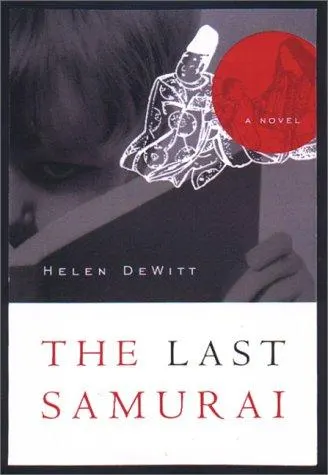
Sibylla, an intellectually ferocious single mother, raises her precocious son Ludo among Greek, mathematics, Icelandic sagas, and repeated viewings of Kurosawa’s Seven Samurai. DeWitt does not scatter references as decoration: each language, text, and film becomes an instrument for thinking about education, courage, disappointment, and the stories people use to construct themselves.
The pleasure here is speed and abundance. Diagrams, typographical play, learned jokes, and sudden changes of register generate an emotional design that becomes visible only as you read. Like Markson, DeWitt trusts the reader to make connections without having them underlined. Long neglected after its 2000 publication, The Last Samurai found the passionate audience it deserved through its NYRB Classics revival; it now feels less like a cult secret than a modern classic readers keep pressing into one another’s hands.