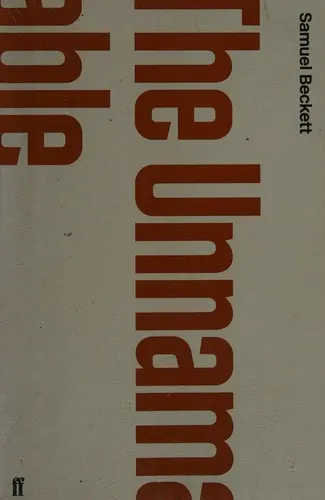
Books like The Unnamable
Start in an Ohio kitchen crowded with children, baking, advertisements, recipes, and dread. Lucy Ellmann’s Ducks, Newburyport seems impossibly far from Beckett’s bare nowhere, yet it asks the same terrifying question: if the voice ever stops, what remains? From that unexpected bridge, the path leads toward two still more radical novels of speech, selfhood, and extinction.
If you liked The Unnamable, you’ll love these
Not lookalikes — kindred books. Each one shares something essential with The Unnamable, and we tell you exactly what.
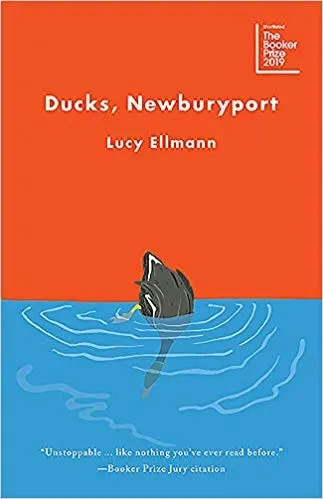
Ellmann exchanges Beckett’s void for suffocating abundance. Almost the entire novel pours through one woman’s mind in a vast, comma-driven sentence, repeatedly snagging on the phrase “the fact that.” Domestic errands, mass shootings, old films, illness, motherhood, and ecological fear become parts of one compulsive verbal weather system.
A lover of The Unnamable will recognize the deeper mechanism: speech continuing because silence feels like annihilation. But where Beckett pares consciousness down, Ellmann makes it ingest a whole culture. The result is funny, panicked, intimate, and formally astonishing. Winner of the Goldsmiths Prize and shortlisted for the Booker, it is not merely a celebrated stunt; its enormous sentence becomes a place you inhabit. Missing it means missing one of contemporary fiction’s boldest demonstrations that ordinary consciousness can be as strange and inexhaustible as Beckett’s abyss.
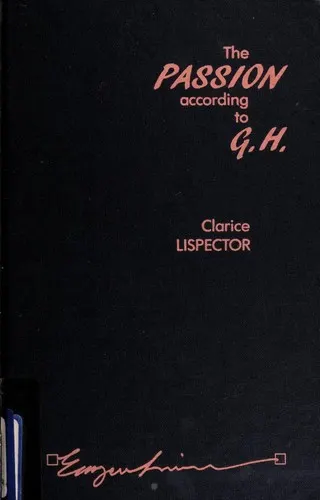
A wealthy woman enters her maid’s vacated room and encounters something that begins to dissolve every reassuring idea she has about herself. From that stark opening, Lispector turns confession into an ordeal: the speaker addresses an imagined hand-holder while language strains to approach an experience that may lie beyond personality, morality, and even the human.
This is Beckett’s metaphysical pressure with a different temperature—sensuous, feverish, almost devotional. G.H. does not simply wonder who is speaking; she feels the category of “I” being stripped away. Lispector’s repetitions circle what cannot be stated, each return altering the thought, until abstraction becomes physically immediate. Widely regarded as one of her masterpieces, the novel has inspired unusually fervent readers because it does not describe an encounter with the unknowable so much as stage one inside the reader. For anyone moved by The Unnamable’s impossible demand to speak what has no name, this is essential.
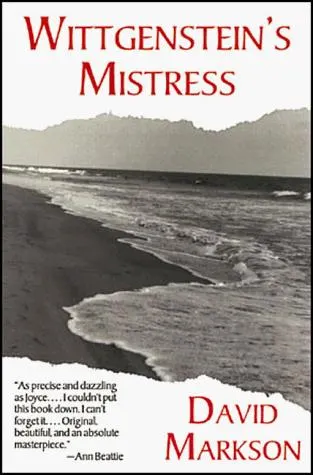
Kate believes she may be the last person on earth. She types statements about paintings, philosophers, composers, ancient history, houses, fires, and her own uncertain memories—correcting herself, contradicting herself, and returning obsessively to details whose significance keeps shifting.
Markson’s fragments look lucid and orderly, but their gaps carry devastating emotional weight. Like Beckett, he makes logical precision reveal rather than cure solitude: every correction opens another doubt, and every cultural fact becomes both company and evidence of absence. The novel’s formal ingenuity gradually yields an unexpectedly piercing portrait of grief without settling into conventional explanation.
Once neglected, Wittgenstein’s Mistress became a fiercely admired landmark of American experimental fiction, championed by writers and critics who recognized how much feeling Markson had hidden inside its austere machinery. It is among the rare post-Beckett novels that truly extends Beckett’s discovery: a voice can fail to establish the world and still make its failure unbearably alive.