Author
Books like Ruth Ozeki
5 books we recommend to Ruth Ozeki readers, drawn from A Tale for the Time Being and The Book of Form and Emptiness — each with the reason why.
If you loved A Tale for the Time Being
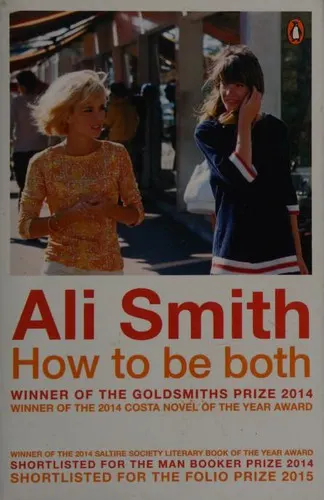
Smith binds two lives—one belonging to a grieving contemporary teenager, the other to Renaissance painter Francesco del Cossa—into a novel whose halves can be read in either order. That ingenious design is not a puzzle-box gimmick: it makes time feel permeable and turns art into a conversation between people who can never meet.
Like Ozeki, Smith trusts the reader to live with ambiguity, notice echoes, and help create meaning. Her prose is quick, funny, mournful, and exhilaratingly alert to how looking at another person can become an ethical act. Winner of the Goldsmiths Prize and shortlisted for the Booker, How to Be Both is one of the rare experimental novels readers cherish not despite its audacity but because that audacity intensifies its tenderness.
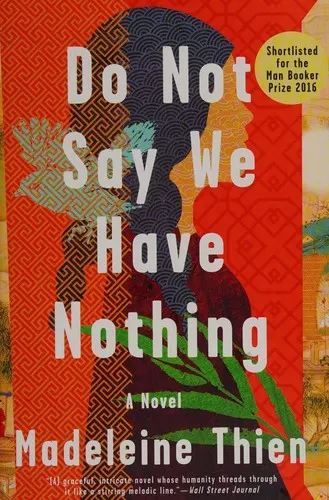
Thien begins with a young woman in Vancouver receiving a visitor who carries her toward a buried family history. From notebooks, stories, and music, an intimate archive gradually takes shape. The novel asks a question Ozeki’s readers will recognize: what obligations arise when another person entrusts you with their past?
Thien’s canvas is vast, but her power lies in precision—the private joke, the copied page, the piece of music that preserves what official history tries to erase. Lives separated by geography and generations begin to answer one another without losing their singularity. This Giller Prize winner and Booker finalist earns its scale through emotional accumulation; by the end, reading itself feels like remembrance, witness, and resistance. Missing it means missing one of the finest modern novels about how art carries human beings through history.
If you loved The Book of Form and Emptiness
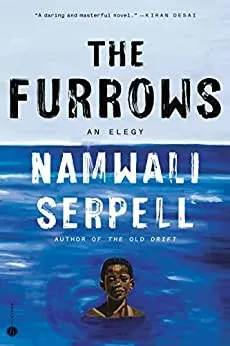
Serpell begins with a sister trying to describe her younger brother’s loss—not simply what happened, but how it felt—and builds a mesmerizing novel from grief’s repetitions and distortions. Like Ozeki, she understands that bereavement can make reality seem unreliable without making the bereaved person’s experience any less true.
The novel’s shifting patterns, doubles, and competing accounts turn formal experiment into emotional precision. A finalist for the National Book Critics Circle Award, The Furrows is one of those rare cerebral novels that also produces a visceral ache. If Benny’s struggle to live inside an altered world moved you, Serpell’s fierce, hypnotic rendering of loss is indispensable.
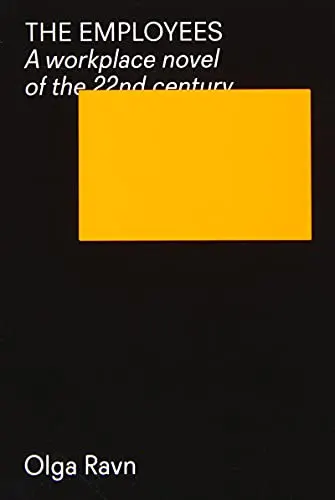
On a distant spacecraft, human and humanoid workers give brief statements about their jobs and about a collection of mysterious objects brought aboard. Those objects awaken longing, memory, revulsion, and attachment—responses that gradually unsettle the distinction between person and product.
Shortlisted for the International Booker Prize, Ravn’s slim novel has the compression of poetry and the momentum of a mystery. Its cool corporate transcripts conceal an increasingly poignant question: what remains of a life when institutions value beings only for their usefulness? Readers who loved Ozeki’s alertness to the inner lives of things—and her critique of consumption and accumulation—will find The Employees startlingly beautiful.
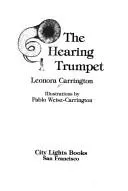
Ninety-two-year-old Marian Leatherby receives a hearing trumpet and discovers that her family intends to place her in an institution. From that blunt betrayal, Carrington launches a magnificently unruly assault on every authority that claims to define sanity, usefulness, or proper behavior.
A cult classic by one of Surrealism’s great artists, The Hearing Trumpet shares Ozeki’s gift for making philosophical questions funny, strange, and materially vivid. Marian is never reduced to a diagnosis or a symbol; her curiosity keeps enlarging the world around her. The book’s anarchic warmth makes reading it feel less like entering a fantasy than escaping a cramped definition of reality.