Author
Books like Nicola Griffith
6 books we recommend to Nicola Griffith readers, drawn from Hild and Ammonite — each with the reason why.
If you loved Hild

Hild’s great weapon is attention; so is Thomas Cromwell’s. Mantel’s Cromwell reads rooms, debts, silences, and careless phrases with the same thrilling acuity that Hild brings to birds, kinship, and royal politics. In both novels, intelligence is not decorative brilliance but a means of survival.
Mantel also achieves Griffith’s rarest feat: the past never feels like a museum arranged for modern visitors. Its people inhabit assumptions we must learn from within. Winner of the Booker Prize and now a landmark of historical fiction, Wolf Hall earns its stature sentence by sentence. If you loved the sensation of becoming cleverer alongside Hild, entering Cromwell’s consciousness is indispensable.
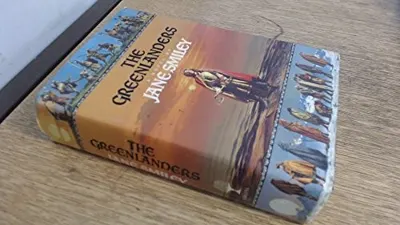
Read this for the part of Hild that belongs to the land. Smiley’s medieval Greenland is an entire ecological and social system: pasture, sea ice, hunger, inheritance, feuds, marriages, and stories all press upon one another. She offers little modern hand-holding; gradually, almost eerily, the settlement’s values become legible on their own terms.
Written in austere, saga-inflected prose, The Greenlanders has become the book many of Smiley’s most devoted readers call her masterpiece. Its perspective is broader and more communal than Hild’s, but it creates the same deep enchantment: history ceases to be background and becomes weather—inescapable, intimate, and alive.
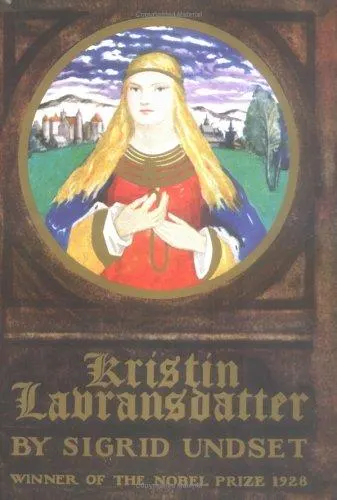
Undset gives medieval womanhood its full moral, sensual, and spiritual weight. Beginning with Kristin’s girlhood in fourteenth-century Norway, the novel treats desire, family obligation, work, childbirth, pride, and religious belief not as separate themes but as forces contending within one formidable life. Like Hild, Kristin is never reduced to either rebel or victim; she is allowed appetite, error, endurance, and consequence.
Undset received the Nobel Prize in Literature for the power of her historical writing, and Kristin Lavransdatter remains the work through which generations of readers have become fiercely attached to her. Choose Tiina Nunnally’s lucid translation. The book’s scale may look daunting, but its cumulative intimacy is precisely the reward: by the end, Kristin feels less like a historical character than someone whose whole life you have known.
If you loved Ammonite
On the ocean moon Shora, the Sharers—women whose biological knowledge is inseparable from their culture—meet an expansionist civilization that mistakes nonviolence for helplessness. The resemblance to Ammonite lies less in the women-only society than in how fully Slonczewski imagines one: language, medicine, ecology, ethics, and daily work all grow from the same roots.
Like Griffith, Slonczewski treats cultural encounter as something that changes the observer. Her nonviolence is neither decorative nor naïve; it is a difficult discipline requiring ingenuity and courage. Winner of the John W. Campbell Memorial Award, this is one of feminist science fiction’s enduring achievements: sensuous, argumentative, and alive with the possibility that another social order might produce another kind of strength.
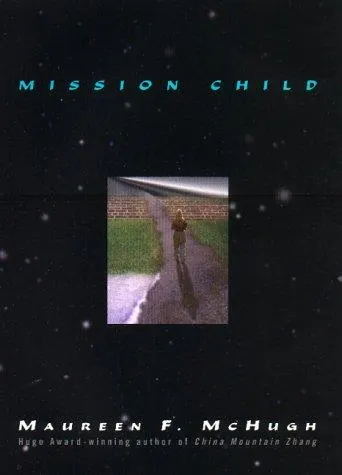
Janna grows up in an isolated polar settlement shaped by imported religion, local custom, and technologies no one around her fully controls. When that world fractures, survival carries her across cultures that keep trying to assign her a fixed identity.
McHugh shares Griffith’s gift for making gender, belonging, and embodiment experiential rather than theoretical. Janna learns through cold, hunger, work, language, clothing, and the judgments of strangers; every new community offers shelter at the price of a new definition. The prose is restrained and compassionate, never forcing her life into a tidy argument. Mission Child is a quieter book than its great reputation deserves—and for readers moved by Marghe’s gradual remaking, it can feel like the discovery of a missing classic.
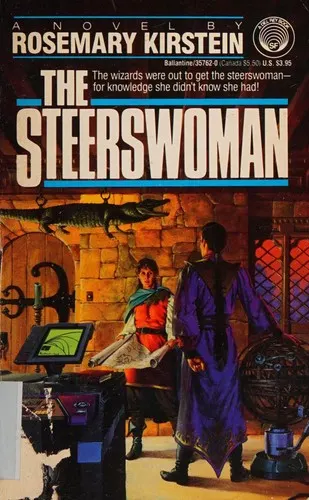
Rowan is a steerswoman: an itinerant scholar bound to answer any question honestly, with the right to demand the same openness from others. Her investigation of some oddly uniform jewels brings her into conflict with wizards, while her friendship with the formidable Outskirter Bel opens an unfamiliar culture to her—and tests the limits of her own assumptions.
The addictive pleasure here is disciplined curiosity. Rowan observes, compares, revises, and admits error; Kirstein turns the scientific method into high adventure without sacrificing character or wonder. Just as importantly, Rowan and Bel’s bond is built through competence, difference, and earned trust rather than sentimental shorthand. The novel begins a series with exceptionally devoted readers, many of whom regard it as one of speculative fiction’s great overlooked works. Once Rowan asks her first dangerous question, it is difficult not to follow.