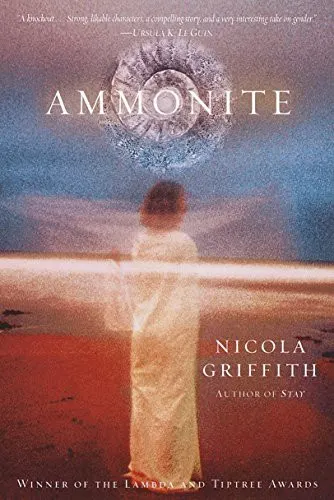
Books like Ammonite
Wind-scoured landscapes, patient observation, and the quiet exhilaration of becoming someone a familiar world could never have imagined: these novels preserve Ammonite’s rare union of intellectual rigor and intimate transformation.
If you liked Ammonite, you’ll love these
Not lookalikes — kindred books. Each one shares something essential with Ammonite, and we tell you exactly what.
On the ocean moon Shora, the Sharers—women whose biological knowledge is inseparable from their culture—meet an expansionist civilization that mistakes nonviolence for helplessness. The resemblance to Ammonite lies less in the women-only society than in how fully Slonczewski imagines one: language, medicine, ecology, ethics, and daily work all grow from the same roots.
Like Griffith, Slonczewski treats cultural encounter as something that changes the observer. Her nonviolence is neither decorative nor naïve; it is a difficult discipline requiring ingenuity and courage. Winner of the John W. Campbell Memorial Award, this is one of feminist science fiction’s enduring achievements: sensuous, argumentative, and alive with the possibility that another social order might produce another kind of strength.
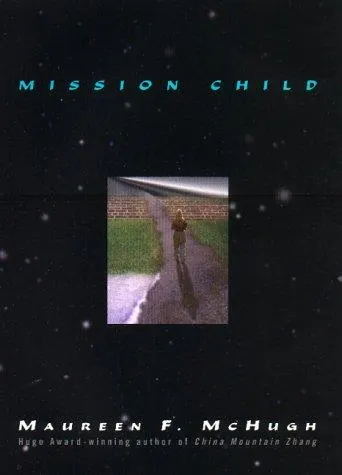
Janna grows up in an isolated polar settlement shaped by imported religion, local custom, and technologies no one around her fully controls. When that world fractures, survival carries her across cultures that keep trying to assign her a fixed identity.
McHugh shares Griffith’s gift for making gender, belonging, and embodiment experiential rather than theoretical. Janna learns through cold, hunger, work, language, clothing, and the judgments of strangers; every new community offers shelter at the price of a new definition. The prose is restrained and compassionate, never forcing her life into a tidy argument. Mission Child is a quieter book than its great reputation deserves—and for readers moved by Marghe’s gradual remaking, it can feel like the discovery of a missing classic.
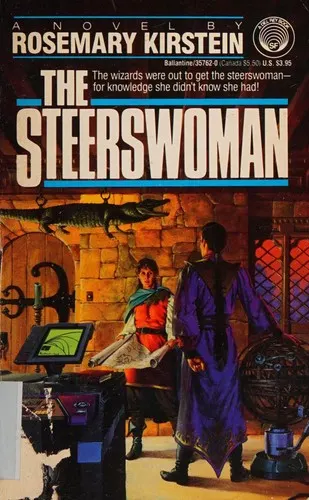
Rowan is a steerswoman: an itinerant scholar bound to answer any question honestly, with the right to demand the same openness from others. Her investigation of some oddly uniform jewels brings her into conflict with wizards, while her friendship with the formidable Outskirter Bel opens an unfamiliar culture to her—and tests the limits of her own assumptions.
The addictive pleasure here is disciplined curiosity. Rowan observes, compares, revises, and admits error; Kirstein turns the scientific method into high adventure without sacrificing character or wonder. Just as importantly, Rowan and Bel’s bond is built through competence, difference, and earned trust rather than sentimental shorthand. The novel begins a series with exceptionally devoted readers, many of whom regard it as one of speculative fiction’s great overlooked works. Once Rowan asks her first dangerous question, it is difficult not to follow.