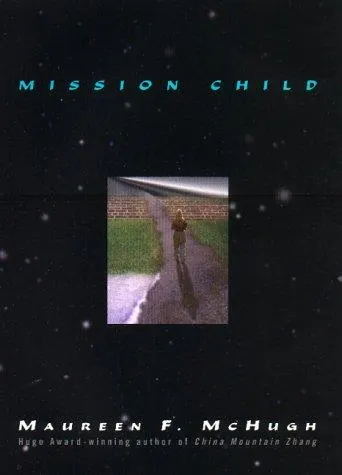
Books like Mission Child
Lauren Groff’s The Vaster Wilds trades interstellar travel for a seventeenth-century forest, yet it understands Mission Child’s deepest concern: when society’s certainties collapse, survival becomes an argument over what a person is allowed to be. The other two recommendations return that question to richly imagined futures shaped by gender, language and power.
If you liked Mission Child, you’ll love these
Not lookalikes — kindred books. Each one shares something essential with Mission Child, and we tell you exactly what.
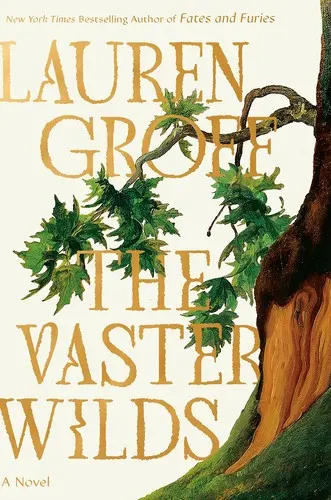
A starving servant girl escapes a failing colonial settlement and enters an immense wilderness. Groff makes her flight intensely physical—cold water, torn feet, hunger—but the real journey is inward, as inherited ideas about God, civilization and human worth begin to lose their authority.
Like Mission Child, this is an unsentimental odyssey in which identity is repeatedly stripped down and improvised. Groff’s celebrated, incantatory prose gives the landscape spiritual force without romanticizing either nature or colonial history. Readers moved by McHugh’s fusion of bodily hardship, cultural dislocation and stubborn self-creation will find this brief novel difficult to shake.
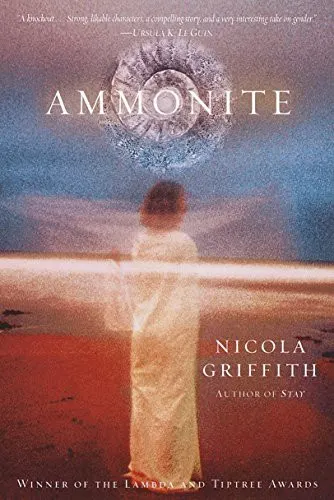
Anthropologist Marghe Taishan arrives on a quarantined planet where an indigenous virus has killed every man and transformed the isolated human cultures left behind. What begins as a scientific assignment becomes an encounter with ways of living that her training cannot adequately explain.
Griffith shares McHugh’s rare ability to make culture feel lived rather than diagrammed: kinship, ritual, work and language reshape Marghe more convincingly than any exposition could. Most importantly, Ammonite treats identity as something discovered through the body and through participation, not as a label imposed from outside. Its wins of both the Lambda Literary and James Tiptree Jr. awards recognized what readers still cherish in it—a feminist planetary novel of unusual intelligence, warmth and immersive power.

Delany begins with Rat Korga, a man whose society has made him almost property, then opens outward into a civilization where gender, desire, family and belonging follow radically different grammars from world to world. The result is science fiction that does not merely invent cultures; it asks how culture determines what can be perceived, desired or said.
Mission Child readers will recognize the refusal to treat gender as a tidy puzzle with a final answer, along with the profound loneliness of someone made legible differently by every community they enter. Delany’s prose is far more baroque than McHugh’s, but the emotional intelligence is similarly exact. Widely regarded as one of his major novels, it has inspired decades of fiercely devoted readers because its future feels not decorative but genuinely other—and because its vision of connection across difference remains astonishing.