Author
Books like Ngũgĩ wa Thiong'o
7 books we recommend to Ngũgĩ wa Thiong'o readers, drawn from A Grain of Wheat, Wizard of the Crow and Devil on the Cross — each with the reason why.
If you loved A Grain of Wheat
Sembène’s landmark novel turns the 1947–48 Dakar–Niger railway strike into a vast communal drama. Like Ngũgĩ, he distrusts the easy manufacture of heroes: courage emerges unevenly among workers, wives, children, organizers, and doubters spread across several cities.
What makes the book indispensable is its attention to how resistance changes ordinary life. Hunger, domestic authority, religious conviction, and relations between men and women all become part of the struggle. Its many characters never blur into a faceless mass; each tests what solidarity actually costs. Few novels match A Grain of Wheat so closely in making collective action feel both magnificent and painfully human.
The opening fact is startling: Henry Townsend, a formerly enslaved Black man in antebellum Virginia, has died leaving enslaved people of his own. From that contradiction, Jones builds a whole community in which nearly everyone is caught inside systems they may resist, exploit, rationalize, or fail to understand.
A lover of Ngũgĩ’s shifting chronology and distributed point of view will recognize the deeper kinship. Jones moves freely among lives and across time, revealing how one person’s hidden choice becomes another person’s inherited wound. Yet his calm, almost biblical narrator never dictates a simple verdict. Winner of the Pulitzer Prize and now widely regarded as a modern American classic, The Known World offers the rare exhilaration of seeing an entire moral landscape come alive.
A young Sudanese man returns from Europe to his village beside the Nile and becomes fascinated by Mustafa Sa’eed, a stranger whose cultivated reserve conceals a disturbing history. Salih makes that mystery the center of a fierce inquiry into colonialism, masculinity, self-invention, and the dangerous desire to turn a damaged person into a symbol.
Where A Grain of Wheat expands through a chorus, this short novel tightens like a knot. Stories pass between men, identities begin to mirror one another, and the peaceful village acquires an undertow of secrecy. Salih’s prose is sensuous, ironic, and unsettling; the book’s canonical place in modern Arabic literature rests not on dutiful importance but on its inexhaustible ambiguity. It is one of those brief novels that readers argue with for years.
If you loved Wizard of the Crow
Kourouma transforms the history of African dictatorship into a magnificent mock-epic. A griot recounts the career of the ruler Koyaga through songs, proverbs, praise formulas, and ritual interruptions—but the ceremonial language steadily becomes an instrument of exposure. Like Ngũgĩ, Kourouma understands that despotism is both murderous and ludicrous, sustained by theatricality, superstition, foreign interests, and endlessly revised national myths.
Winner of France’s Prix du Livre Inter, the novel is admired as one of Kourouma’s masterpieces. Its satire has the authority of history but the momentum of live performance: cunning, bawdy, furious, and impossible to reduce to sober political reportage. If the oral grandeur and gleeful demolition of power in Wizard of the Crow thrilled you, this is indispensable.
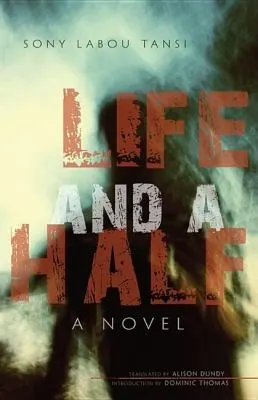
This cult classic of Francophone African literature begins under a tyrant known as the Providential Guide and immediately pushes dictatorship beyond realism into grotesque nightmare. Bodies, appetites, violence, and resistance become outrageously unstable; power tries to impose finality, while the novel’s language refuses to let anything stay settled or obedient.
Sony Labou Tansi’s imagination is harsher and more feverish than Ngũgĩ’s, but the kinship is profound: both writers answer authoritarian absurdity with an art even more excessive than the regime. Life and a Half is short, concentrated, and incendiary—a novel that seems to invent new rules because ordinary realism cannot contain what tyranny does. Missing it would mean missing one of the boldest literary assaults ever made on absolute power.
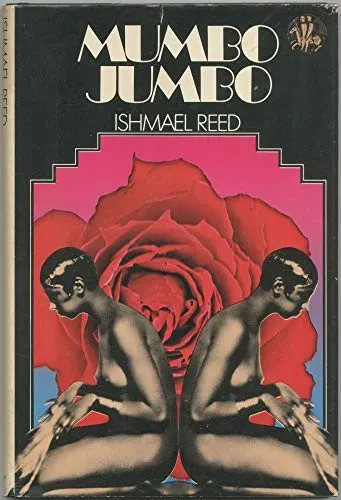
Reed’s great countercultural novel treats joy itself as a subversive contagion. As the mysterious Jes Grew phenomenon spreads, defenders of official Western order scramble to suppress it, and the book explodes into a collage of conspiracy, parody, history, typography, photographs, myth, and detective fiction.
Where Wizard of the Crow enlarges African storytelling traditions until they can challenge a modern state, Mumbo Jumbo turns the conventional Western novel inside out. Its jokes are arguments; its formal mischief is a rebellion against authorities that control people by controlling culture and historical memory. Long established as a cult landmark of American postmodernism, it remains startlingly alive—brainy, irreverent, and ecstatic. Read it for the exhilarating sensation of a novel refusing to ask permission from anyone.
If you loved Devil on the Cross
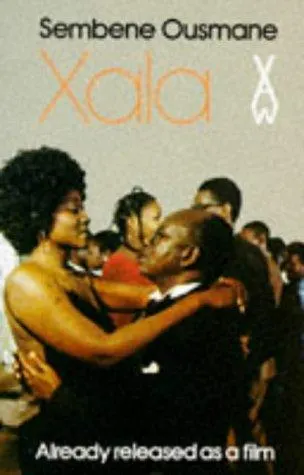
Sembène compresses a whole postcolonial ruling class into the predicament of El Hadji Abdou Kader Beye, a prosperous Senegalese businessman who takes a third wife and discovers, on his wedding night, that he has become impotent. From that brutally efficient premise, Xala exposes businessmen who celebrate African independence while preserving colonial habits, hierarchies and appetites.
A reader who admired the thieves’ feast in Devil on the Cross will recognize Sembène’s gift for making elite self-congratulation condemn itself. But Xala has its own merciless economy: every status symbol becomes incriminating, every attempted cure deepens the satire. Sembène—also the pioneering filmmaker who adapted the novel—made this short classic both wickedly funny and morally unforgettable.