Author
Books like Michel Faber
5 books we recommend to Michel Faber readers, drawn from Under the Skin and The Book of Strange New Things — each with the reason why.
If you loved Under the Skin

Aboard a corporate spacecraft, human and humanoid workers give statements about their duties—and about a collection of mysterious objects that has begun unsettling the crew. The novel arrives as a dossier of brief testimonies, each clipped and bureaucratic, yet together they generate extraordinary emotional pressure.
Like Faber, Ravn uses a nonhuman perspective to expose the grotesqueness of supposedly normal systems: employment, ownership, productivity, even the distinction between person and equipment. Her fragmented voices have the same eerie combination of clinical detachment and dawning vulnerability that makes Isserley unforgettable. Shortlisted for the International Booker Prize, this tiny, radiant novel can be read in an evening, but its questions about who is permitted a soul are hard to shake.
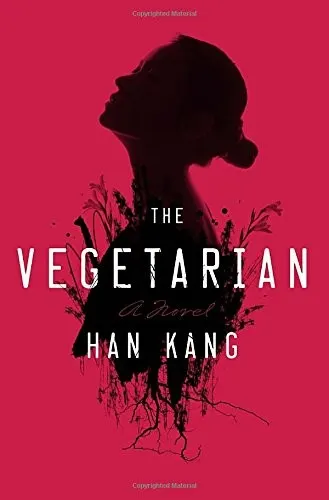
Yeong-hye stops eating meat after a disturbing dream. That modest refusal becomes intolerable to the people around her, who regard her body as family property, sexual object and social embarrassment. Crucially, Han Kang seldom grants Yeong-hye direct control of the narrative; other people interpret her, desire her and attempt to force her back into legibility.
A reader captivated by Under the Skin’s fusion of flesh, appetite and power will recognize the moral voltage here. Both novels make meat impossible to consider innocently, while refusing the comfort of a simple allegory. Winner of the International Booker Prize, The Vegetarian is lucid, beautiful and savage—a book in which bodily horror arises not from monsters but from the conviction that one person may decide what another body is for.

Kathy H. begins by calmly recalling her work as a carer and her childhood at Hailsham, an apparently privileged English boarding school. Ishiguro lets unease accumulate inside her courteous, nostalgic voice: peculiar rules and euphemisms suggest that the students’ lives have been arranged according to purposes they do not fully discuss.
Where Faber shocks by making humanity look like livestock, Ishiguro achieves a related reversal through tenderness and understatement. Both novels ask how exploitation becomes ordinary—how victims learn the vocabulary of the system that values them, and how affection survives inside it. Never Let Me Go is now regarded as one of Ishiguro’s defining novels because its speculative premise never overwhelms its intimate tragedy. Its restraint is precisely what devastates: it leaves the reader hearing all the anguish hidden inside calm sentences.
If you loved The Book of Strange New Things

Like Faber, Robinson treats religious belief neither as a delusion to expose nor a certainty to endorse, but as a demanding way of loving imperfect people. An elderly minister writes to the young son he will not live to see grow up, turning family memories, old grievances, and ordinary moments into questions about grace.
Winner of the Pulitzer Prize and beloved for its luminous calm, Gilead shares Faber’s gift for making theology intimate. Its quietness accumulates extraordinary emotional force: by the end, a blessing can feel as consequential as the discovery of a new world.

A Jesuit expedition sets out after music is detected from another planet; the novel opens years later with one priest returning alive, physically and spiritually shattered. That structure gives every early scene of curiosity, fellowship, and hope a gathering undertow.
The kinship with Faber lies deeper than missionaries in space. Russell asks what happens when sincere faith meets radical incomprehension—when good intentions cannot guarantee goodness, and apparent providence may be only human pattern-making. The Arthur C. Clarke Award-winning novel is gripping, intellectually fearless, and emotionally ferocious; readers often remember Emilio Sandoz less as a science-fiction protagonist than as someone whose crisis of faith became painfully personal to them.